
mescreen™ insights
Chloride Blood Test: Read the Context
Understand a chloride blood test, its reference interval and how it relates to electrolytes, without turning one laboratory result into a diagnosis or target.
Read the articleEvidence-led UK articles on mitochondrial health, fatigue, biomarkers, recovery and practical longevity decisions.

Browse our latest explainers on biomarkers, testing, fatigue, recovery and where mitochondrial insights fit into the wider UK health picture.
Understand a chloride blood test, its reference interval and how it relates to electrolytes, without turning one laboratory result into a diagnosis or target.
Read the article
Understand serum osmolality, why blood and urine results may be paired, and how measured and calculated values differ, without turning results into a diagnosis.
Read the article
Understand adjusted calcium when a laboratory equation changes, with UK blood test guidance on albumin, comparing results and questions for your clinician.
Read the article
Understand a uric acid blood test, why gout flare timing matters and how urate results differ from treatment targets, using current NHS and NICE guidance.
Read the article
Understand a fibrinogen blood test with UK guidance on Clauss, derived and antigen methods, plus practical questions about your report and clinical context.
Read the article
Understand the ESR blood test, how inflammation and CRP fit into the picture, and why results need clinical context rather than an online diagnosis or guess.
Read the article
A phosphate blood test measures blood phosphate, not an energy score: understand phosphorus, laboratory reference intervals and the questions to ask in the UK.
Read the article
Understand a C3 blood test alongside C4, complement proteins and reference ranges, with clear UK guidance on what one result can and cannot tell you alone.
Read the article
Understand an IgA blood test, total IgA and coeliac antibodies with clear UK guidance on test names, result context and useful questions for your clinician.
Read the article
What does a reticulocyte count show? Understand young red blood cells, full blood count context and why a reference range cannot diagnose the cause on its own.
Read the article
Understand an AST blood test with clear UK guidance on liver enzymes, muscle context and lab results, plus the questions to ask your healthcare professional.
Read the article
A GGT blood test needs liver blood test context, not a one-number verdict; learn what to ask about ALP, medicines and the limits of a single result in the UK.
Read the article
An albumin blood test needs its laboratory method, reference range and clinical context; understand why comparing results is not simply comparing two numbers.
Read the article
Understand a total protein test, how albumin and globulin fit the result, and why blood test reference ranges and clinical context matter more than one flag.
Read the article
An ALP blood test needs context: understand alkaline phosphatase, liver and bone profiles, reference ranges and useful questions for your UK clinician review.
Read the article
Understand a bilirubin blood test with clear UK guidance on conjugated bilirubin, reference ranges and jaundice, plus questions to discuss with your clinician.
Read the article
Understand a globulin blood test with clear UK guidance on total protein, albumin and reference ranges, plus questions to discuss with your clinical team.
Read the article
Understand a haptoglobin blood test with clear UK guidance on haemolysis, inflammation and reference ranges, plus questions to discuss with your clinical team.
Read the article
Understand an MCHC blood test with a clear UK guide to haemoglobin concentration, full blood count context and questions to ask about high or low results.
Read the article
Understand transferrin saturation in the UK, how this iron blood test differs from ferritin and TIBC, and which questions to discuss with your clinician.
Read the article
Understand platelet function tests in the UK: learn how they differ from a platelet count, what closure time means and which questions to ask your clinician.
Read the article
Understand an MCV blood test in the UK: learn what mean cell volume measures, how it fits a full blood count and why one result cannot provide a diagnosis.
Read the article
Understand a haematocrit blood test in the UK: what HCT measures, how it differs from red cell count and why full blood count results need clinical context.
Read the article
Understand a blood film in the UK: how microscopy adds context to a full blood count, why laboratories request it and what to ask about results and follow-up.
Read the article
Understand a monocyte count with UK guidance on raised results, previous blood tests and clinical context, without turning one flagged number into a diagnosis.
Read the article
Understand a low lymphocyte count with NHS guidance on blood tests, previous results and clinical context, plus questions for a useful discussion with your GP.
Read the article
Understand a low neutrophil count with context on blood tests, low results and the questions to discuss with a clinician before drawing your own conclusions.
Read the article
Understand your basophil count, how a blood differential reports results, and why persistent basophilia needs clinical context rather than an online diagnosis.
Read the article
Understand an eosinophil count on your blood test, why a raised result has several possible explanations, and what to ask about your full blood count in the UK.
Read the article
Understand an MCH blood test with UK guidance on haemoglobin, full blood count results and reference ranges, plus questions to discuss with your clinician.
Read the article
An RDW blood test measures red cell size variation, not a diagnosis: understand full blood count context, laboratory reference ranges and useful GP questions.
Read the article
Understand a reticulocyte count with UK guidance on young red cells, anaemia investigations and laboratory units, without diagnosing yourself from a number.
Read the article
Understand Gilbert's syndrome with UK guidance on bilirubin, jaundice and diagnosis, plus the symptoms that need urgent clinical advice rather than assumptions.
Read the article
Understand a creatine kinase blood test with UK guidance on CK results, muscle damage, reference ranges and the questions to discuss with your own clinician.
Read the article
Understand a bicarbonate blood test with UK guidance on total CO2, acid-base balance, reference ranges and sample handling, plus questions for your clinician.
Read the article
Understand a total protein blood test with UK guidance on albumin, globulins and reference ranges, plus useful questions about high or low laboratory results.
Read the article
Understand an LDH blood test with UK guidance on lactate dehydrogenase, haemolysis and reference ranges, plus the limits of interpreting a result in isolation.
Read the article
Understand a chloride blood test with UK guidance on electrolytes, kidney function and reference ranges, plus the limits of interpreting one laboratory result.
Read the article
Understand a magnesium blood test with UK guidance on serum magnesium, reference ranges and kidney function, plus clear limits on what one result can tell you.
Read the article
Understand a phosphate blood test, bone health and kidney function, with UK guidance on reference ranges, related results and the limits of one measurement.
Read the article
Understand a creatinine blood test, eGFR and urine ACR, with UK guidance on kidney function, result limitations and why one number needs clinical context.
Read the article
Understand a calcium blood test, adjusted calcium and ionised calcium, with NHS guidance on albumin, reference ranges and why a result is not a bone scan.
Read the article
Understand a potassium blood test with UK guidance on electrolytes, sample quality and kidney function, plus clear questions for your healthcare professional.
Read the article
Understand a sodium blood test in the UK, including electrolytes, fluid balance, reference ranges and why high or low results need careful clinical context.
Read the article
Understand a uric acid blood test with UK guidance on serum urate, gout assessment and why a high or low result still needs context from your healthcare team.
Read the article
Understand blood test reference ranges with clear UK guidance on lab results, normal ranges and the clinical context a flagged or in-range number still needs.
Read the article
Understand a full blood count with clear UK guidance on FBC results, blood cells and clinical context, plus sensible questions for your healthcare professional.
Read the article
Understand an ALP blood test with clear UK guidance on alkaline phosphatase, liver tests and reference ranges, plus useful questions for your healthcare team.
Read the article
Understand a bilirubin blood test with clear UK guidance on liver tests, reference ranges and jaundice, plus practical questions to ask your healthcare team.
Read the article
Understand an albumin blood test with clear UK guidance on blood protein, reference ranges and lab results, plus sensible questions for your healthcare team.
Read the article
Understand a cholesterol blood test in the UK, including a full lipid profile, HDL and non-HDL results, fasting questions and why clinical context matters.
Read the article
A folate blood test needs clinical context. Learn what serum folate measures, why B12 and blood count matter, and what UK guidance says about results.
Read the article
Understand an HbA1c blood test in the UK, what it reflects, when results may mislead, diagnostic limits and why symptoms and red-cell context still matter.
Read the article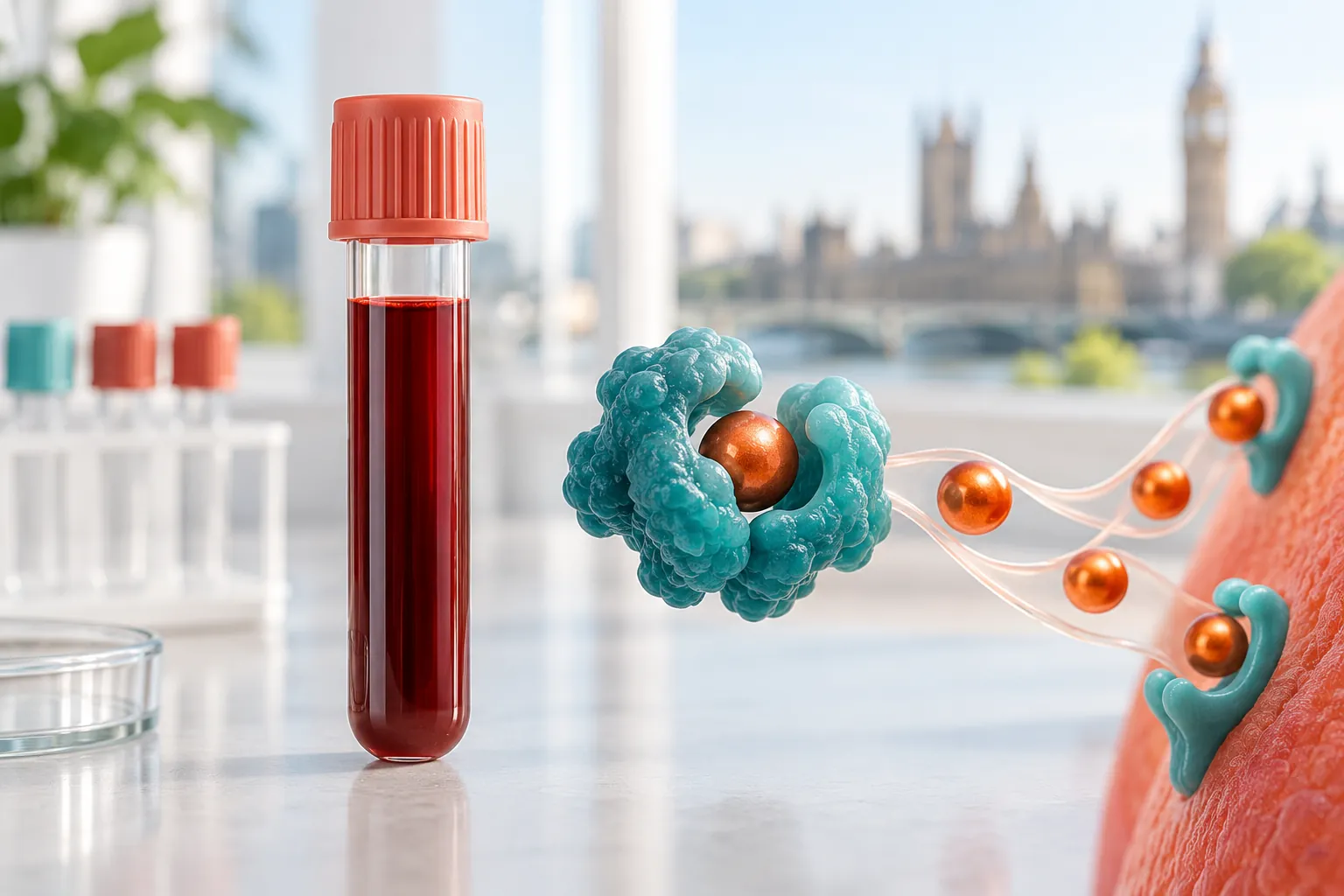
Understand a transferrin test in the UK, including TIBC, iron transport, related blood results, clinical context and why one number cannot diagnose a cause.
Read the article
Understand a vitamin B12 blood test in the UK, including total and active B12, factors that affect results, further tests and why symptoms still matter.
Read the article
Understand a magnesium blood test in the UK, including what serum magnesium measures, why related results matter and why one number needs clinical context.
Read the article
Understand thyroid function tests in the UK, including TSH, FT4 and FT3, why results form a pattern, and how illness, medicines and biotin add context.
Read the article
Understand kidney function tests in the UK, including creatinine, eGFR and urine ACR, why results need context, and what one reading cannot prove safely.
Read the article
Understand liver function tests in the UK, including ALT, ALP, bilirubin and albumin, why patterns matter, and what one abnormal result cannot prove alone.
Read the article
Understand a CRP blood test in the UK, including inflammation, reference ranges, ESR differences, clinical context and the limits of one result safely.
Read the article
Understand a ferritin blood test in the UK, including iron stores, inflammation, reference ranges, full blood count context and sensible clinical follow-up.
Read the article
Understand platelet count results in the UK, including full blood count context, low platelets, repeat testing, bleeding symptoms and sensible follow-up.
Read the article
Understand dried blood spot testing in the UK, from home sample collection and return to report access, with clear limits on what any results can mean.
Read the article
Understand vitamin D in the UK, including sunlight, supplements and blood-test context, with clear NHS guidance and sensible limits on what a result means.
Read the article
Blood test preparation in the UK starts with the instructions for that test. Learn what to ask about fasting, medicines, timing and your test results.
Read the article
Understand blood test units, reference ranges and lab results without guessing: learn why the complete result matters and what to ask your UK healthcare team.
Read the article
Understand a haemolysed blood sample, why potassium results may need review, and which blood test questions to ask your healthcare team before another sample.
Read the article
A folate blood test measures blood folate, not overall health: understand serum folate, vitamin B12 and questions to discuss with your UK healthcare team.
Read the article
A full blood count measures blood cells, not everything: understand blood test results, red blood cells and the questions to take to your UK healthcare team.
Read the article
An ESR blood test offers a clue about inflammation, not a diagnosis: understand blood results, reference ranges and why clinical context matters in the UK.
Read the article
A cortisol test needs context, not guesswork: understand cortisol levels, sample timing and UK guidance before treating one blood result as a stress score.
Read the article
Understand a false positive blood test, how screening differs from diagnosis, and which follow-up questions matter before you interpret a result or buy a test.
Read the article
Understand blood test turnaround, when the wait starts for mescreen™, how NHS results reach you and who to contact if an expected report has not yet arrived.
Read the article
Explore mitochondrial tests in the UK, separate biological research from test validation and ask clearer questions about mescreen™'s evidence and intended use.
Read the article
Learn how private blood tests fit with NHS follow-up, who explains blood test results and what to ask your UK provider before you order or share a report.
Read the article
Learn who may handle blood test data, what to ask about health data privacy and which questions to raise before choosing home blood tests from a UK provider.
Read the article
Understand UKAS accreditation for blood tests, check the laboratory's current scope and learn why one credential does not cover every test or health claim.
Read the article
A dried blood spot test uses a small capillary sample collected on a card. Learn how DBS collection, laboratory analysis and limitations differ in the UK.
Read the article
Fasting blood test instructions vary by test. Learn what fasting means, whether water is allowed, how medicines fit and what to do after eating by mistake.
Read the article
Medicines before blood test appointments need test-specific advice. Learn what to disclose, why timing matters and when to contact your UK testing service.
Read the article
Blood test timing can affect some results. Learn why time of day, rest and preparation matter, when consistency helps and what to ask your UK testing service.
Read the article
Exercise before a blood test can alter some results, especially creatine kinase. Learn what to record, why timing varies and when to ask the UK test service.
Read the article
Biotin blood test interference can affect some laboratory assays. Learn which supplements matter, what to tell the service and why instructions vary in the UK.
Read the article
Can you drink coffee before a blood test? Learn when coffee may break fasting instructions, what plain water means and what to do after an accidental cup.
Read the article
Understand a blood test reference range, why laboratories differ, what an out-of-range result can mean and when to discuss UK results with a clinician.
Read the article
Can dehydration change your blood test results? Learn which values shift with fluid balance, how to prepare safely and when UK symptoms need urgent care.
Read the article
A normal blood test doesn't rule out every cause of your symptoms. Learn what reference ranges really mean, what to ask next, and when to seek urgent UK care.
Read the article
Blood sample rejected on a home test? Learn the real reasons, what rejection actually means, and the exact steps to get a clean repeat right.
Read the article
Comparing two blood test results? A higher or lower number isn't automatically better or worse. Learn what makes UK results truly comparable, and when to ask.
Read the article
A calm UK guide to your at-home finger-prick blood test: prepare properly, follow the kit instructions exactly, avoid common sample errors and know when to stop.
Read the article
At-home health tests in the UK can create data, not decisions. Use these 12 buyer questions and a 100-point scorecard to know what is worth paying for.
Read the article
A careful UK wellness guide to stress, cortisol and mitochondrial context, with verified PubMed citations and no diagnosis or outcome claims.
Read the guide
A careful UK wellness guide to sleep debt, Monday energy and mitochondria, with verified PubMed citations and no diagnosis or outcome claims.
Read the guide
A careful UK wellness guide to time restricted eating, daily routine and mitochondria, with verified PubMed citations and no diagnosis or outcome claims.
Read the guide
A careful UK wellness guide to desk work, sitting, movement breaks and mitochondria, with verified PubMed citations and no diagnosis or outcome claims.
Read article
A careful UK wellness guide to blood sugar, everyday energy and mitochondria, with verified PubMed citations and no diagnosis, treatment or outcome claims.
Read article
A careful UK wellness guide to morning routines, sleep, movement and mitochondria, with verified PubMed citations and no diagnosis or treatment claims.
Read article
A careful UK wellness guide to vaping, cell stress and mitochondria, with verified PubMed citations and no diagnosis, treatment or outcome claims.
Read article
A careful UK wellness guide to cold exposure, thermogenesis and mitochondria, with verified PubMed citations and no health promises.
Read article
A careful UK wellness guide to oxidative stress, recovery and mitochondria, with verified PubMed citations and no health promises.
Read article
A careful UK wellness guide to NAD+, ageing biology, sirtuins and mitochondrial context, with verified study links and no health promises.
Read article
A careful UK wellness guide to Zone 2 training, exercise, skeletal muscle mitochondria and energy, with verified study links and no health promises.
Read article
A careful UK wellness guide to CoQ10, supplements, mitochondrial energy context and sensible evidence boundaries, with verified study links and no health promises.
Read article
A careful UK wellness guide to late nights, meal timing, sleep, cellular energy and mitochondria, with verified study context and conservative language.
Read article
A careful UK wellness guide to alcohol, recovery, sleep, cellular energy and mitochondria, with conservative language and verified study context.
Read article
A careful UK wellness guide to creatine, cellular energy, mitochondria, phosphocreatine and safe context, with no personal supplement claims.
Read article
A careful UK wellness guide to midlife energy, muscle, sleep, activity and mitochondrial context, with clear safety boundaries and no diagnostic claims.
Read article
A careful UK wellness guide to rest days, training load, sleep, perceived energy and mitochondrial recovery, with clear NHS boundaries and no diagnostic claims.
Read article
A careful UK wellness guide to vitamin D, daylight, sleep timing and mitochondrial energy context, with clear NHS boundaries and no diagnostic claims.
Read article
A UK wellness guide to summer light, temperature, sleep patterns and perceived energy, with safe boundaries and practical tracking tips.
Read article
A UK summer wellness guide to heat, hydration, training recovery and cellular energy patterns, with safe boundaries and practical tracking tips.
Read article
A practical UK guide to protein, muscle maintenance and mitochondrial recovery for training, weight change and midlife energy decisions.
Read article
A practical UK guide to eGFR, kidney filtration, creatinine context, urine ACR, trends and where mescreen™ fits after clinical kidney checks.
Read article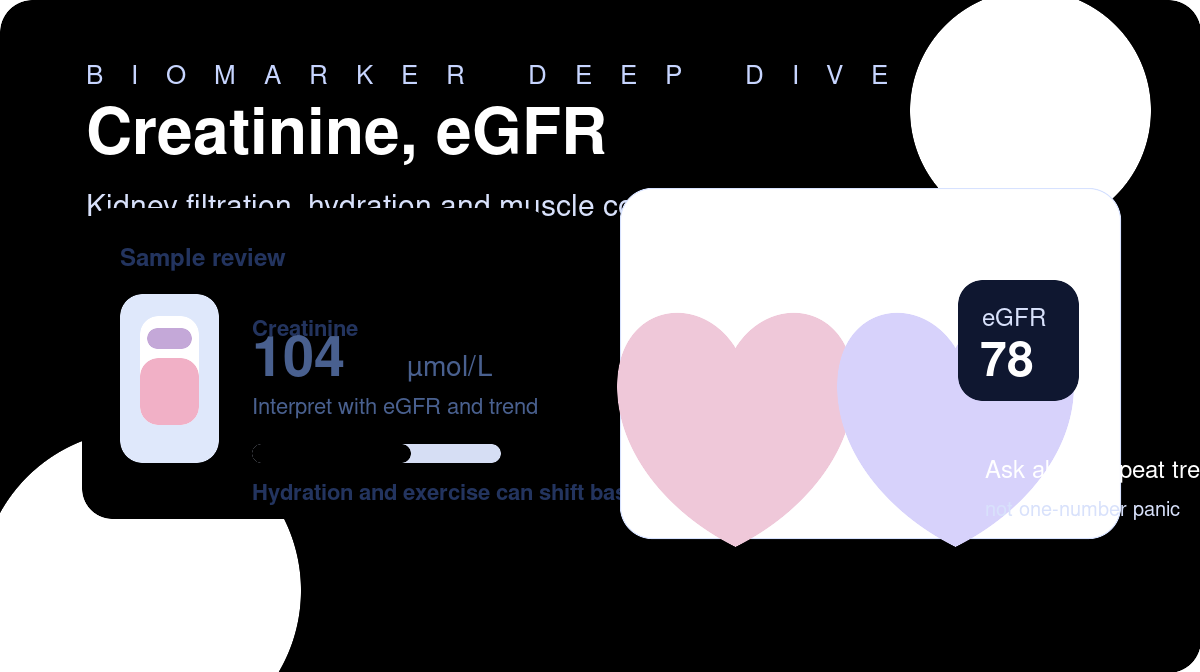
A practical UK guide to creatinine, what a raised result can suggest about kidney filtration, hydration and muscle mass, and where mitochondrial testing fits.
Read article
A practical UK guide to ApoB, what the test says about cholesterol particle count, and where mitochondrial testing fits.
Read article
A practical UK guide to ALT, what a raised alanine transaminase result can suggest about liver stress, and where mitochondrial testing fits.
Read article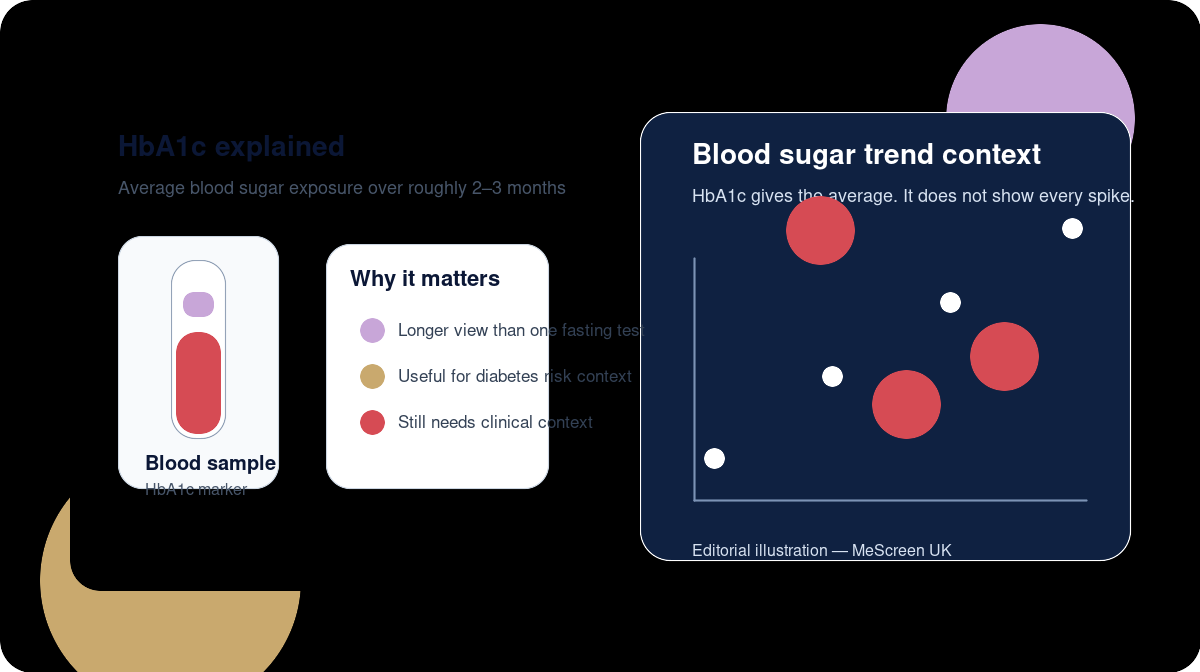
A practical UK guide to HbA1c, what the test can and cannot tell you about blood sugar, and where mitochondrial testing fits.
Read article
A practical UK guide to GGT, what raised gamma-GT can suggest about liver stress, alcohol load, and where mitochondrial testing fits.
Read article
A practical UK guide to fasting glucose, what a high result can suggest about metabolic health, and where mitochondrial testing fits.
Read article
A practical UK guide to the triglyceride-HDL ratio, what it can suggest about metabolic health and where mitochondrial testing fits.
Read article
A practical UK guide to thyroid blood tests, what TSH and free T4 can explain about fatigue, and where mitochondrial testing fits.
Read article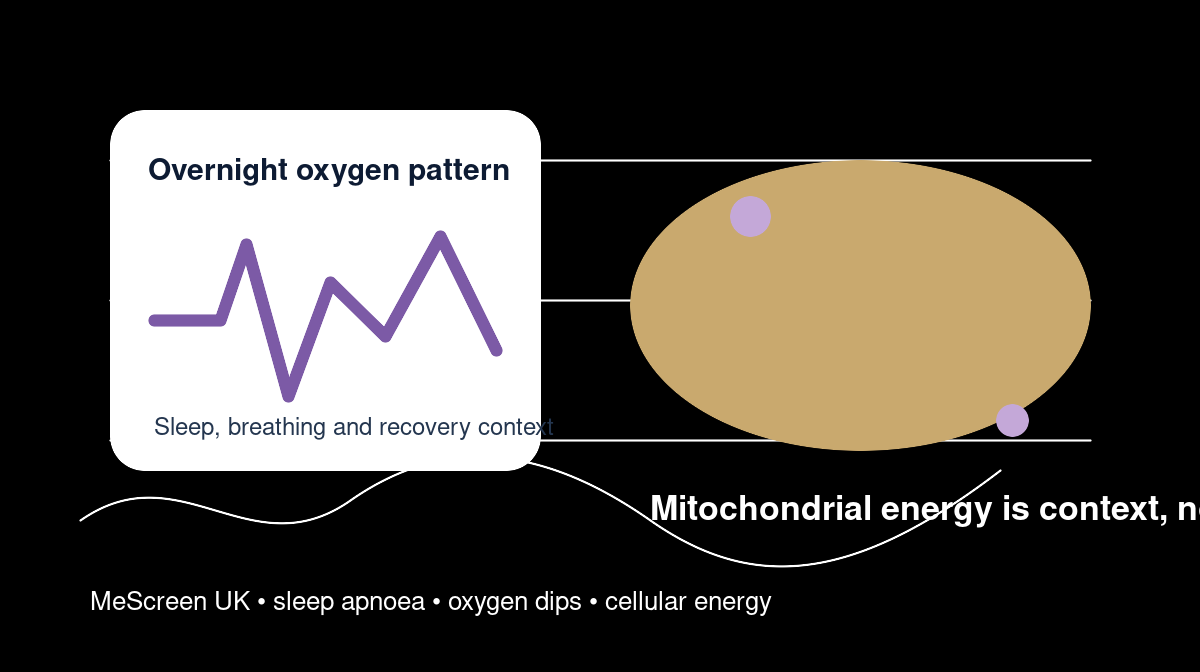
A practical UK guide to sleep apnoea, oxygen dips, tiredness and where mitochondrial wellness data can fit alongside NHS-style care.
Read article
A practical UK guide to insulin resistance, mitochondrial health, HbA1c, energy and where at-home mitochondrial function testing can fit.
Read article
A practical UK guide to choosing, timing and repeating biomarkers so your baseline leads to clearer preventative health decisions.
Read article
A practical UK guide to choosing private preventative tests: NHS basics first, then useful biomarkers, red flags and retesting cadence.
Read article
A practical UK guide to morning light, sleep timing and mitochondrial recovery: what daylight can and cannot fix, plus when biomarker testing adds context.
Read article
A practical UK guide to shift work, sleep debt and mitochondrial recovery: what to change, what to monitor and when biomarker testing adds context.
Read article
A practical UK guide to jet lag, sleep, travel recovery and cellular energy: light timing, caffeine, hydration, training and when biomarkers add context.
Read article
A practical UK guide to caffeine, sleep, recovery and cellular energy: timing, tolerance, warning signs and when biomarker testing adds useful context.
Read article
A practical UK guide to alcohol, mitochondrial health, sleep, recovery and biomarkers: what drinking can affect, what testing can show, and when to cut back.
Read article
A practical UK guide to perimenopause fatigue, mitochondrial health and biomarkers: what hormones can explain, what they cannot, and when testing adds useful context.
Read article
A practical UK guide to VO2 max, mitochondrial health and recovery: what aerobic fitness data suggests, what it cannot diagnose, and when biomarker testing adds context.
Read article
A practical UK guide to resting heart rate and HRV: what recovery metrics can suggest, what they cannot diagnose, and when biomarker testing adds useful context.
Read article
A practical UK guide to how often to retest biomarkers, when quick follow-up matters, and when repeat testing creates noise.
Read article
A practical UK guide to turning mescreen™ and biomarker results into sensible next steps: clinician review, priorities, retesting windows, habits and escalation signs.
Read article
A practical UK guide to omega-3 index testing, oily fish intake, heart-health context, inflammation signalling and how omega-3 status fits into cellular-health screening.
Read article
A practical UK guide to zinc testing, symptoms, diet patterns, absorption context, and how zinc fits into immunity, wound healing and cellular-health screening.
Read article
A practical UK guide to magnesium testing, symptoms, medicines, diet and how results fit into energy and preventative health screening.
Read article
A practical UK guide to vitamin B12 deficiency testing, symptoms, diet, NHS context, and how to read B12 alongside wider energy and cellular-health markers.
Read article
A practical UK guide to vitamin D deficiency, testing, NHS advice, supplements, and how to interpret low vitamin D alongside energy and wider health markers.
Read article
A practical UK guide to LDL cholesterol, high LDL results, ApoB, non-HDL cholesterol, and what to do next without overreacting.
Read article
A practical UK guide to hs-CRP results, low-grade inflammation, heart-risk context, and how to interpret one raised result sensibly.
Read article
UK guide to HDL cholesterol, what low or high levels can suggest, and how to interpret HDL with triglycerides, ApoB and wider risk.
Read article
A practical UK guide to triglycerides: what they are, why they rise, when they matter for cardiovascular and metabolic risk, and what to do before panicking.
Read article
UK guide to ferritin, what low or high results can suggest, and how to interpret iron stores with blood count and inflammation context.
Read article
UK guide to fasting insulin, why it can rise before glucose or HbA1c changes, and how to interpret a high result in context.
Read article
A practical UK guide to blood test prep: when to fast, what to drink, when to pause hard exercise, and why supplements like biotin can affect results.
Read article
A practical UK guide to whether a £599 private preventative testing package is worth it, who it suits, and where it sits beside NHS care.
Read article
A practical UK explainer on what mitochondria are, how they make ATP, why they matter for fatigue and ageing, and what usually helps them work better.
Read article
A practical guide to urolithin A and mitophagy, including what it is, why mitochondrial quality control matters, and what current human evidence actually supports.
Read article
A practical guide to urinary organic acids testing in the UK, including what OAT markers can suggest about mitochondrial function, metabolism, and limitations.
Read article
Learn how chronic stress can impair mitochondrial function, energy production, and recovery, plus which biomarkers may help guide useful next steps.
Read article
Learn how sleep quality shapes mitochondrial recovery, energy production, and resilience, plus which signals may suggest recovery is falling behind.
Read article
A practical guide to red light therapy and mitochondria, including photobiomodulation, cytochrome c oxidase, ATP, and what evidence is credible.
Read article
What PQQ does, where the biogenesis claim comes from, and what the evidence supports for UK readers considering supplementation.
Read article
A practical guide to oxidative stress, how it damages mitochondria, and what it means for fatigue, ageing, and recovery.
Read article
Learn how overtraining can impair mitochondrial recovery, energy production, and resilience, plus which warning signs may suggest recovery debt is building.
Read article
NAD+, NMN, NR and the mitochondrial connection — where the science stands in 2026 and what still needs caution.
Read article
A UK evidence-led review of mitochondrial supplements: which have real data, which are marketing, and how to think about stacking them sensibly.
Read article
A practical guide to mitochondrial dysfunction in Long COVID, including fatigue, post-exertional crashes, brain fog, and why cellular energy remains part of the discussion.
Read article
A practical guide to mitochondrial DNA vs nuclear DNA, maternal inheritance, and what the difference means for energy, ageing, and heritable risk.
Read article
A practical guide to mitochondrial biogenesis, how exercise and recovery stimulate it, and why it matters for energy, endurance, and healthy ageing.
Read article
A practical guide to mitochondrial age vs chronological age, including biological ageing, energy decline, resilience, and what testing can and cannot tell you.
Read article
A practical guide to mitochondria and muscle weakness, including exercise intolerance, early muscular fatigue, and poor recovery.
Read article
A practical guide to mitochondria and chronic fatigue, what the energy link may mean, where ME/CFS fits, and why better testing beats vague wellness guesses.
Read article
A practical guide to mitochondria and ageing, including healthspan, recovery, oxidative stress, and why mitochondrial decline matters over time.
Read article
A practical guide to the lactate pyruvate ratio, what it can suggest about energy metabolism, and why it is useful only in context.
Read article
Learn how to track mitochondrial health at home using symptoms, biomarkers, and functional testing, with a practical UK-focused guide to useful next steps.
Read article
Homocysteine explained for UK readers, what high levels may signal, and when private testing adds useful cardiovascular risk context.
Read article
Sauna, heat stress and mitochondrial biogenesis — what the Finnish cohort data shows, and how to use heat therapy sensibly.
Read article
Compare Harley Street longevity clinics with at-home biomarker testing, costs, convenience, and what mescreen™ offers for UK screening decisions.
Read article
Intermittent fasting, autophagy and mitochondrial quality control — what the evidence supports and where the hype outpaces the data.
Read article
A practical guide to exercise for mitochondrial health, including aerobic work, intervals, strength training, and the recovery needed to benefit from them.
Read article
A practical guide to the electron transport chain, how it drives ATP production, and why it matters for mitochondrial health and fatigue.
Read article
A practical UK dietary framework for mitochondrial health — what to add, what to reduce, and why consistency beats perfection.
Read article
Why creatine shows up in cellular-energy conversations, where the strongest evidence sits, and how it connects to mitochondrial function.
Read article
What CoQ10 actually does inside the electron transport chain, where the evidence on supplementation is strongest, and who may genuinely benefit.
Read article
A practical guide to cold exposure and mitochondria, including thermogenesis, adaptation, recovery tradeoffs, and where cold therapy is actually useful.
Read article
How blood sugar stability affects mitochondrial efficiency, and why glucose volatility is a cellular-energy story in its own right.
Read article
A practical UK guide to ATP, how cells make usable energy, and why mitochondrial function matters for fatigue, exercise and recovery.
Read article
UK guide to ApoB vs LDL, what each marker measures, why they disagree, and which gives better preventative cardiovascular-risk context.
Read article
A practical UK guide to the biomarkers that matter most for longevity, including ApoB, HbA1c, hs-CRP, Lp(a), and why trend matters more than theatrics.
Read article
A practical guide to the biomarkers that can help explain poor energy, recovery, and metabolic resilience without pretending one blood test explains everything.
Read article
Learn when fatigue, brain fog, and recovery issues may justify mitochondrial testing, and which biomarkers can help guide a clearer next step in the UK.
Read article
A practical guide to what mitochondrial test results mean, how to read them sensibly, and how to avoid overreacting to a single biomarker pattern.
Read article
A practical UK comparison of the NHS Health Check and private preventative screening, including where each is useful and where expectations go wrong.
Read article
A practical UK guide to reading a biomarker dashboard sensibly, prioritising what matters first, and avoiding panic over isolated outliers.
Read article
A practical UK guide to how at-home mitochondrial testing works, from ordering and sample collection to reporting and what happens next.
Read article
A practical guide to how exercise stimulates mitochondrial biogenesis, which types of training help most, and where recovery fits in.
Read article
How diet patterns shape mitochondrial function — the macronutrient mix, meal timing, and nutrient density that actually move the needle.
Read article
A practical UK guide to whether a blood test can predict longevity, what biomarkers can and cannot tell you, and why trend matters more than prophecy.
Read article
A practical UK guide to biological age tests versus blood biomarkers, and why biomarker-led longevity testing is often more useful than one dramatic age score.
Read article
A practical UK guide to the biomarkers most often worth including in a preventative-health baseline, and how to use them sensibly.
Read article
A practical UK comparison of at-home health screening and clinic screening, including convenience, depth, cost, and when each model is the better fit.
Read article
A practical UK guide to what cellular health tests measure, from mitochondrial function and inflammation to glucose control, lipids, and resilience.
Read article
A practical UK guide to preventative blood tests the NHS does not usually offer, and where private testing can fill the gap.
Read article
A practical UK guide to Lp(a), what it measures, why it matters for inherited cardiovascular risk, and when private testing adds useful context.
Read article
A practical UK guide to HbA1c, what the marker measures, where NHS thresholds sit, and when a private biomarker view can add useful context.
Read article
A practical UK guide to ApoB, what it measures, why it can refine cardiovascular risk, and when private testing may add context beyond routine care.
Read article
A practical UK round-up of recent longevity science, from ApoB and inflammation to exercise, glucose control and mitochondrial ageing.
Read article
Understand what a mitochondrial function test is, what it can reveal about energy, recovery, and metabolic strain, and when advanced testing makes sense.
Read article
A practical guide to mitochondria and brain fog, why mental clarity depends on cellular energy, and what to check before blaming yourself for poor focus.
Read article
A practical guide to mitochondria and fertility, including egg quality, sperm motility, metabolic health, and why reproductive function is also an energy story.
Read article
Learn the common symptoms of mitochondrial dysfunction, what they can suggest about energy production, and which biomarkers may help guide next steps.
Read article
Looking for longevity testing in the UK? This guide covers preventive screening, useful biomarkers, advanced testing options, and where mescreen™ fits.
Read article
Learn 12 evidence-based ways to improve mitochondrial function, from exercise and sleep to glucose control, nutrition, and advanced testing.
Read article
A sober UK guide to private health optimisation, biomarkers, recovery and mitochondrial testing without hype or intervention-first thinking.
Read article
A practical UK guide to at-home health tests, what offers real value, what needs caution, and where mitochondrial testing fits.
Read article