
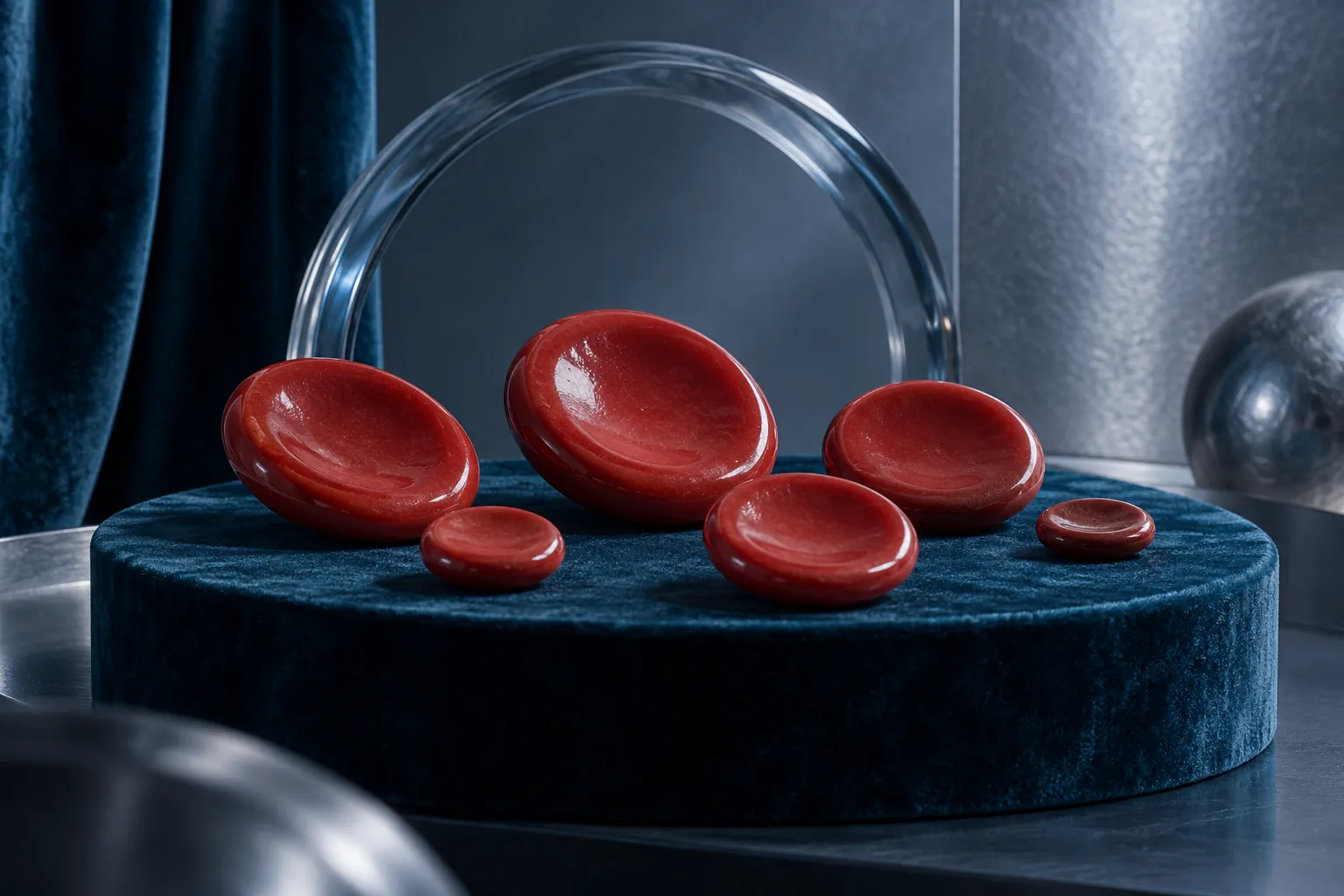
TL;DR: An RDW blood test measures variation in red blood cell size and volume, not the cause of a health problem on its own, as MedlinePlus explains.
Key takeaways
- RDW means red cell distribution width: it describes how much red blood cells differ in size and volume, according to MedlinePlus.
- RDW is often reported within a wider blood count, rather than used as a stand-alone answer; see the MedlinePlus test guide.
- An RDW result within the reference range does not rule out anaemia or another medical condition, as the results guidance explains.
- Reference ranges can vary between laboratories, so the report's own range matters, according to MedlinePlus.
What does an RDW blood test measure?
RDW measures variation in the size and volume of red blood cells. It is not simply another way of counting how many red cells are present. The MedlinePlus explanation makes that distinction by describing RDW as a measure of variation.
For comparison, the NHS describes a full blood count as measuring the number of blood cells to help check for blood conditions such as iron deficiency anaemia. The measurements in a blood count do different jobs, even when they arrive on the same report.

That is the useful starting point: ask what a particular item measures before asking what a flag beside it might mean. A report contains several pieces of information. They have not all been hired to answer the same question.
Is RDW part of a full blood count?
RDW is often included in a wider blood count. The US MedlinePlus guide calls this a complete blood count, or CBC; UK readers will commonly encounter the term full blood count, or FBC, used in the NHS blood-test guide.
MedlinePlus says clinicians commonly use RDW to help investigate anaemia and consider it alongside other blood tests. That is a clinical use of the measurement, not a reason to treat an isolated result as a diagnosis. See its test purpose and results sections.
Our editorial view is that a useful explanation should preserve that wider picture. A single highlighted row may attract attention, but attention is not the same thing as an explanation.
What does a high RDW mean?
A high RDW means there is more variation in red blood cell size than the laboratory's reference range describes. It does not name the cause by itself. MedlinePlus explains both the increased variation and the need to consider combined test results.
There is a difference between describing a measurement and interpreting a person's health. This article can explain the former; it cannot do the latter. A clinician reviewing the wider results can decide what the finding means in that person's situation.

That is also why this guide does not turn a list of conditions associated with high RDW into a self-diagnosis menu. Clinical interpretation uses multiple results. Reducing that to a dramatic list would remove the most useful part of the explanation.
Can a normal RDW rule out anaemia?
No. A normal RDW does not rule out anaemia or another medical condition. MedlinePlus states this explicitly, noting that red cells may still be larger or smaller than usual even when RDW is within the reference range.
The distinction is between variation in size and size itself. Cells can be similar to each other without that fact settling the rest of the blood count. The report has not suddenly become a clean bill of health because one line sits inside its range.
That limit deserves clear wording, not a tiny disclaimer after an overconfident promise.
Which reference range should you use?
Use the reference range accompanying the laboratory report when discussing the result with your healthcare professional. MedlinePlus notes that RDW ranges may differ depending on the laboratory.
For that reason, this article does not offer a universal numerical cut-off or interpret a reader's value. Bring the complete report, including its units and range, to the conversation rather than copying a detached number into a search box.

A search result can explain a term. It cannot borrow the rest of your clinical context by looking sufficiently confident.
Where does mescreen™ fit?
mescreen™ is a different type of assessment, not a substitute for a clinician-led blood-count investigation. Its current UK product page describes a wellness and functional laboratory assessment for informational and educational purposes and says that it is not diagnostic.
The same page says the assessment does not replace clinician-led investigation. Nothing in this article establishes that mescreen™ measures RDW, identifies the cause of anaemia or changes health outcomes. The product's scope and the clinical uses of RDW should remain separate.
For another blood-count term, our reticulocyte count explainer discusses a different question about red cells. It is background reading, not an interpretation of your report.
Limitations
This article explains terminology and the limits of an isolated RDW result. It cannot diagnose anaemia, determine a cause, select further tests or recommend treatment. The main RDW source is US public-health information from MedlinePlus; the NHS source provides UK blood-test and care-process context. Neither source turns this article into individual medical advice.
What is a sensible next step?
Ask the healthcare professional who arranged the blood test how RDW fits with the rest of the results. The NHS blood-test guide advises asking to talk to a healthcare professional if you do not understand your results or have questions.

If you are considering mescreen™, read the current UK product information for its stated scope. Keep questions about blood-count results with the clinician responsible for that investigation.