
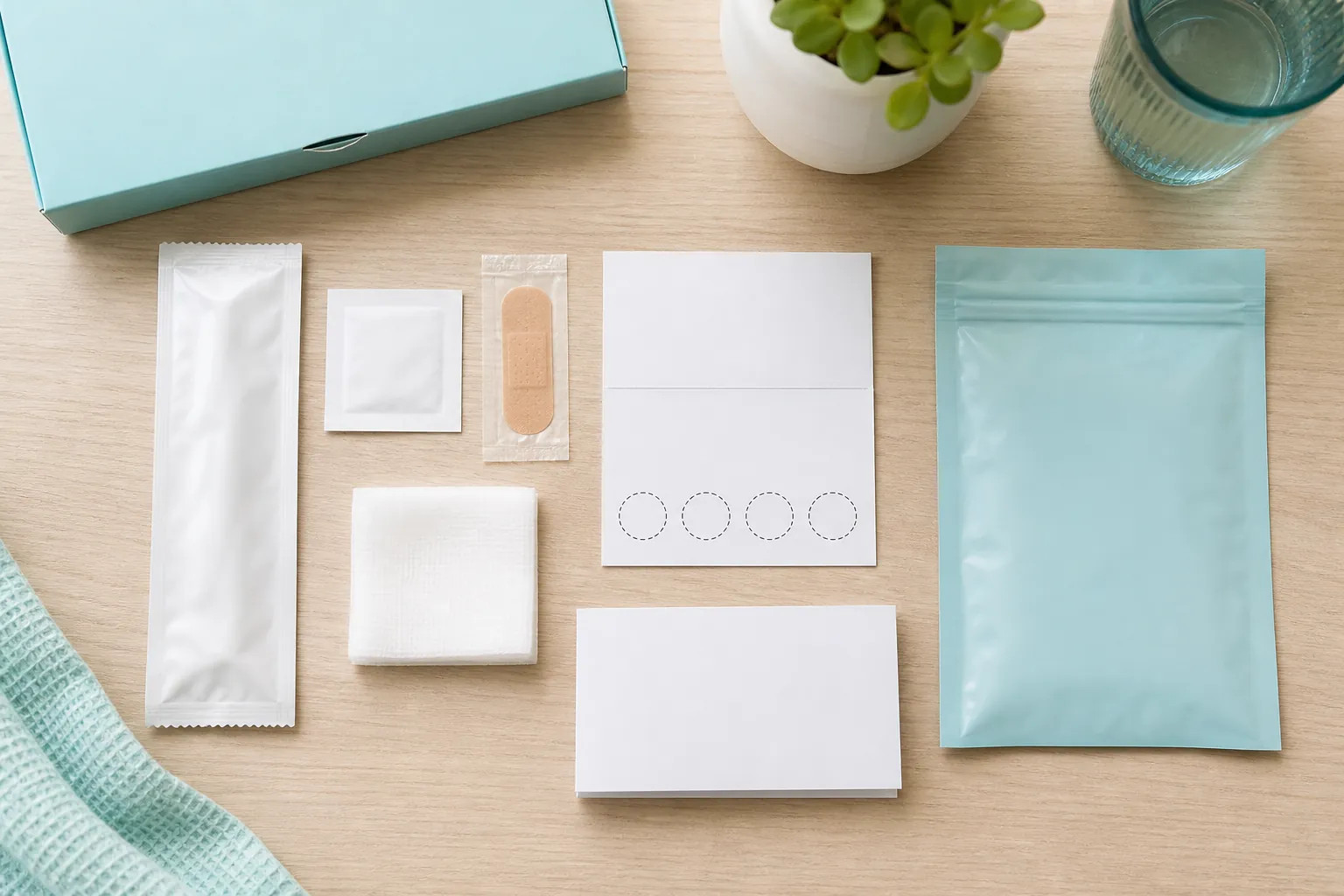
A successful home finger-prick sample is won before the lancet is ever opened. Get the preparation right and the rest is calm and quick; skip it and you risk a card the lab cannot use. Here is how to do it properly, once.
You need the correct kit, enough uninterrupted time, clean warm hands, a prepared return route and, most importantly, the exact instructions supplied for that specific test.
Dried blood spot (DBS) collection looks simple, but published laboratory literature identifies important pre-analytical variables including spot volume, haematocrit, contamination, drying, humidity, storage and transport. That does not mean home collection is unreliable as a category. It means results depend on the specific analyte, method and workflow, and the collector should not improvise.
Golden rule: the kit's current instructions override generic internet advice. If your provider tells you to fast, collect at a certain time, fill a particular number of circles or use a different sequence, follow that instruction or ask the provider before collecting.
This article is educational, not medical advice. It does not validate any assay or show that capillary and venous results are interchangeable. Do not use home wellness testing to investigate urgent symptoms or to change treatment.
TL;DR: A good home finger-prick (dried blood spot) sample comes from preparation, warm clean hands and following your kit's exact instructions rather than generic advice, and from stopping if anything goes wrong.
Key Takeaways
- The kit's current instructions always override generic internet advice: if your provider says to fast, collect at a set time or fill a certain number of circles, follow that or ask before you collect.
- Postpone and contact the provider if the kit is damaged, expired, incomplete or does not match your order, and ask for individual advice first if you have a bleeding disorder, poor circulation, reduced sensation, or a history of fainting during blood collection.
- Never touch the card's collection area, never let water or hand products reach the spot, and never assume two partial spots equal one valid spot; poor-quality samples can be rejected by the laboratory.
- Drying is an active stage: follow the kit's stated time and never use a hairdryer, radiator or oven unless the validated kit explicitly instructs it.
- This is wellness and functional laboratory assessment, not a diagnostic test; do not use it to investigate urgent symptoms or change treatment, and use NHS 111 for urgent advice and 999 for emergencies.
Is self-collection appropriate for you today?
Postpone and contact the provider if the kit is damaged, expired, incomplete or does not match your order. Ask for individual advice before collection if you:
- are unsure you can safely use a lancet;
- have a bleeding disorder or take medicine that affects bleeding;
- have poor circulation, reduced sensation, damaged skin or infection at the intended site;
- have previously fainted or become unwell during blood collection;
- cannot understand or physically complete the instructions; or
- are collecting for a child or another person without a procedure explicitly designed and consented for them.
These points are precautions, not a diagnosis. The provider or an appropriate clinician should decide what is suitable for the individual. mescreen™'s how-it-works page likewise says to ask a clinician before ordering if you are unsure whether finger-prick collection is appropriate.
If you have new, severe or worsening symptoms, seek appropriate NHS care rather than waiting for a private wellness result. Use NHS 111 for urgent advice and 999 for a life-threatening emergency.
What is a dried blood spot sample, and what is it not?
A finger puncture produces capillary blood that is applied to an absorbent collection card and dried, and the laboratory later removes a defined portion for analysis. DBS can offer practical collection and shipping advantages, but the paper, spot geometry, blood volume, haematocrit and extraction method can influence measurement.
A peer-reviewed review in International Journal of Neonatal Screening explains that DBS workflows have pre-analytical, analytical and post-analytical variables. A 2017 specimen-quality study found that poor-quality DBS samples can lead laboratories to reject specimens and that incomplete spots should not simply be combined as though they were one adequate sample. Those studies were conducted in specific clinical and testing contexts, not on mescreen™ customers; they support collection discipline, not a claim about mescreen™'s rejection rate or clinical performance.
How do you prepare in the 24 hours before?
Start with the four steps below the day before you collect, not on the morning itself.
1. Read the entire instruction set
Do this before the collection day. Check:
- required fasting or non-fasting state;
- allowed time of day;
- food, alcohol, exercise, supplement or medication instructions;
- number and fill requirement for spots;
- drying time and method;
- labelling and activation steps;
- packaging and posting deadline; and
- what to do if collection fails.
Never stop prescribed medicine to prepare for a private test unless the prescribing clinician tells you to. Generic preparation advice can be wrong for a specific biomarker or person.
2. Check the kit and deadline
Confirm identity details, expiry, lancets, card, wipes or gauze, plaster, protective components and return packaging. Do not touch the card's collection area. Check the last safe posting day, weekend or holiday constraints and any activation requirement.
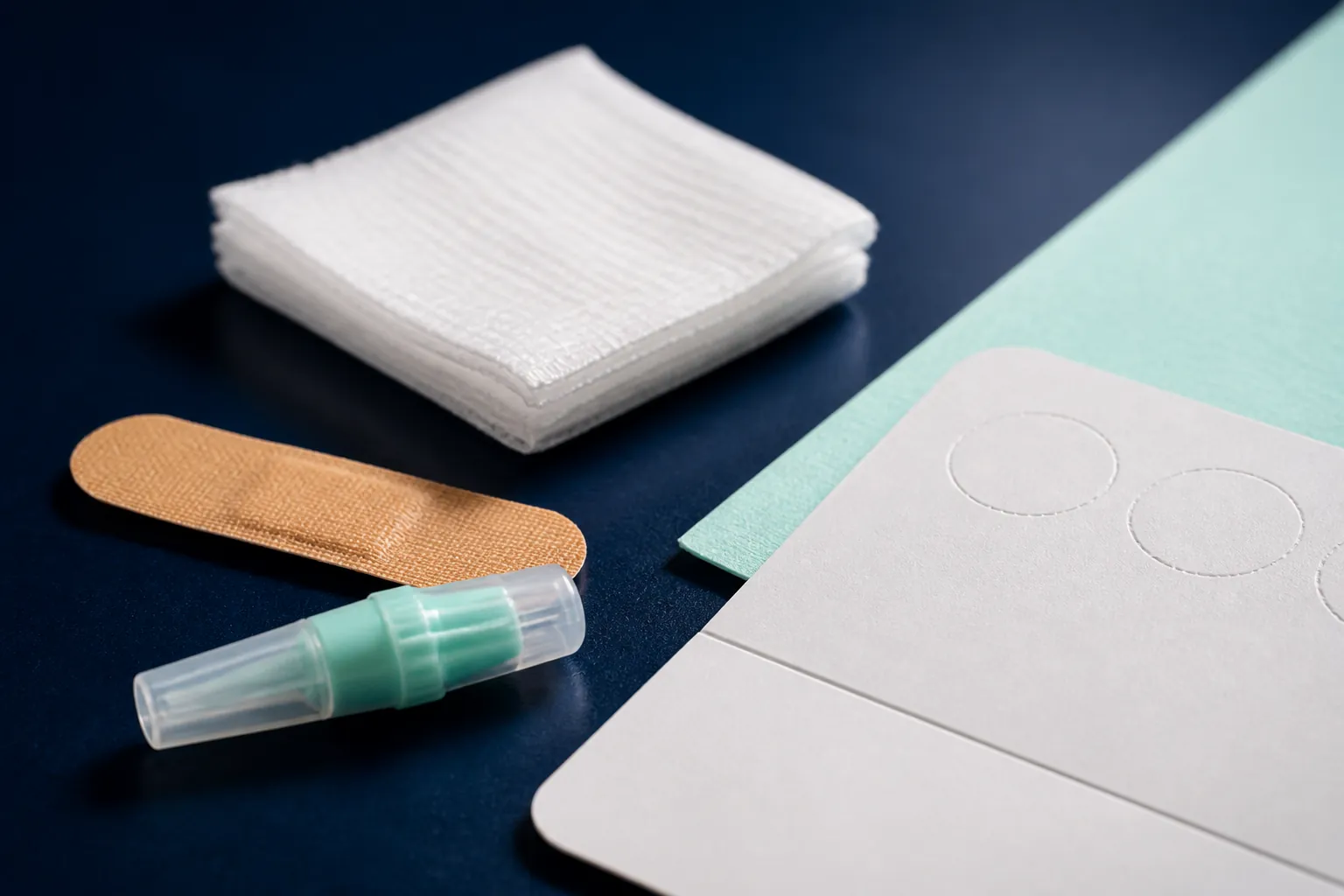
mescreen™ provides a dedicated blood card collection guide and describes international shipment to a partner laboratory. Follow the live instructions packaged with your kit and confirm return logistics before puncture.
3. Choose a calm window
Allow more time than the advertised puncture itself. Rushing encourages missed steps, wet packaging and incomplete labelling. Collect at a clean, stable surface with good lighting, a chair and access to handwashing. Keep children, pets, food and drinks away.
4. Deal with uncertainties before opening anything
If two instruction pages conflict, do not choose the easier one. Contact the provider and record the answer. If fasting, acute illness, intense exercise or another condition could affect the requested measurement, ask whether to proceed.
How should you set up the collection area?
Arrange the unopened equipment in the instructed order. Have a clock or timer available, but do not place your phone where it can contaminate clean components. Keep the return envelope and labels nearby without exposing adhesive or absorbent areas prematurely.
Use a sharps container or the kit's specified disposal route for used lancets. A single-use lancet must not be reused or shared. Follow local and provider disposal instructions; do not leave it loose in household waste.
How do you warm your hands for better blood flow?
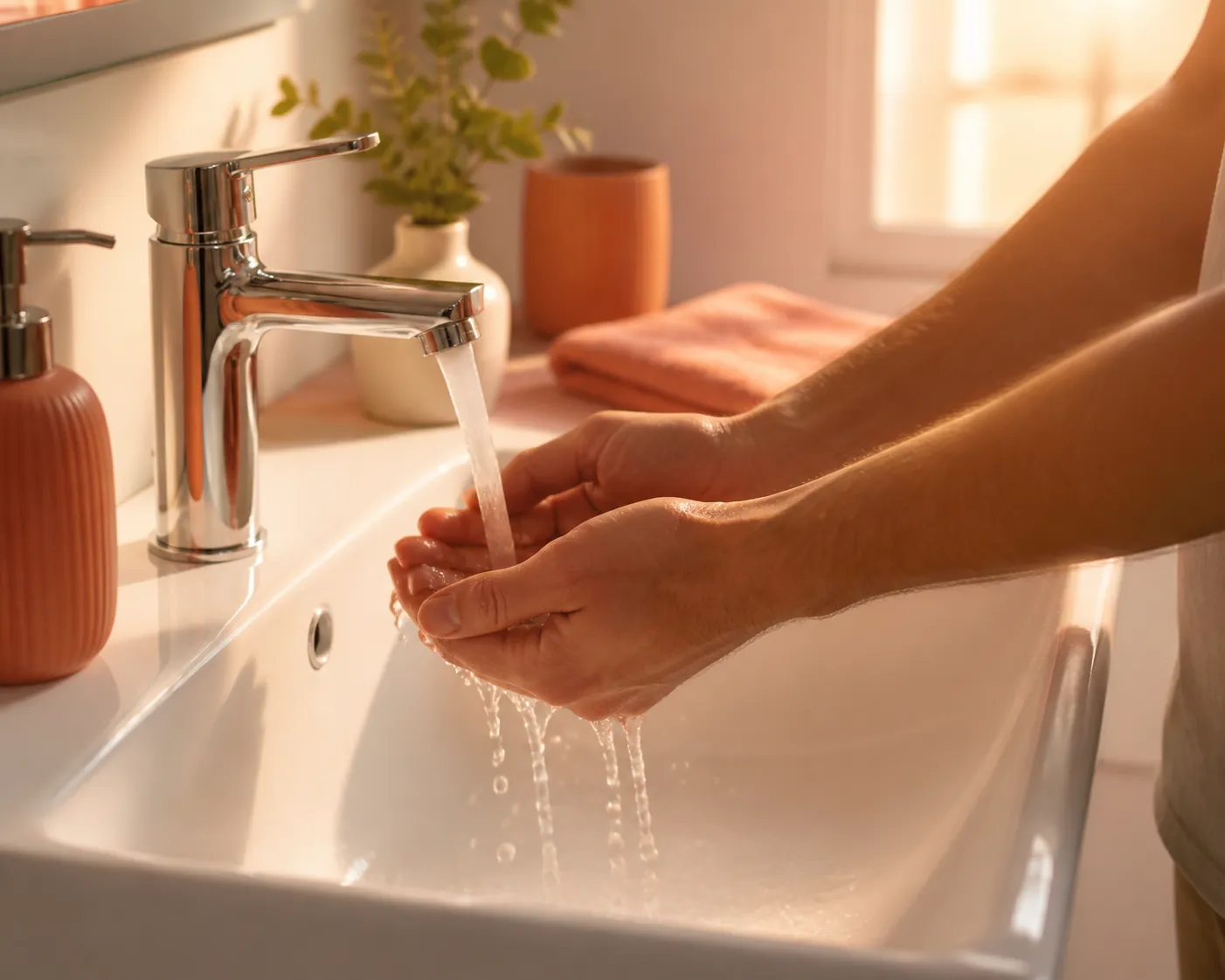
Provider guides commonly recommend warming the hands and keeping the puncture hand below heart level, and mescreen™'s guide tells users to prepare for good blood flow. Use comfortably warm, not hot, water if the kit instructs this, dry thoroughly, and avoid heat that could burn skin.
Gentle movement may help circulation, but vigorous exercise can alter some biomarkers. Do not add an exercise routine unless the test instructions permit it. The safe principle is modest warming and exact adherence, not "do whatever makes more blood".
What is the correct collection sequence?
The exact puncture site, cleaning method and spot technique must come from the kit. A typical sequence is preparation, hand cleaning, complete drying, puncture with a sterile single-use lancet, formation of a drop, application to the card, haemostasis and card drying, but details differ.
Key error controls supported by DBS literature include:
- do not touch the collection area with fingers;
- do not allow household substances, water or hand products to contact the spot;
- do not layer repeated tiny applications unless the provider explicitly permits it;
- do not scrape or press the finger against the paper;
- do not apply blood to both sides unless instructed;
- do not use a wet cleaning site; and
- do not guess that two partial spots equal one valid spot.
Excessive squeezing may mix tissue fluid with the sample and can damage the site. Use only the technique shown by the provider. If blood flow is insufficient, follow the kit's failure instructions rather than repeatedly puncturing or changing method on your own.
When should you stop?
Stop collection, apply pressure and seek appropriate advice if bleeding does not settle as expected, you feel faint or unwell, pain is severe, or the site causes concern. If the required sample cannot be collected within the kit's allowed attempts, contact the provider for a replacement or alternative.
Do not mail a sample you know violates the instructions merely to avoid wasting the kit. A recollection is inconvenient; an uninterpretable or misleading result is worse. Ask whether the laboratory will accept the card and disclose exactly what happened.
How do you dry the sample properly?
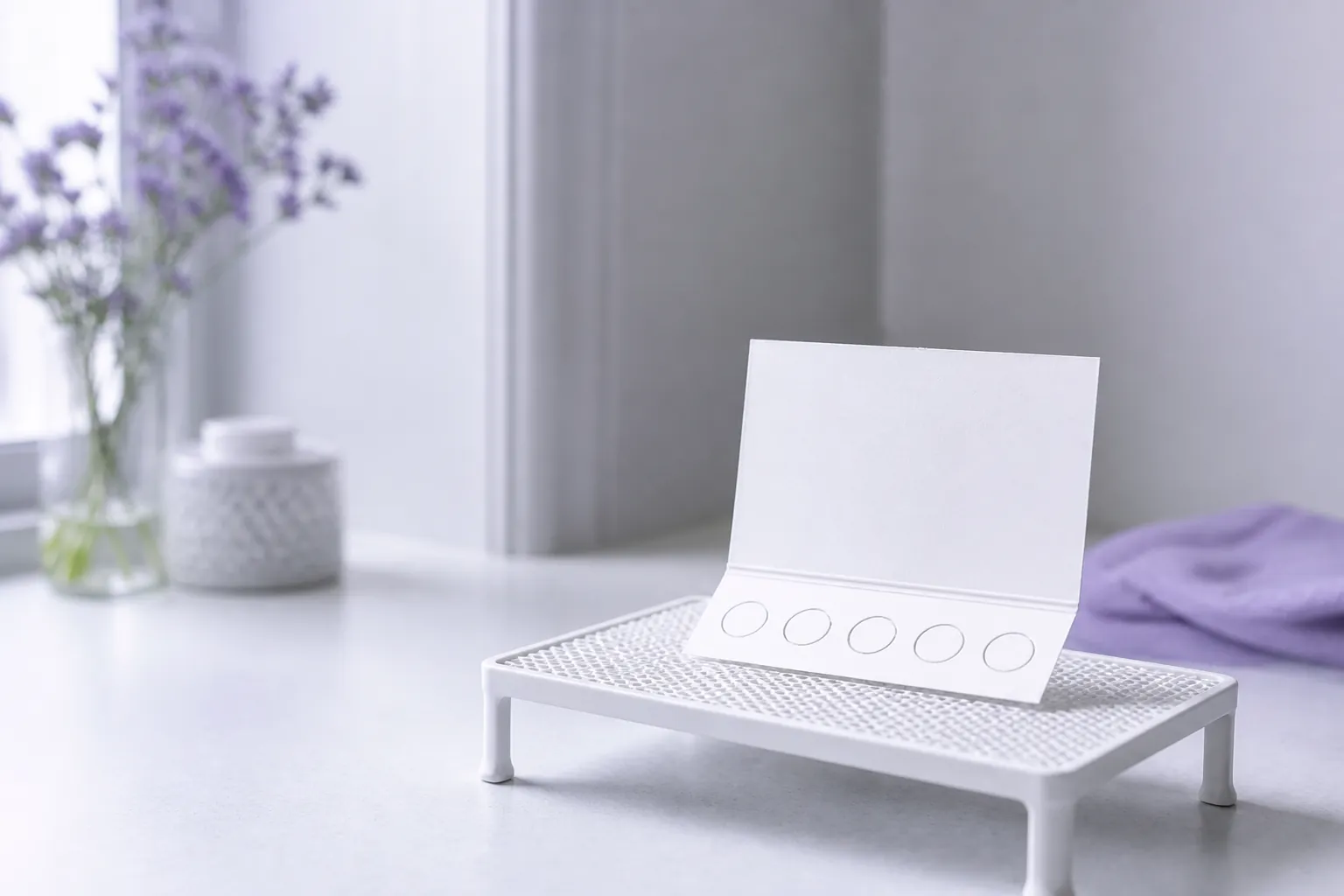
Drying is an active stage, not dead time, so follow the kit's stated duration and position. In general DBS practice, cards should dry without the wet spots touching surfaces or each other and should be protected from contamination, direct heat, food, liquids and handling. Never use a hairdryer, radiator or oven unless a validated kit explicitly instructs it, which standard home guidance should not.
Do not close the card or place it into plastic while still wet unless the specific instructions explicitly require a validated alternative. Humidity and incomplete drying can affect sample quality. Use the supplied desiccant or protective pouch exactly as directed and do not substitute household materials.
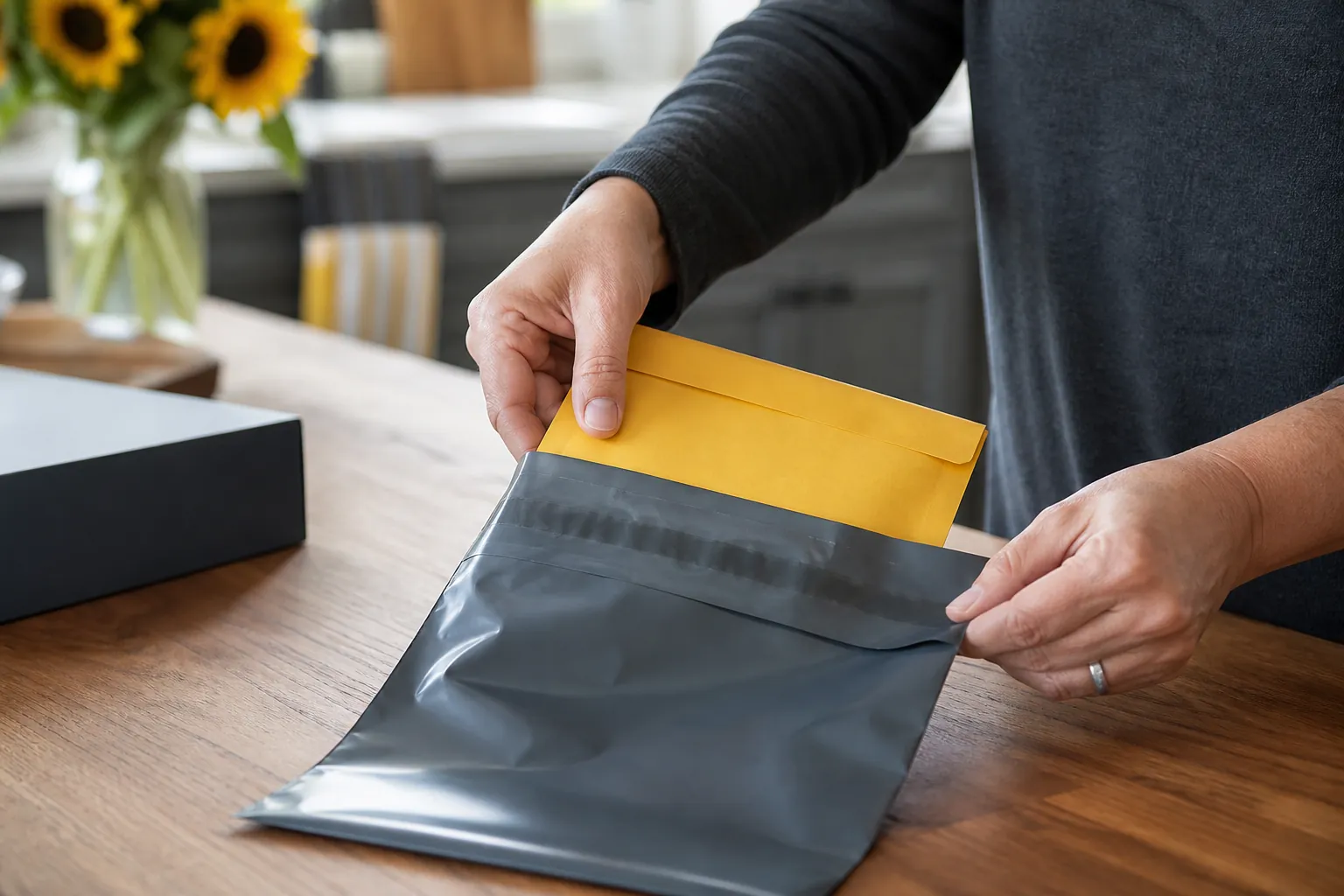
How do you package and post the card?
After the stated drying period:
- verify that required identifiers and activation steps are complete;
- avoid touching the spots;
- close the card as directed;
- add only the supplied protective and desiccant components;
- place it in the correct return packaging;
- record the collection and dispatch time if requested; and
- use the specified postal or courier route within the allowed window.
Transport stability is assay-specific. A statement that DBS is generally stable does not prove that every measured output tolerates every temperature or delay. Ask the provider what happens after a missed collection, delayed dispatch or disrupted shipment.
Should you photograph the card?
Only photograph or transmit the card when the provider requests it through an approved channel, because health and identity data may be visible. A photograph can help a support team assess spot appearance, but do not post it to social media or send it through an unapproved messaging account. Never assume an image can establish laboratory adequacy; final acceptance belongs to the laboratory workflow.
Quick troubleshooting table
| Situation | Do now | Do not |
|---|---|---|
| Kit expired/damaged | pause and contact provider | substitute parts |
| Hands cold | use the permitted warming method | use painful heat |
| Spot incomplete | follow exact failure instructions | layer or combine without approval |
| Card touched/contaminated | disclose and request advice | hide the event |
| Card still wet at packing time | continue specified drying/contact provider | seal it wet |
| Missed courier/post window | ask about stability and recollection | assume it is valid |
| Persistent bleeding/unwell | apply pressure and seek appropriate care | continue collecting |
What should you know before trusting the result?
Good collection is necessary but not sufficient: it does not establish analytical validity, clinical validity or clinical utility. Ask whether the exact DBS assay has been validated for each output, how inadequate samples are detected, what quality controls apply and what change exceeds method plus biological variation.
mescreen™ describes its service as a wellness and functional laboratory assessment, not a diagnostic test. Its report should not be used to diagnose mitochondrial disease or another condition, and it should not prompt medication or treatment changes without an appropriate clinician. The example report page repeats that it is not a substitute for medical advice, diagnosis or treatment.
Your mescreen™ collection route
If you have a mescreen™ kit:
- read the instructions in the delivered kit;
- compare them with the current mescreen™ collection guide;
- resolve any conflict with support before collecting;
- follow the defined card, drying and packaging process; and
- contact mescreen™ if the sample is incomplete, contaminated or delayed.
Review how mescreen™ works before ordering. If you already have a kit, use the collection guide rather than this article as the operating instruction.
Limitations
This guide cannot determine whether self-collection is suitable for a specific person, whether a card is adequate, or whether an assay is valid. Studies cited here cover DBS principles and particular laboratory contexts; they are not peer-reviewed validation of mescreen™'s 11 reported metrics. Preparation requirements can differ by analyte and provider.
Sources
- mescreen™, sample collection guide
- mescreen™, how it works and suitability boundary
- Lim, 2018, contamination of dried blood spots, Clinical Chemistry and Laboratory Medicine
- Smit et al., 2014, DBS specimen quality and rejection, peer-reviewed full text
- Moat et al., 2020, DBS pre-analytical, analytical and post-analytical variables
- NHS, blood tests
Written by Dr Dooa Arif. Reviewed by Hemal Patel, PhD. Published 27 August 2026.