
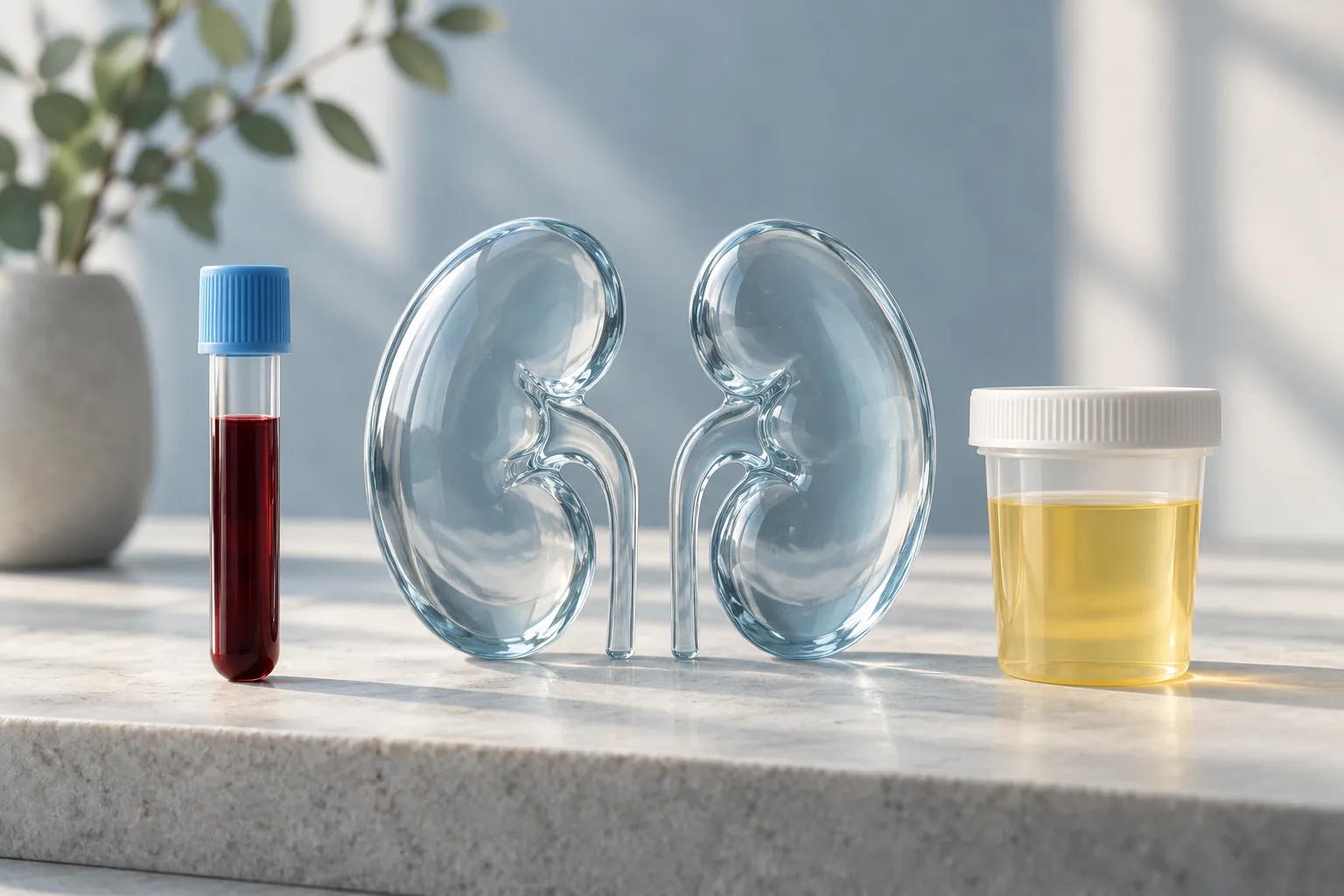
TL;DR: Kidney function tests use blood and urine information together, so creatinine or eGFR alone cannot diagnose or exclude chronic kidney disease.
Key takeaways
- Creatinine is measured in blood and used in a calculation that estimates glomerular filtration rate, or eGFR.
- Urine albumin to creatinine ratio, or ACR, checks for albumin relative to creatinine in urine.
- NICE says creatinine-based eGFR is less reliable in several situations, including acute kidney injury, pregnancy and extremes of muscle mass.
- One result needs its units, date, clinical reason and any previous results.
- Do not change medicines, supplements, food or fluid intake because of this article or one result.
What do kidney function tests measure?
Kidney function tests provide different pieces of information about filtration and possible kidney damage. The NHS chronic kidney disease diagnosis page says the main blood test measures creatinine and uses it with other information to calculate estimated glomerular filtration rate, or eGFR.
The NHS also describes urine testing for albumin and creatinine, reported as the albumin to creatinine ratio, or ACR. Blood and urine tests are partners here, not contestants competing for one dramatic reveal.

What is creatinine?
Creatinine is a waste product measured in blood as part of assessing kidney function. Its concentration contributes to the eGFR calculation rather than acting as a complete diagnosis by itself.
NICE guidance says laboratories should report creatinine-based eGFR alongside serum creatinine when creatinine is requested. The estimate depends on a prediction equation and has recognised limits.
What does eGFR mean?
Estimated glomerular filtration rate is a calculated estimate of kidney filtration. It is not a direct measurement of every aspect of kidney health.
NICE says creatinine-based eGFR may be less reliable in acute kidney injury, pregnancy, oedematous states, muscle wasting, malnutrition, higher muscle mass, protein supplement use and amputation. NICE also advises caution at higher eGFR values because estimates become less accurate as true GFR rises.
A flagged eGFR therefore needs the clinical setting and often comparison over time. Online interpretation without that context is mostly arithmetic wearing a stethoscope.

Why is a urine ACR useful?
Urine ACR looks for albumin relative to creatinine and can add information that eGFR does not provide. The NHS says urine tests for albumin, creatinine, blood or protein help give a more accurate picture alongside eGFR.
NICE recommends eGFR and ACR testing for adults with defined risk factors, with monitoring tailored to the person. This article cannot determine who should be tested or how often.
Does one abnormal result mean chronic kidney disease?
No. One abnormal result does not by itself establish chronic kidney disease. NICE defines chronic kidney disease using abnormalities of kidney function or structure present for more than three months, and its recommendations include repeat testing in specified circumstances.
The clinician may consider previous results, current illness, medicines, hydration, muscle mass, urine findings and other tests. Do not try to manufacture a better result by changing fluid intake, diet, supplements or medicines before follow-up.
How should you prepare for follow-up?
Follow the test-specific instructions from the clinician or service arranging it. mescreen™'s blood test preparation guide explains why generic fasting or medicine advice cannot replace the instructions for the actual test.
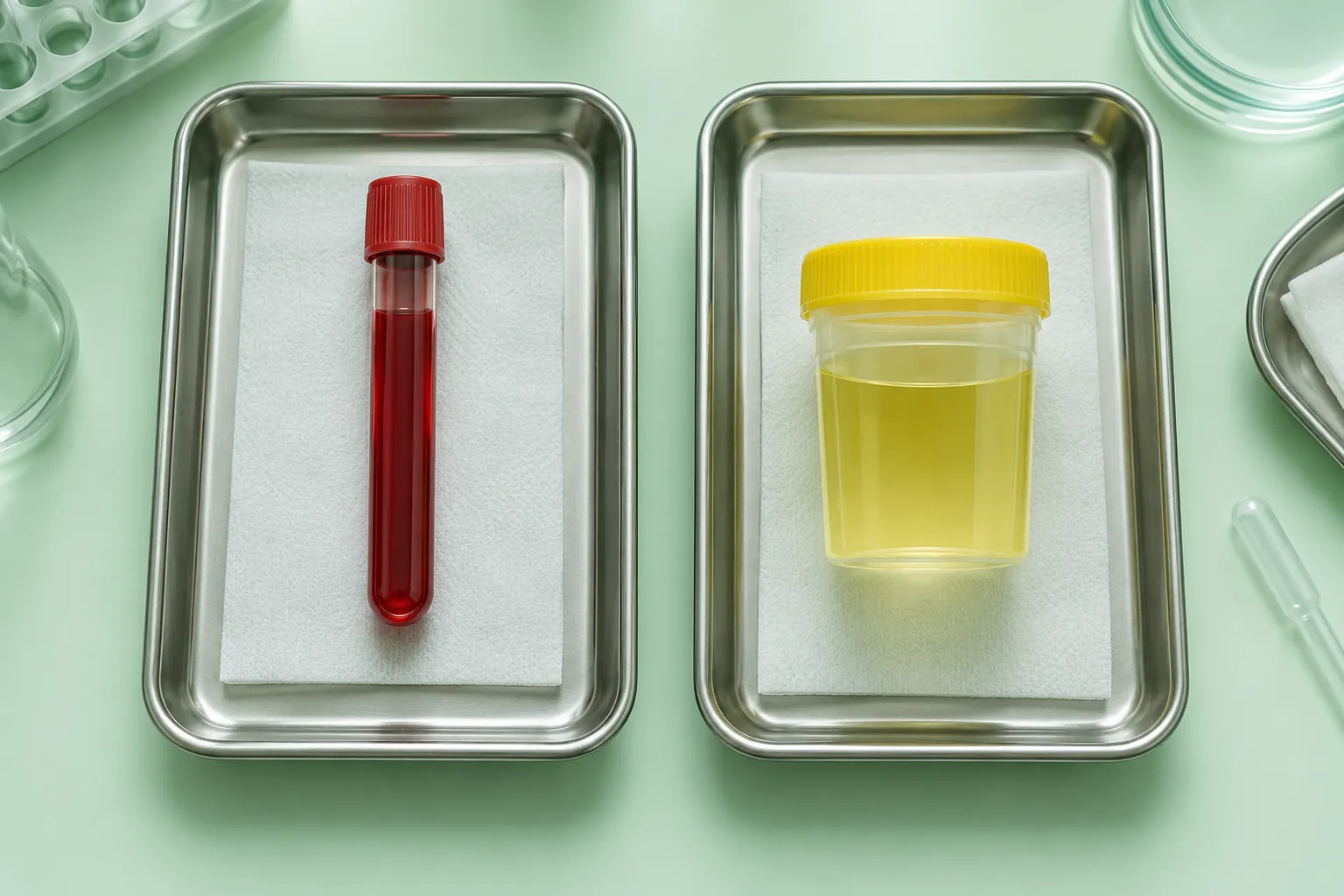
Keep the complete report, including test name, value, unit, reference information and date. Ask what question the tests were intended to answer and whether a repeat, urine test or other assessment is needed.
Does mescreen™ provide kidney function tests?
The current How mescreen™ Works page describes a dried blood spot wellness and functional laboratory assessment focused on cellular-energy signals. It does not describe mescreen™ as a kidney function test, and this article does not claim that mescreen™ measures creatinine, eGFR or urine ACR.
mescreen™ should not be used to diagnose kidney disease, interpret kidney results or replace NHS or clinician-led testing. Different tests answer different questions. A wellness label does not persuade biology to merge the paperwork.
Limitations
This is general UK information, not personalised medical advice. It cannot interpret an individual's result, diagnose or exclude kidney disease, determine urgency, recommend treatment or set a testing interval. The cited guidance may not cover every clinical circumstance.
Generated images are editorial illustrations, not patient samples, real results, mescreen™ equipment or evidence of diagnostic performance.

What is the sensible next step?
Keep the full blood and urine reports together and ask the clinician who arranged the kidney function tests what the combined results mean. If you feel seriously unwell or have urgent symptoms, use the appropriate current NHS urgent-care route.
Sources
- Chronic kidney disease: Diagnosis, NHS. Blood creatinine, eGFR, urine ACR and other tests.
- Chronic kidney disease: assessment and management, NICE. Creatinine-based eGFR, recognised limitations, ACR and repeat-testing recommendations.
- How mescreen™ Works, mescreen™ UK. Current process and wellness boundary.
- Blood Test Prep: Ask First, mescreen™ UK. Related test-specific preparation guidance.