
TL;DR: Strenuous exercise before a blood test can change some results, particularly creatine kinase, so follow the exact test instructions and disclose recent activity.
Key takeaways
- Exercise is a recognised cause of raised creatine kinase, or CK.
- The effect varies with exercise type, intensity, duration, training history and the person.
- There is no universal pause that suits every blood test or clinical situation.
- Do not cancel an urgent or clinician-directed test because of a workout without asking the responsible service.
- Record what you did, when you finished and whether you have unusual muscle symptoms.
Can exercise affect a blood test?
Yes, physical activity can affect some laboratory measurements, but the size and duration of the change depend on the activity, analyte and individual. A peer-reviewed review in Biochemia Medica describes physical activity as an important pre-analytical variable, meaning a factor present before laboratory analysis.
That does not make every result after exercise invalid. It means timing and context can matter. Blood testing is not offended by the gym. It simply records biology without reading your training plan first.
Tell the requesting clinician or testing service about recent strenuous or unfamiliar activity when it may be relevant. They can apply the instructions for the actual panel and purpose.

Which result is most clearly affected?
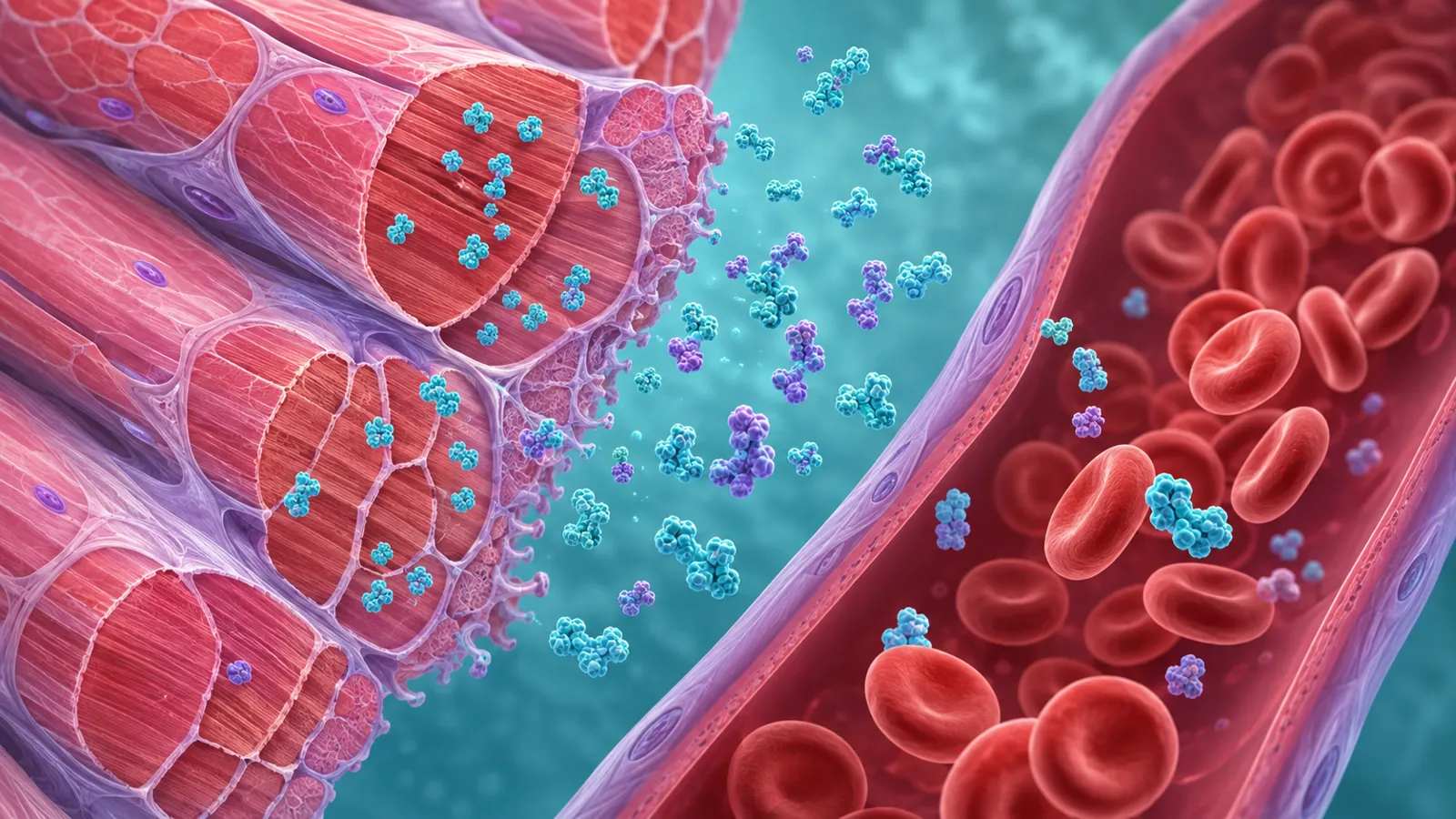
Creatine kinase is a clear example because exercise is a recognised cause of a raised CK result. University Hospitals of North Midlands lists exercise among common causes of raised CK in its current pathology test information.
CK is an enzyme found in tissues including skeletal muscle. A raised result can have several causes, so exercise history is context rather than a home diagnosis.
The same NHS page warns that a result outside its reference range does not necessarily indicate disease and an in-range result does not exclude abnormality. A reference range is useful. It is not a verdict with better stationery.
How much can CK change after exercise?
The change is highly variable, so one generic correction cannot be applied to an individual's result. A 2025 peer-reviewed literature review of post-exercise CK variability reports that the response varies across exercise protocols and individuals.
Exercise type, training status, muscle groups used and sampling time can all influence the observation. Evidence drawn from controlled exercise studies does not tell a reader exactly what their own CK will be after a particular session.
Do not subtract an online estimate from a laboratory result. If the result is unexpected, give the responsible professional the timing and nature of the activity and let them decide whether exercise is relevant.
Should you avoid exercise before a blood test?
Follow the instructions for the exact test rather than applying a universal ban. For a planned baseline test, the responsible service may ask you to avoid strenuous or unusual exercise beforehand so the collection conditions are easier to interpret and repeat.
mescreen™'s live blood biomarker test preparation guide advises checking provider instructions first and discusses hard exercise as one preparation factor. That page is general guidance, not permission to delay a clinically necessary sample.
Routine movement is not the same as a hard session, but the boundary depends on the person and purpose. If the instruction is unclear, contact the service before changing a usual routine.
Does the type of workout matter?
Yes, the biological response can differ with intensity, duration, muscle loading and whether the activity is familiar. The post-exercise CK review describes substantial variability, which is precisely why neat universal promises are unhelpful.
Record enough detail to make the activity interpretable:
- the type of exercise;
- when it started and finished;
- approximate duration and effort;
- whether it was usual or unusually hard;
- any recent event, race or strength session;
- unusual muscle pain, weakness or dark urine.
This record does not interpret the blood test. It gives the responsible professional better context.
What if the workout already happened?
Do not assume the test is ruined and do not silently omit the activity. Contact the service if there is time, or report the exercise at collection and when the result is reviewed.
The requested test may not be meaningfully affected, the timing may be acceptable, or the clinical need may outweigh preparation preferences. Those are decisions for the responsible service, not for an article.
Do not repeat a test independently, change training, stop medication or start supplements because one result looks unusual. Ask the clinician or service that requested the test what the result means in context.

When is medical help more important than test preparation?
Urgent symptoms take priority over achieving an ideal baseline. Do not delay urgent assessment because you exercised or did not follow a preparation instruction.
Seek urgent medical advice if you have severe or worsening symptoms. Unusual severe muscle pain or weakness, especially with dark urine or feeling seriously unwell, needs prompt clinical assessment. Use NHS 111 for urgent advice when appropriate, and call 999 for a life-threatening emergency.
How can you make repeat testing more comparable?
Use similar, documented collection conditions when the responsible service recommends repeat testing. Record recent exercise, collection time, fasting instructions, medicines and supplements without changing them unless advised.
Comparable conditions can reduce avoidable variation, but they do not make two results interchangeable. Laboratory method, illness, treatment and normal biological variation can still differ.
One result can begin a useful conversation. It cannot finish the entire diagnostic plot before lunch.
Where does mescreen™ fit?
mescreen™'s current UK process page describes an at-home dried blood spot collection, partner-laboratory analysis, digital reporting and an optional educational walkthrough. See how mescreen™ works for the current service process.
The supplied instructions for the selected service control preparation. This article does not establish that exercise changes every mescreen™ metric, that a mescreen™ result can diagnose a condition, or that changing exercise will improve a result.
If you have symptoms, a diagnosed condition, medication questions or clinician-directed investigations, use appropriate NHS or clinical care. mescreen™ does not replace diagnosis or urgent assessment.

Limitations
This article cannot determine whether exercise changed an individual's result or whether testing should be delayed or repeated. Exercise studies vary in participants, protocols, sampling times and outcomes. Evidence about CK cannot automatically be extended to every analyte or test panel.
The cited NHS test page reflects a specific laboratory service, and local methods and reference ranges vary. The current mescreen™ pages establish service process only, not clinical utility for exercise-related conditions.
Sources
- Sanchis-Gomar and Lippi, Physical Activity: An Important Preanalytical Variable, Biochemia Medica
- Odermatt et al., Post-Exercise Creatine Kinase Variability: A Literature Review, Biochemia Medica
- University Hospitals of North Midlands, Creatine Kinase
- mescreen™, How to Prepare for a Blood Biomarker Test in the UK
- mescreen™, How It Works