

TL;DR: Serum osmolality helps clinicians assess blood concentration and fluid-balance problems, but its meaning depends on other results and clinical context, not on a stand-alone hydration score. North West London Pathology describes its use alongside urine osmolality and electrolyte assessment.
Key takeaways
- Serum and urine osmolality answer related but different questions about concentration (Gloucestershire Hospitals).
- A measured result and a value calculated from other blood results are not interchangeable descriptions (Gloucestershire Hospitals).
- Paired blood and urine samples can help clinicians assess the kidney response in the appropriate investigation (North West London Pathology).
- The result is not a personalised instruction to increase or restrict fluids; interpretation belongs with the clinician assessing the underlying question (North West London Pathology).
What does serum osmolality tell a clinician?
Serum osmolality contributes to the assessment of blood concentration and electrolyte disturbances. It is an investigation used in a clinical question, not a general wellness grade.
Gloucestershire Hospitals' laboratory guidance describes serum osmolality as a useful initial test when investigating hyponatraemia, which means a low blood sodium concentration. The same guidance discusses other specialist uses, showing why the reason for requesting the test matters.

That distinction is worth preserving when reading a report. A laboratory measurement answers a defined question in a larger assessment. It has not secretly been appointed head of your entire health department.
Why might blood and urine osmolality be requested together?
Blood and urine results can be used together to assess whether the kidney response is appropriate to the clinical situation. North West London Pathology specifically recommends interpreting serum osmolality alongside urine osmolality for that purpose.
Urine osmolality concerns how concentrated the urine is. Gloucestershire Hospitals says its interpretation depends on whether that concentration is appropriate for the patient's clinical state, rather than on treating one urine number as a universal target.
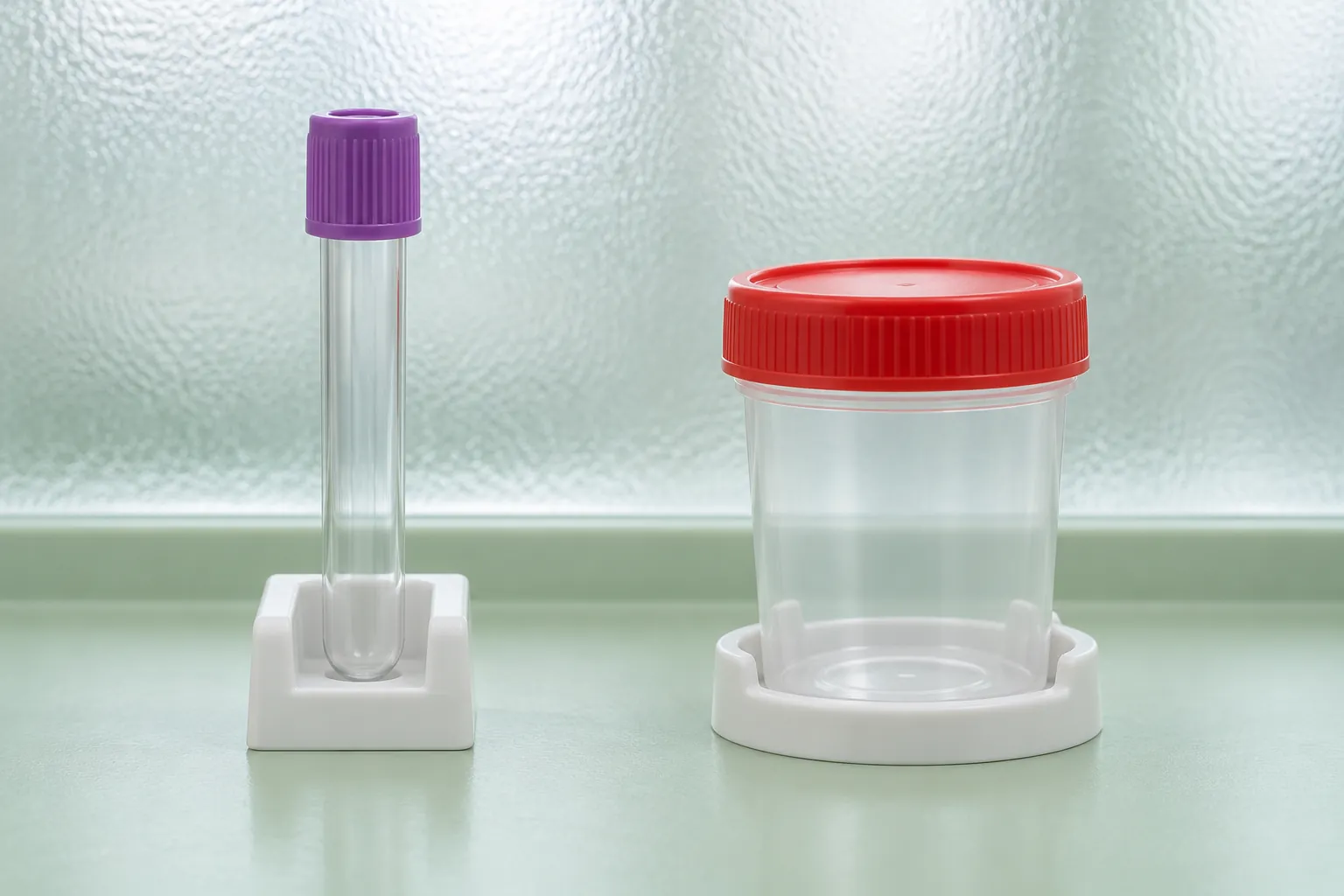
The same guidance says paired samples, collected at the same time, can be useful in a particular investigation of inappropriate antidiuretic hormone activity. That is a clinician-directed use, not a reason to arrange your own fluid experiment or collect replacement samples without instructions.
A useful question for the requesting clinician is: was this result intended to be read with a urine sample, and were the samples paired as requested?
Is measured osmolality the same as calculated osmolality?
No: a measured result comes from the laboratory measurement, while a calculated value is derived from other reported substances. Gloucestershire Hospitals provides a calculation using sodium, glucose and urea and distinguishes the calculated value from measured osmolality.
Its guidance calls the difference between measured and calculated values the osmolal gap. It also describes important limitations in specialist interpretation. This is not a calculation to use as a home diagnostic shortcut.
For a report discussion, ask which value you are looking at, which calculation the laboratory uses if relevant, and why the comparison was requested. More arithmetic is not necessarily more understanding. Occasionally it is simply a spreadsheet becoming ambitious.
Is there a single normal number to aim for?
No: the laboratory's reference interval is a comparison aid, not an individual fluid-intake target. Gloucestershire Hospitals lists a serum reference interval of 275 to 295 mOsm/kg, while emphasising context in interpreting blood and urine findings.

Use the interval and units printed on your own report when discussing it with the requesting clinician. Do not substitute a urine range for a serum range or turn a result outside the interval into a diagnosis.
The important conversation is about why the test was requested, which other findings accompany it and what the clinician recommends next. A result should not become a reason to change fluid intake or medicines on your own.
Where does mescreen™ fit?
The current mescreen™ UK product page describes its service as a mitochondrial wellness assessment, not a rare-disease genetic diagnostic. That product description does not establish serum osmolality as a measured marker or a clinical application of the service.
Keep the two conversations separate: a clinician-directed investigation of fluid or electrolyte balance is not interchangeable with a wellness assessment. Read the current service scope if you are considering mescreen™, and ask the requesting clinician about the osmolality result itself.
Limitations
This article explains laboratory terminology; it cannot identify the cause of an individual's result, establish that illness is absent or recommend fluid, medicine or treatment changes. The cited NHS laboratory pages describe clinical investigations, not evidence that a consumer wellness test diagnoses or improves fluid-balance problems.

No mescreen™ performance claim, endorsement relationship or clinical outcome is implied. Discuss the complete report and the reason for testing with the clinician who requested it.