
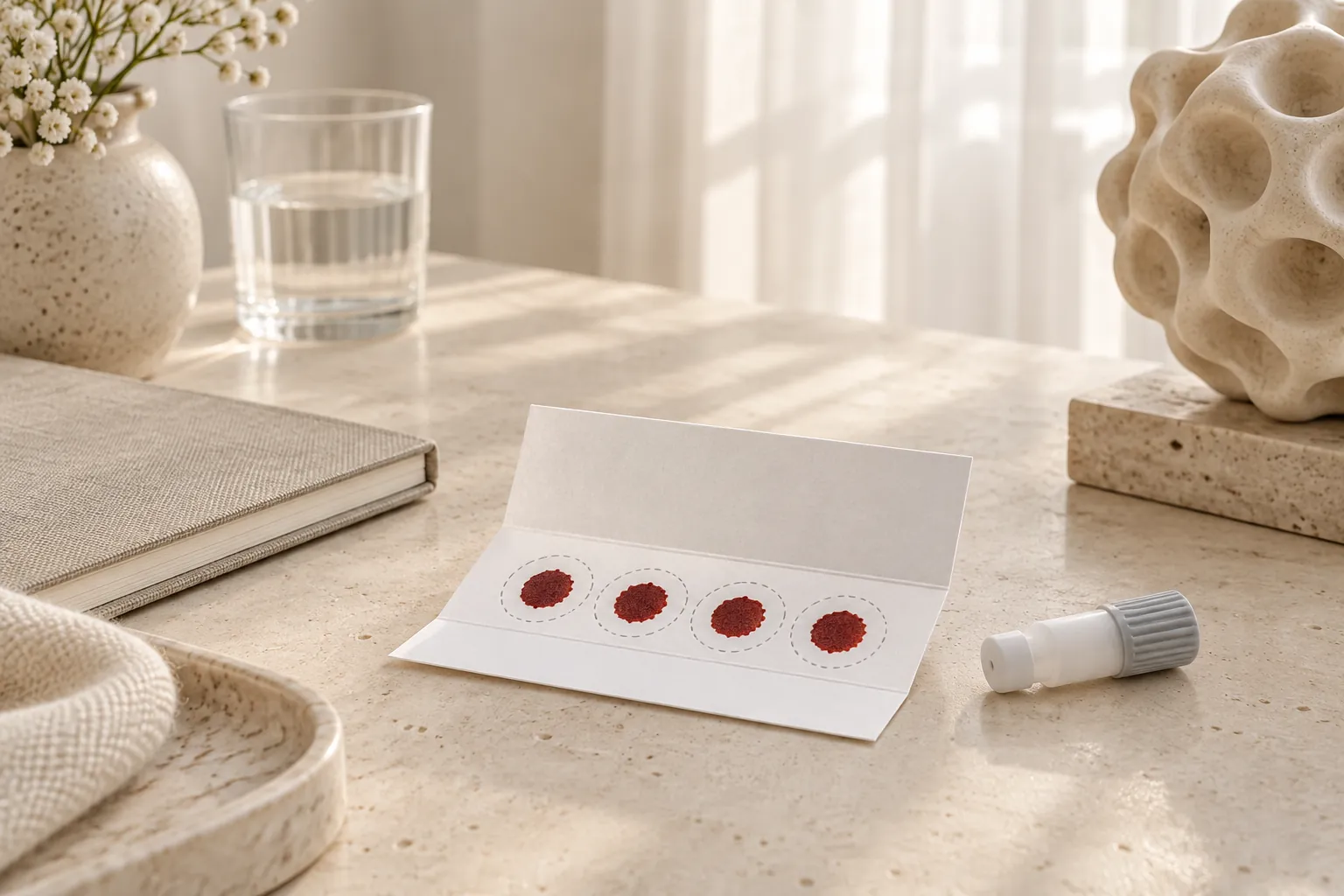
TL;DR: A dried blood spot sample is a small finger-prick blood collection that is dried on a card for laboratory analysis, and the meaning of any result depends on the test, method and clinical context.
Key takeaways
- A finger-prick is one recognised way blood can be collected for testing.
- mescreen™ says its kit uses a guided dried blood spot collection card at home.
- The current mescreen™ page says the sample is returned for laboratory processing and quality checks before reporting.
- A report does not diagnose a condition or replace medical advice.
What is a dried blood spot sample?
A dried blood spot sample is blood placed on a collection card and allowed to dry before laboratory analysis. The NHS explains that blood may sometimes be taken from a finger, alongside more familiar venous blood collection methods.
The practical details matter because samples, methods and interpretation are part of the same picture. Biology has not agreed to operate as a vending machine.
What does the mescreen™ process say happens at home?
The current mescreen™ process page says the kit includes materials and instructions for a guided finger-prick dried blood spot collection at home. It says the aim is to make the collection step practical while keeping the process clear and repeatable.
Follow the instructions supplied with the specific kit. If you are unsure whether finger-prick collection is appropriate for you, mescreen™ says to ask a clinician before ordering.
What happens after the sample is returned?
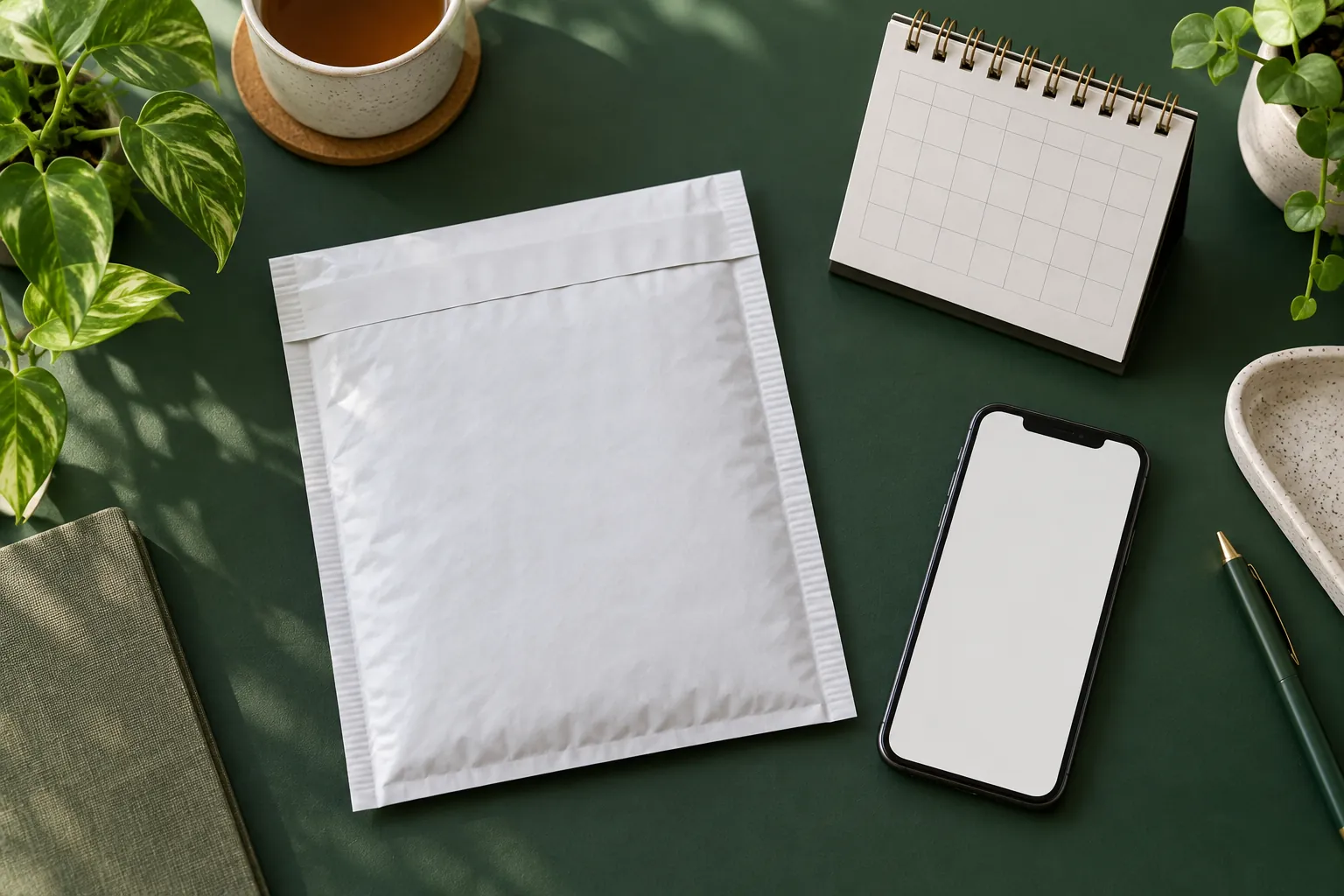
mescreen™ says returned samples go through laboratory processing and quality checks before results are prepared. Its current page says the dried blood spot sample is shipped to a partner laboratory for analysis and quality-controlled reporting.

mescreen™ states that a secure report is typically available within 3 to 4 weeks. Timing can vary with sample quality, transport and laboratory workflow, so a date is useful context, not a stopwatch with a clipboard.
What can a report tell you?
mescreen™ describes its service as a wellness and functional laboratory assessment focused on functional signals related to cellular energy. The page says it should not be used to rule a medical condition in or out.
The NHS says blood-test results can be complicated and advises speaking to a healthcare professional if you have questions or do not understand them. An in-range result does not rule out illness, and an out-of-range result does not establish a diagnosis by itself.

When should you use a clinical route?
For symptoms, urgent concerns or questions about diagnosis and treatment, use an appropriate NHS or clinical route rather than relying on a wellness report. mescreen™'s contact page says urgent medical concerns should go through NHS 111, urgent care, emergency services or a GP.
For ordering, delivery, sample handling or report-access questions, the mescreen™ support team is the appropriate contact. Different question, different route. This is not bureaucracy for its own sake.
Limitations
This is general UK information, not personalised medical advice. It does not interpret an individual's result, diagnose a condition, recommend treatment or establish the clinical utility of any particular test.
What is the sensible next step?
If you are considering mescreen™, read the current How mescreen™ Works page and use the mescreen™ contact page for service questions. Keep any report, units, reference context and questions together when seeking professional advice.

Sources
- How mescreen™ Works, mescreen™ UK. Current collection, return, analysis, report and intended-use information.
- Blood tests, NHS. Blood collection methods, result context and clinical follow-up information.
- Contact mescreen™, mescreen™ UK. Current support and urgent-care routes.