
PRIVATE TEST OUTPUT · NOT PUBLISHED
TL;DR: A dried blood spot test collects a small capillary blood sample on an absorbent card for laboratory analysis, but its suitability and interpretation depend on the exact analyte, method and service.
Key takeaways
- Dried blood spot, or DBS, testing uses blood dried on a purpose-made collection card.
- A finger-prick sample is not automatically interchangeable with venous blood.
- Collection quality, spot volume, drying, transport and the laboratory method can affect usability.
- Evidence for one analyte or assay does not validate every DBS test.
- A private wellness result does not diagnose illness or replace NHS assessment.
What is a dried blood spot test?
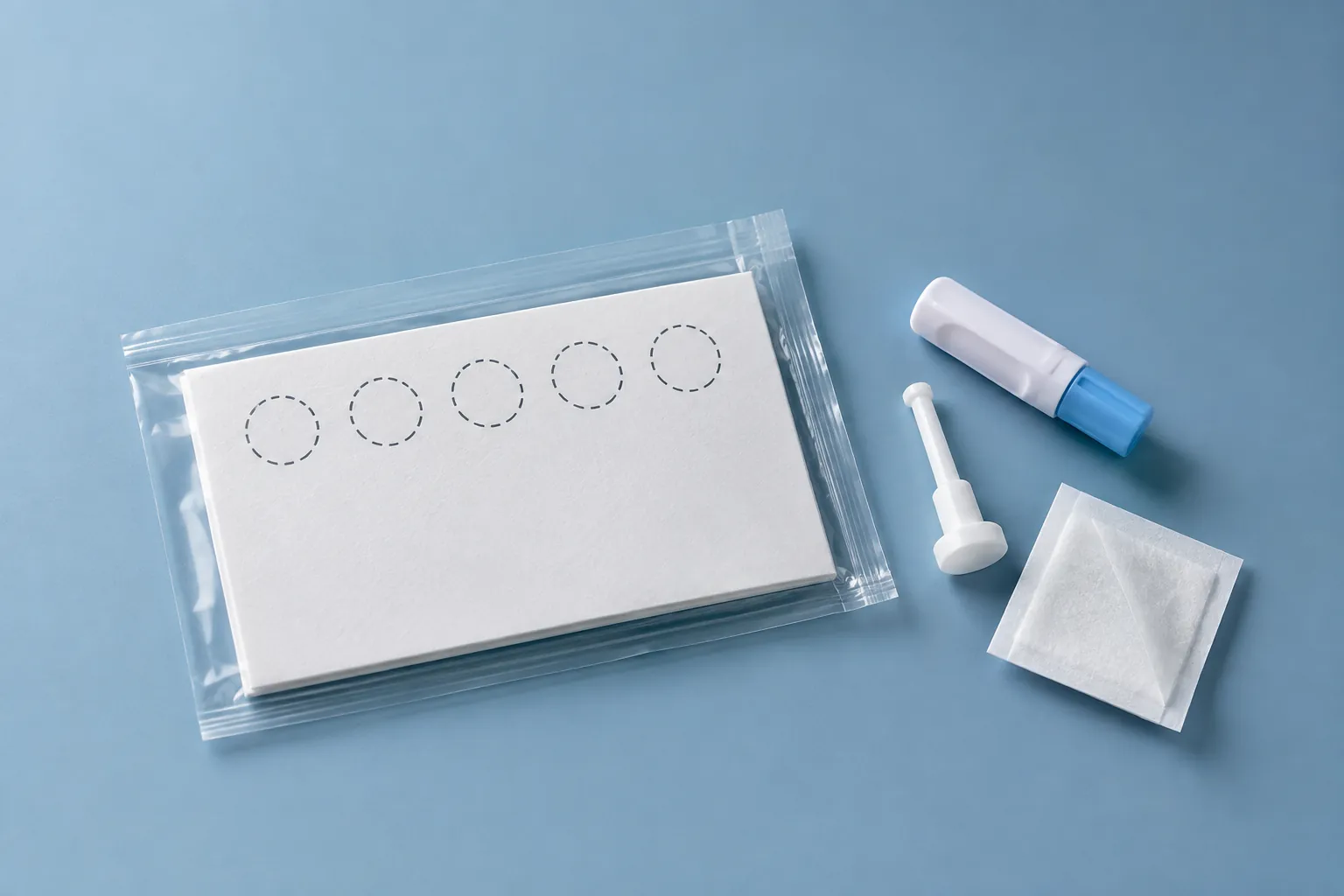
A dried blood spot test is a laboratory method that analyses blood collected and dried on an absorbent card. The sample commonly comes from capillary blood obtained by a finger prick.
A peer-reviewed review in Bioanalysis describes DBS as small volumes of whole blood collected on filter paper and dried for later measurement. It also explains that the method has both practical advantages and analytical limitations.
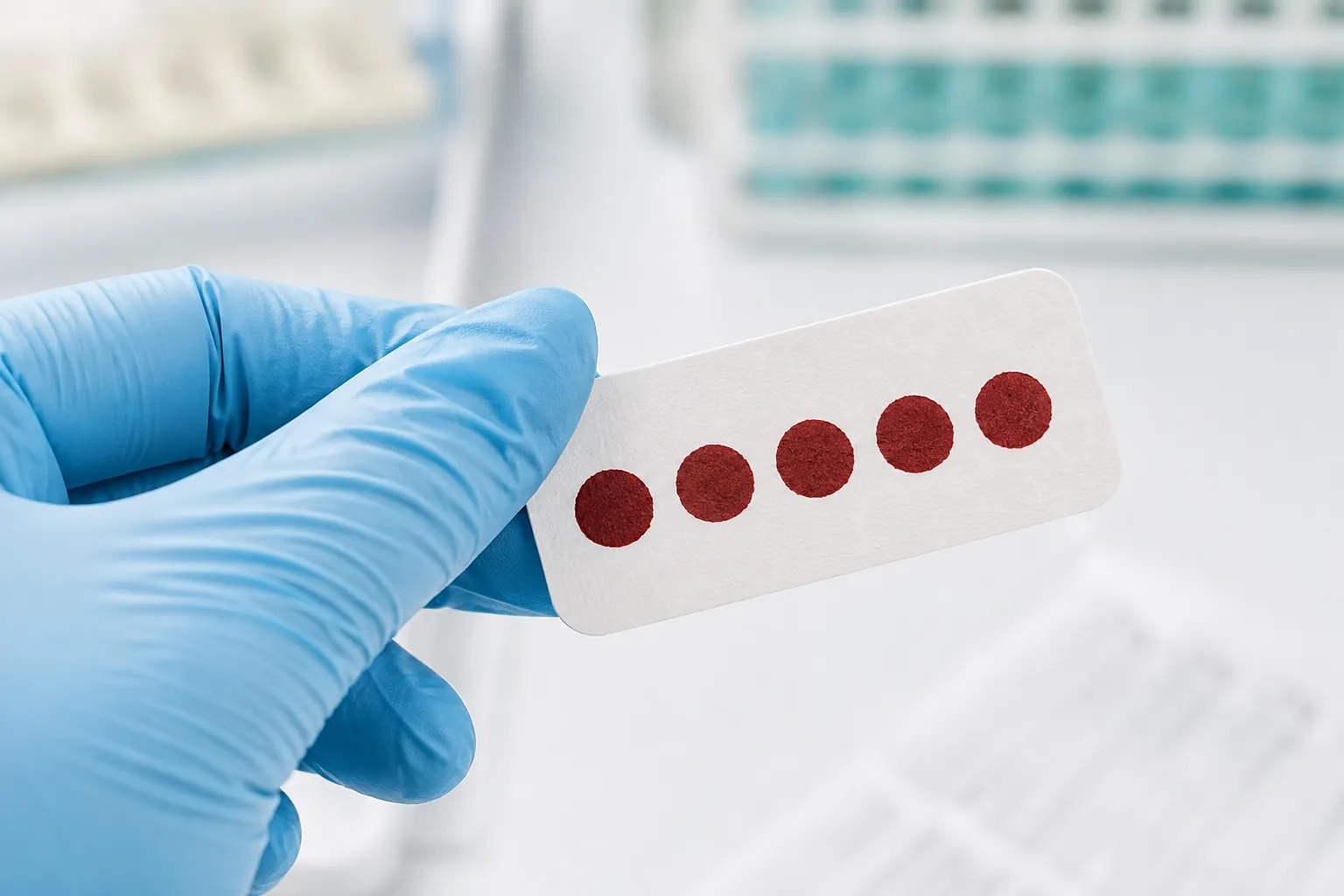
Small sample, neat card, serious laboratory caveats. Science has once again declined to become simple merely because the packaging is compact.
How is a DBS sample collected?
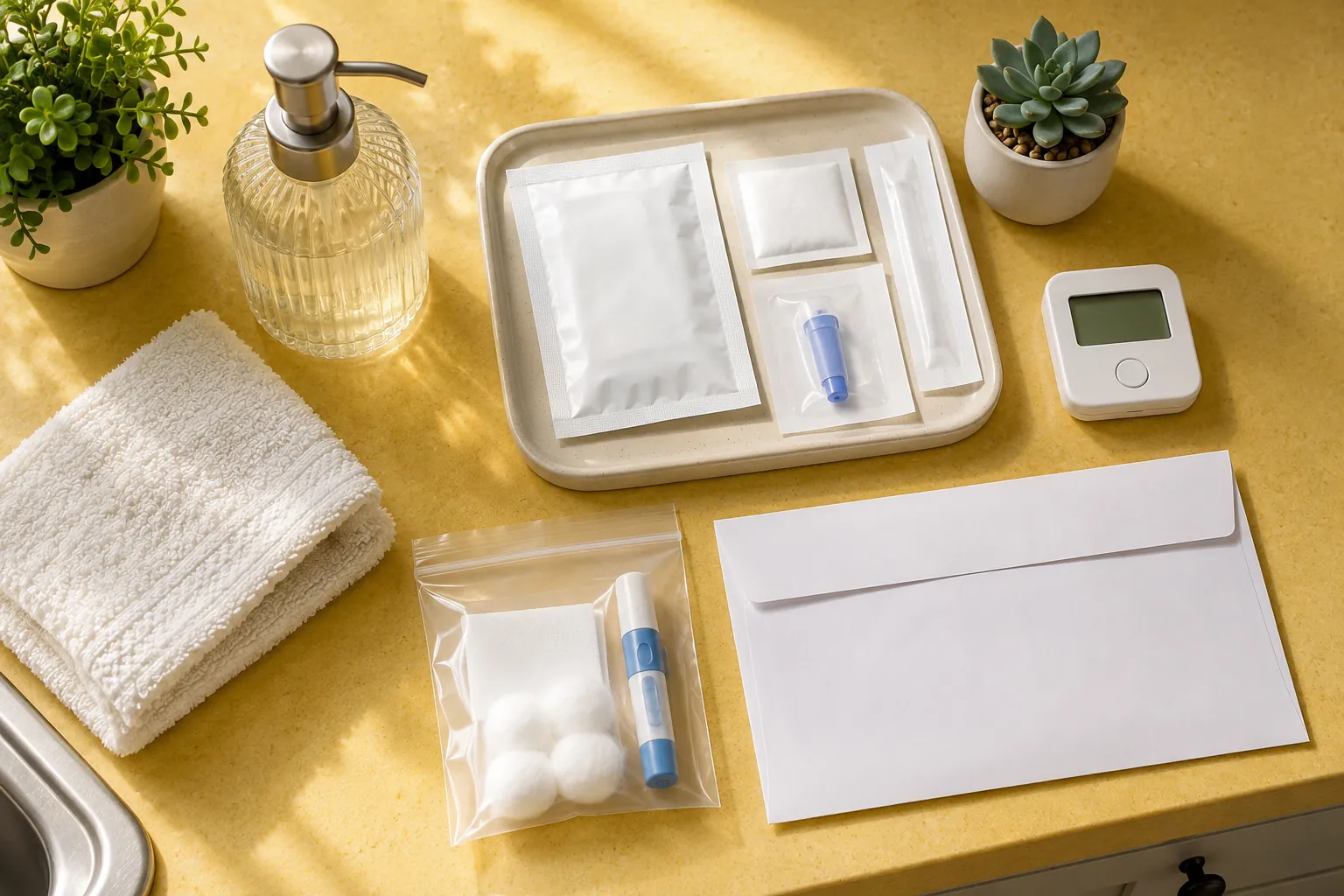
A DBS sample is collected by applying capillary blood to the designated areas of a collection card and allowing it to dry according to the kit instructions. The exact steps, spot requirements and drying time are service-specific.
mescreen™'s verified How It Works page says its kit contains materials and instructions for an at-home dried blood spot collection using a guided finger-prick card. It says the sample is returned for laboratory processing and quality checks.
Follow the supplied instructions rather than borrowing a method from another kit. mescreen™'s live finger-prick sample guide provides general collection context, but the instructions packaged with the current kit take priority.
Is capillary blood the same as venous blood?
No, capillary and venous samples are different specimen types and should not be assumed to produce interchangeable results. Whether they can be compared depends on the analyte, collection approach and validated laboratory method.
The Bioanalysis review notes that DBS measurements can face issues including haematocrit effects, spot homogeneity and the relationship between whole-blood results and plasma or serum values. These are assay questions, not evidence that every DBS method is unreliable.
A result needs its specimen type, units, method context and reference information. More numbers without those details are mostly a busier dashboard.
What can affect a dried blood spot sample?
Collection, drying, storage, transport and analysis can all affect whether a DBS sample is suitable. The relevant risks vary by test and laboratory protocol.
The peer-reviewed review discusses pre-analytical factors such as blood volume, spotting technique, drying conditions, temperature and humidity. It also describes analytical considerations including the area punched from the card and analyte stability.
This does not establish what happened to an individual sample. If a laboratory rejects a card, use the reason and next steps supplied by that service. mescreen™'s sample rejection guide explains common categories without attempting remote diagnosis of a sample.
Are dried blood spot tests accurate?
Accuracy cannot be assigned to DBS as one universal category. Performance must be established for the specific analyte, assay, laboratory process and intended use.
The Bioanalysis review reports that DBS can be useful across various applications while emphasising method-specific validation and limitations. Evidence supporting one measurement does not prove another, and laboratory feasibility does not by itself establish clinical utility.
Be cautious with broad claims such as more accurate, comprehensive or medical-grade when no exact comparison and intended use are supplied. A confident adjective is not a validation study wearing a tie.
What happens in the laboratory?
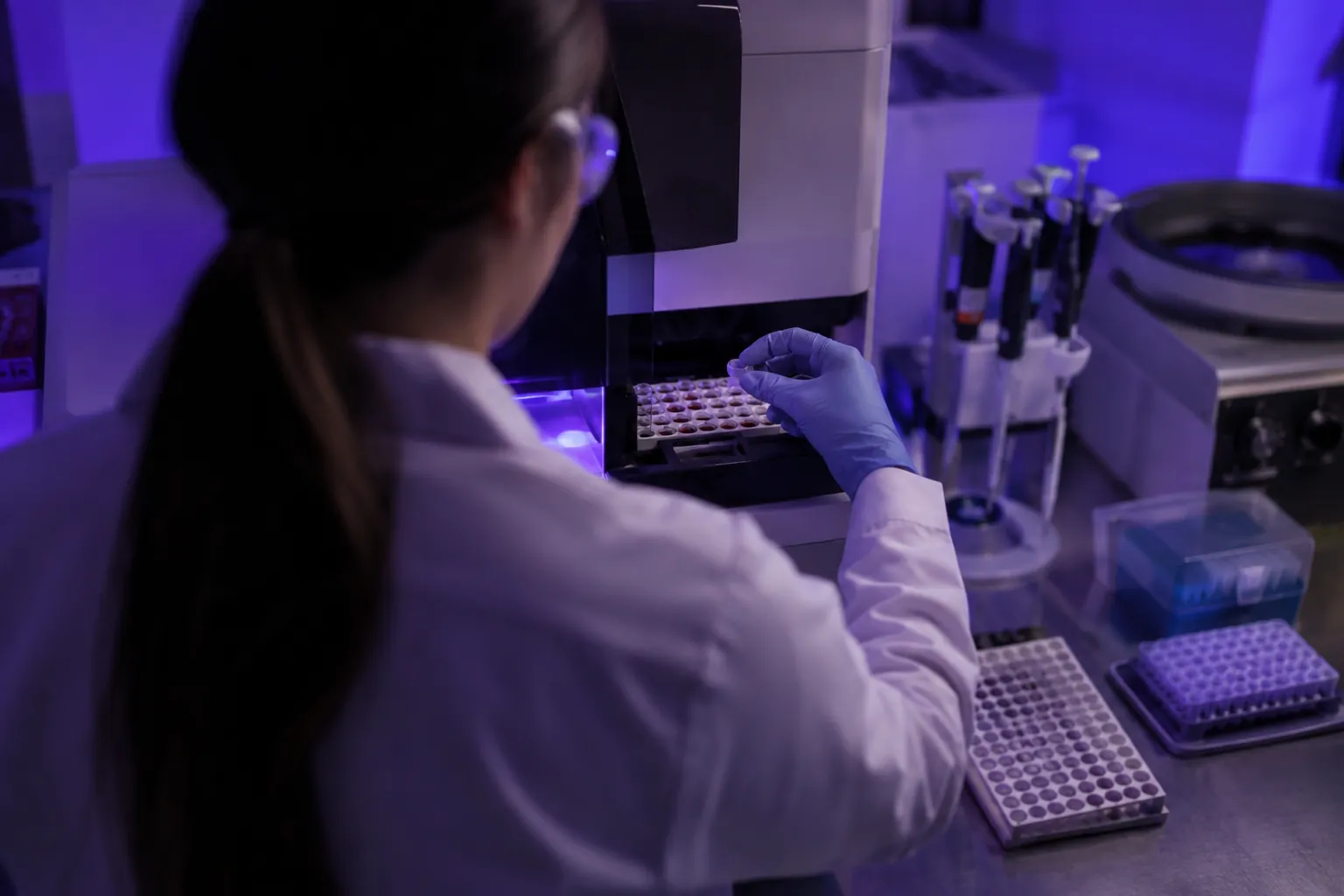
The laboratory processes a defined portion of the dried spot and measures the target using its established protocol. Details vary by method.
The review describes workflows in which a disc is punched from the dried spot, the material is extracted and the target is measured. Quality controls and calibration remain important because the card is a sample format, not the complete analytical system.
mescreen™'s current page says its DBS sample is shipped to a partner laboratory for analysis and quality-controlled reporting. It describes the service as a wellness and functional laboratory assessment focused on functional cellular-energy signals, not a diagnostic test.
How does mescreen™ use dried blood spots?
The current mescreen™ UK page says its at-home kit uses a guided finger-prick dried blood spot collection card. It says the returned sample undergoes laboratory processing before a digital report is prepared.
That product statement does not mean DBS evidence in another field proves mescreen™ improves health outcomes. It also does not turn a wellness report into a diagnosis, a screening programme or a substitute for clinician-requested blood tests.
Use the mescreen™ contact page for current kit, collection and service questions. Questions about symptoms, prescribed medicines or whether testing is appropriate belong with a qualified clinician.
Can you use a DBS result to diagnose illness?
Do not use a private wellness DBS result to diagnose or rule out illness. A normal-looking value does not prove that somebody is well, and an unusual value does not establish a condition by itself.
If you have persistent, new or worsening symptoms, seek appropriate clinical assessment rather than waiting for a private result. Use NHS 111 for urgent medical help when it is not an emergency, and call 999 for a life-threatening emergency.
Urgent-care decisions should be based on symptoms and appropriate assessment, not on completing a home collection.
What should you check before buying a DBS test?
Check the intended use, specimen type, measured items, laboratory, reporting process and stated limitations. Ask what happens if the sample is insufficient and whether support is educational or clinical.
Read the current collection instructions before taking the sample. Check the service's policy on timing, return and unsuitable cards. Do not change medicines, supplements, food, fluids or exercise merely to influence a result unless the responsible clinician gives test-specific advice.
Limitations
This article explains the DBS sample format but cannot establish whether a particular test is suitable, analytically valid or clinically useful for an individual. DBS performance varies by analyte, assay, laboratory, collection quality and intended use.
The cited review covers many applications and cannot validate the mescreen™ product. mescreen™'s own pages establish its current process and stated wellness boundary, not diagnosis, treatment, prevention or improved outcomes.