

TL;DR: A cholesterol blood test provides information about blood lipids, but the full profile and your wider clinical context matter more than one headline number.1013
Key takeaways
- A full lipid profile includes total cholesterol, HDL cholesterol and triglyceride measurements, with non-HDL and LDL cholesterol calculated.10
- Most people do not need to fast for a cholesterol test, but the instructions for your own appointment still apply.9
- Your GP considers cholesterol alongside factors such as age, blood pressure and health conditions.13
- mescreen™'s current service is a wellness and functional laboratory assessment, not a replacement for diagnostic blood tests.1112
What does a cholesterol blood test measure?
A cholesterol blood test can provide several results rather than one cholesterol value. NICE defines a full lipid profile as measuring total cholesterol, high-density lipoprotein cholesterol and triglycerides, then calculating non-HDL and low-density lipoprotein cholesterol.10
High-density lipoprotein is usually shortened to HDL; low-density lipoprotein is LDL. Those labels describe different parts of the profile, not rival teams in a particularly niche office quiz.
The NHS notes that you may initially be told only your total cholesterol, with separate HDL and non-HDL results available to ask about.13 Ask what was included in your test rather than assuming that every service measured or reported the same things.

Is total cholesterol enough on its own?
Total cholesterol alone does not provide the same information as the wider lipid profile and clinical assessment. NICE recommends measuring both total and HDL cholesterol to achieve the best estimate of cardiovascular disease risk.10
The NHS says a GP uses cholesterol levels with other factors, including age, blood pressure and health conditions, to estimate cardiovascular disease risk.13 Cardiovascular disease means conditions affecting the heart and circulation.
That is why this article does not offer a treatment decision from a single number. A result can be useful without being promoted to chief executive of the entire clinical picture.
What does non-HDL cholesterol mean?
Non-HDL cholesterol is the difference between total cholesterol and HDL cholesterol. The NHS explains this calculation on its cholesterol results page.13
It is a different label from LDL, not simply another spelling of it. NICE's full lipid profile definition lists both calculated non-HDL and LDL cholesterol.10 Keep the names attached to the values when discussing your report.
If a report shows a number without a clear label or explanation, ask the clinician or service responsible for it. This article cannot identify an individual's result from a screenshot or decide which target should apply.

Why might LDL not appear on a report?
A calculated LDL result may not be reported under some laboratory conditions. NICE says reporting can depend on triglyceride concentration and the formula used by the local laboratory.10
The absence of a calculated value is therefore a question for the reporting service, not proof that a result is reassuring or worrying. Ask whether it was measured, calculated, omitted or not part of the requested test.
There is no need to reconstruct the missing figure with an online calculator. The laboratory and responsible clinician can explain the method and its limits.
Do you need to fast before the test?
Most people do not need to fast for a cholesterol test, although some people receive a fasting instruction. The NHS describes both situations, and NICE's definition of a full lipid profile says a fasting sample is not mandated.910
Follow the instructions issued for your own test and ask the arranging service if they are unclear. Do not change medicines, supplements, food or fluid intake because a general article appears to have a confident checklist.
For related questions, read our blood test preparation guide. The appointment instructions remain the authority for the appointment. An internet checklist has not, unfortunately, met your clinician.

What is a good cholesterol target?
The appropriate target depends on the person and the clinical context, rather than one number for everyone. The NHS says age, health conditions and cardiovascular disease risk affect the target that is right for you.13
This is why the article does not reproduce a table of universal treatment targets. A general guide and a personalised decision have different jobs.
Ask the clinician what each reported value means for your assessment, whether further investigation is needed and who will explain the next step. Do not start, stop or change cholesterol medicines or supplements from this article.
Where does mescreen™ fit?
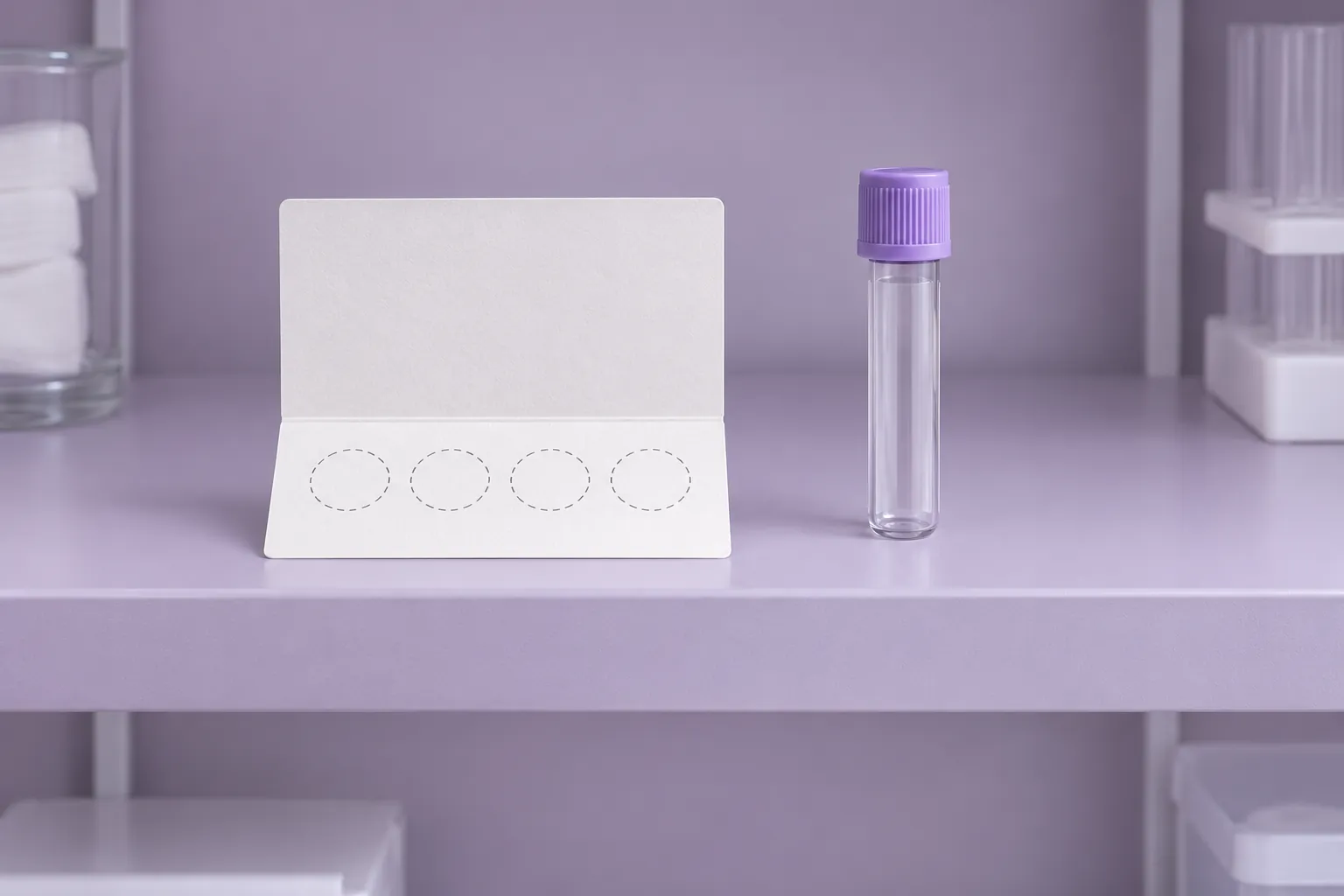
mescreen™'s current UK process page describes an at-home dried blood spot collection for a wellness and functional laboratory assessment focused on cellular-energy signals.11 It does not establish that the service provides the full lipid profile defined by NICE.
The current mescreen™ information says not to use its result as a diagnosis, a substitute for NHS blood tests or a reason to delay care.11 The contact page also states that the assessment is not a medical diagnostic test.12
For cholesterol testing or interpretation, speak to your GP or the clinician arranging the test. For questions about the current mescreen™ collection and reporting process, use How mescreen™ works or contact mescreen™. A service enquiry and a clinical assessment are different routes.
Limitations
This is general UK information, not a diagnosis, individual risk calculation or treatment recommendation. It does not determine whether you need a cholesterol test, interpret your report or set a personalised target. Laboratory methods and reporting can vary. It does not claim that mescreen™ measures cholesterol or improves cardiovascular outcomes.
What is the next sensible step?
Ask the clinician responsible for your test which parts of the lipid profile were reported and how they fit your wider assessment. Keep the complete report and appointment instructions together so the discussion concerns the actual test rather than a remembered headline number.
Sources
[9] https://www.nhs.uk/conditions/high-cholesterol/getting-tested/, NHS, High cholesterol: Getting tested
[10] https://www.nice.org.uk/guidance/ng238/chapter/Recommendations, NICE, NG238: Recommendations
[11] https://mescreen.co.uk/how-it-works/, mescreen™ UK, How mescreen™ works
[12] https://mescreen.co.uk/contact/, mescreen™ UK, Contact
[13] https://www.nhs.uk/conditions/high-cholesterol/cholesterol-levels/, NHS, High cholesterol: Cholesterol levels