
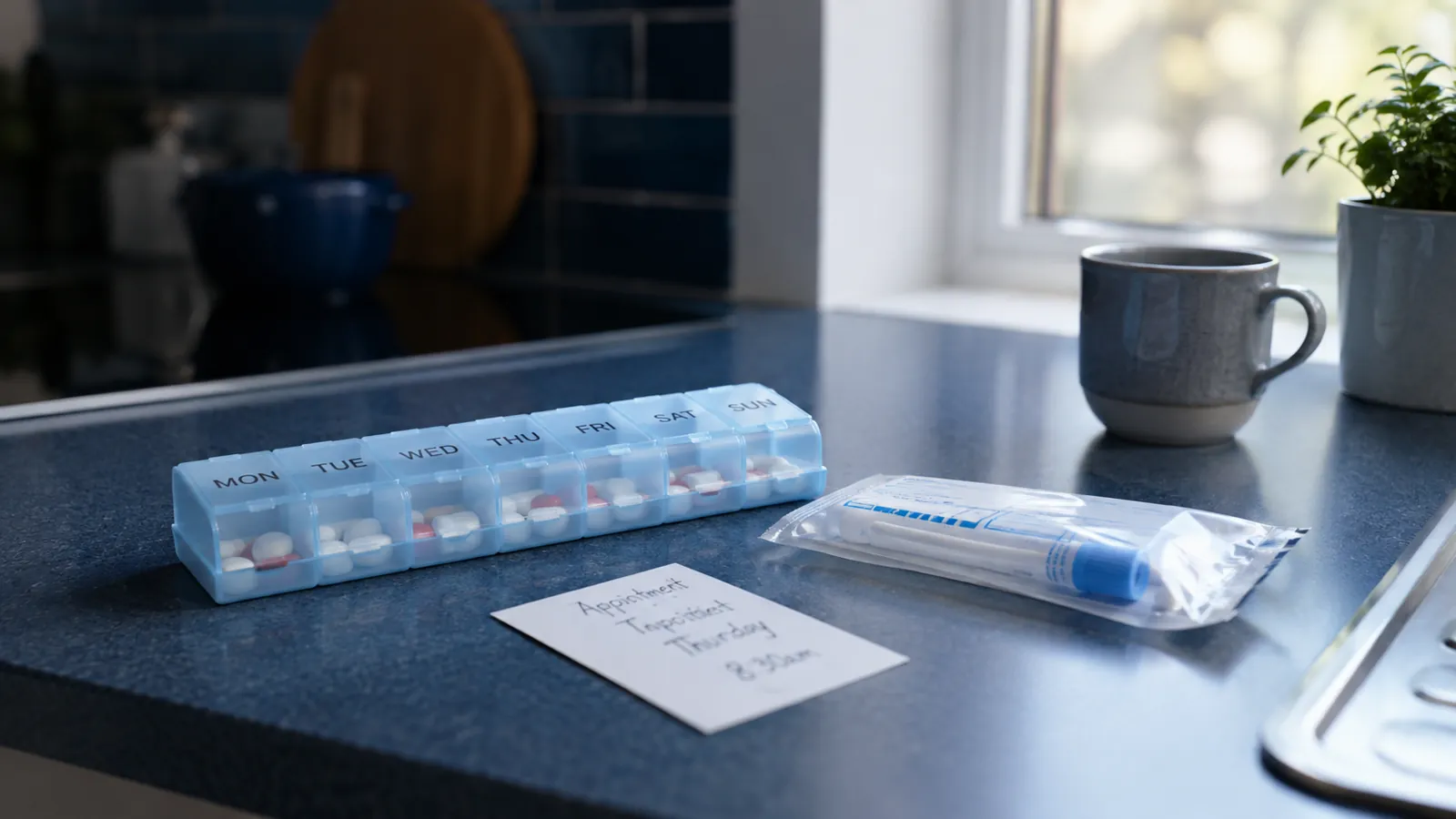
PRIVATE TEST OUTPUT · NOT PUBLISHED
TL;DR: Do not stop, delay or change prescribed medicines before a blood test unless the responsible clinician or testing service has given instructions for that exact test.
Key takeaways
- Blood test preparation depends on the test and why it was requested.
- Medicines, vitamins, herbal remedies and supplements should be disclosed.
- Do not change prescribed treatment using generic online advice.
- Ask before the appointment if a medicine needs food or precise timing.
- Record what you took and when, especially if instructions were unclear.
Can you take medicines before a blood test?
Often you can, but the correct answer depends on the medicine, test and clinical purpose. The NHS blood test guidance says the GP, nurse or specialist should tell you whether preparation is needed. It gives fasting and stopping certain medicines as examples of instructions that may apply before some tests.
That is not permission to decide independently which tablets look optional for the morning. Prescribed treatment and laboratory preparation need a named, test-specific instruction rather than a heroic guess beside the kettle.
If no instruction was supplied, contact the clinician, laboratory or service responsible for the test before making a change.
Why can medicines matter to a blood test?
Medicines can matter because a test may be intended to assess treatment, because a medicine can change the measured biology, or because some substances can interfere with particular laboratory methods. These are different situations and require different interpretation.
The NHS notes that blood tests may check how well a condition is being treated or managed, and that the tests ordered can depend partly on medicines being taken. The result therefore needs the medicine context, not a tidier but inaccurate version of it.
A preparation instruction does not mean a medicine is generally unsafe. It means timing or disclosure may matter for a defined test.
Should you stop a medicine if it might affect the result?
No, not without advice from the responsible clinician or service. York and Scarborough Teaching Hospitals NHS Foundation Trust states in its patient guide to preparing for a blood test that a person unsure about a medicine that could affect a result should continue it as prescribed until they have checked with their doctor.
The same guide says a doctor may be able to interpret a result while taking the medicine's effects into account. This reinforces the useful default: disclose first, do not quietly redesign treatment for the sake of one data point.
Some medicines should not be interrupted abruptly. This article cannot determine whether any individual dose should be taken, delayed or changed.
What should you tell the testing service?
Provide a complete, current list of prescribed medicines, over-the-counter products, vitamins, herbal remedies and supplements. Include the product name, dose if known, and usual timing.
Also record:
- what you took on the collection day;
- the approximate time of the last dose;
- whether a medicine normally needs food;
- any missed or changed dose, without hiding it;
- the exact preparation instruction you received;
- who supplied that instruction.

The York NHS guide specifically asks patients to disclose herbal remedies, vitamins and supplements as well as medication. A complete list is more useful than deciding that a brightly coloured gummy is too cheerful to count.
What if the blood test requires fasting?
Fasting instructions do not automatically explain what to do with every medicine. The NHS says some blood tests may require a period with nothing except water, but the person arranging the test should provide the relevant preparation.
Ask whether the medicine should be taken at its usual time, whether it may be taken with water and what to do if it normally requires food. Do this before the fasting period starts where possible.
Do not extend a fast or skip treatment to make the preparation feel more rigorous. More inconvenience is not a recognised unit of analytical quality.
Does dose timing matter?
Timing can matter for selected tests, particularly when the test is intended to assess a medicine level or its biological effect. The responsible service may need the collection to occur at a defined point relative to a dose.
Record the collection time and last-dose time accurately. Do not move the dose to create a more attractive result or to copy instructions written for a different test.
mescreen™'s live blood test timing guide explains why consistent context can help comparison without making morning collection a universal rule.
Do supplements count as medicines?
Supplements are not all medicines, but they still belong on the preparation list. Vitamins, minerals, herbal remedies and performance products can change biological measurements or, in some cases, interact with laboratory methods.
mescreen™'s blood biomarker test preparation guide directs readers to disclose medicines and supplements and to follow the instructions for the actual test. It does not recommend stopping a product independently.
Bring the label or a clear photograph if the ingredients or dose are uncertain. Marketing names can be imaginative. Laboratories generally prefer ingredients.
What if you already took the medicine?
Do not assume the sample is useless and do not take a second dose to compensate. Tell the responsible service what was taken and when, then follow its instruction.
The service may proceed, interpret the result with context or arrange a correctly timed repeat. That decision depends on the test and purpose, so an article cannot make it for an individual.
If you accidentally took too much medicine or feel unwell, seek appropriate clinical or urgent advice rather than treating it as a laboratory-preparation question.
How does this apply to a mescreen™ home test?
Follow the instructions supplied with the current mescreen™ kit and contact the service if medicine or supplement timing is unclear. mescreen™'s How It Works page describes an at-home dried blood spot collection, laboratory analysis and digital report.
That service description does not establish that a particular medicine affects a mescreen™ metric, nor does it authorise changing treatment. Use the mescreen™ contact page for service-specific preparation questions, and use the prescribing clinician for decisions about prescribed treatment.
A wellness result must not be used to diagnose illness, replace clinician-directed blood tests or justify altering medicines.
When should you seek medical help?
Seek clinical advice if you are unsure whether changing or missing a medicine could be unsafe. For urgent symptoms, possible overdose or a serious reaction, use current NHS urgent or emergency routes rather than waiting for a private test appointment.
Do not delay urgent assessment to improve sample timing. Safety takes priority over comparability.
Limitations
This article cannot determine what an individual should do with a particular medicine before a particular test. The answer depends on the medicine, dose, indication, test method, collection timing and reason for testing.
The NHS sources provide general and local patient-preparation guidance, not a complete rule for every medicine or laboratory. mescreen™ sources establish its current collection process and general preparation information only. They do not show that changing medicines improves mescreen™ results or health outcomes.