Comparison guide
How mescreen™ differs from other health tests.
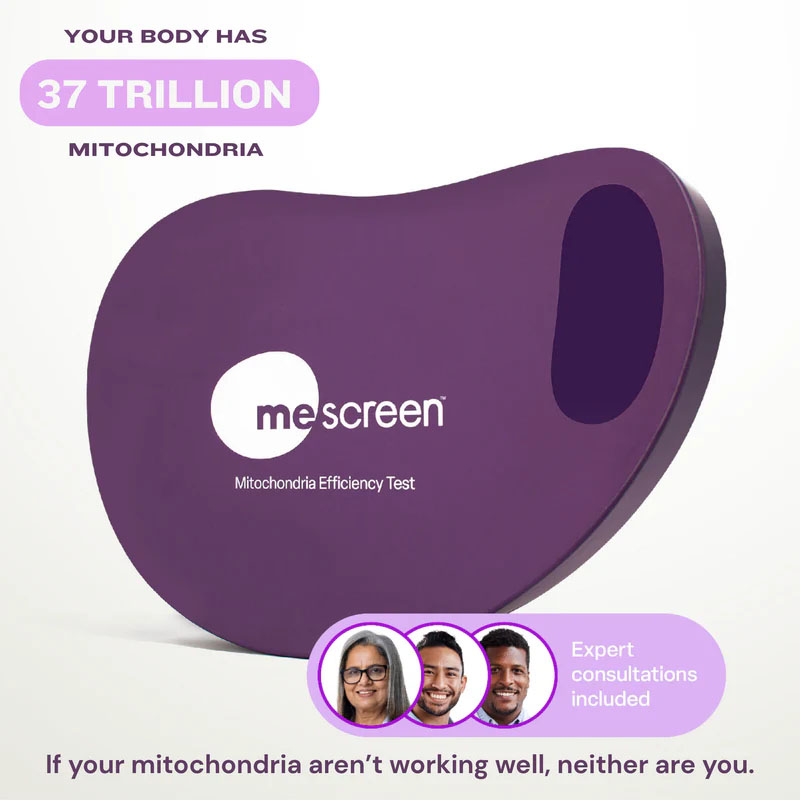
mescreen™ is designed as a functional mitochondrial assessment: a way to look at cellular energy, oxidative stress and reserve capacity in a consumer-friendly report. It complements standard healthcare, but it is not a diagnosis and it does not replace clinician-led investigation.
mescreen™ mitochondrial function test
Best for people who want a practical cellular-energy baseline, a dried blood spot collection kit, and a report that can be retested after changes to sleep, nutrition, exercise, recovery or supplementation.
Standard private blood panels
Useful for clinical context such as full blood count, lipids, HbA1c, thyroid, liver, kidney and inflammation markers. mescreen™ should sit alongside these checks rather than replace them.
Generic cellular-health or micronutrient tests
Often focus on nutrient status, genetics or broad wellness markers. mescreen™ is narrower: it is positioned around mitochondrial function and cellular energy rather than a general health screen.
Wearables and performance tracking
Good for daily signals such as sleep, heart-rate variability, strain, recovery and activity. mescreen™ adds a laboratory-style snapshot that can support longer-term trend conversations.
NHS or specialist mitochondrial-disease pathways
Appropriate where symptoms suggest possible inherited or serious mitochondrial disease. mescreen™ is not a diagnostic pathway and should not be used to rule conditions in or out.
Buying note: use mescreen™ as an education-led functional assessment. If you have unexplained symptoms, red flags or an existing medical condition, speak to an appropriate clinician before relying on any wellness test.