
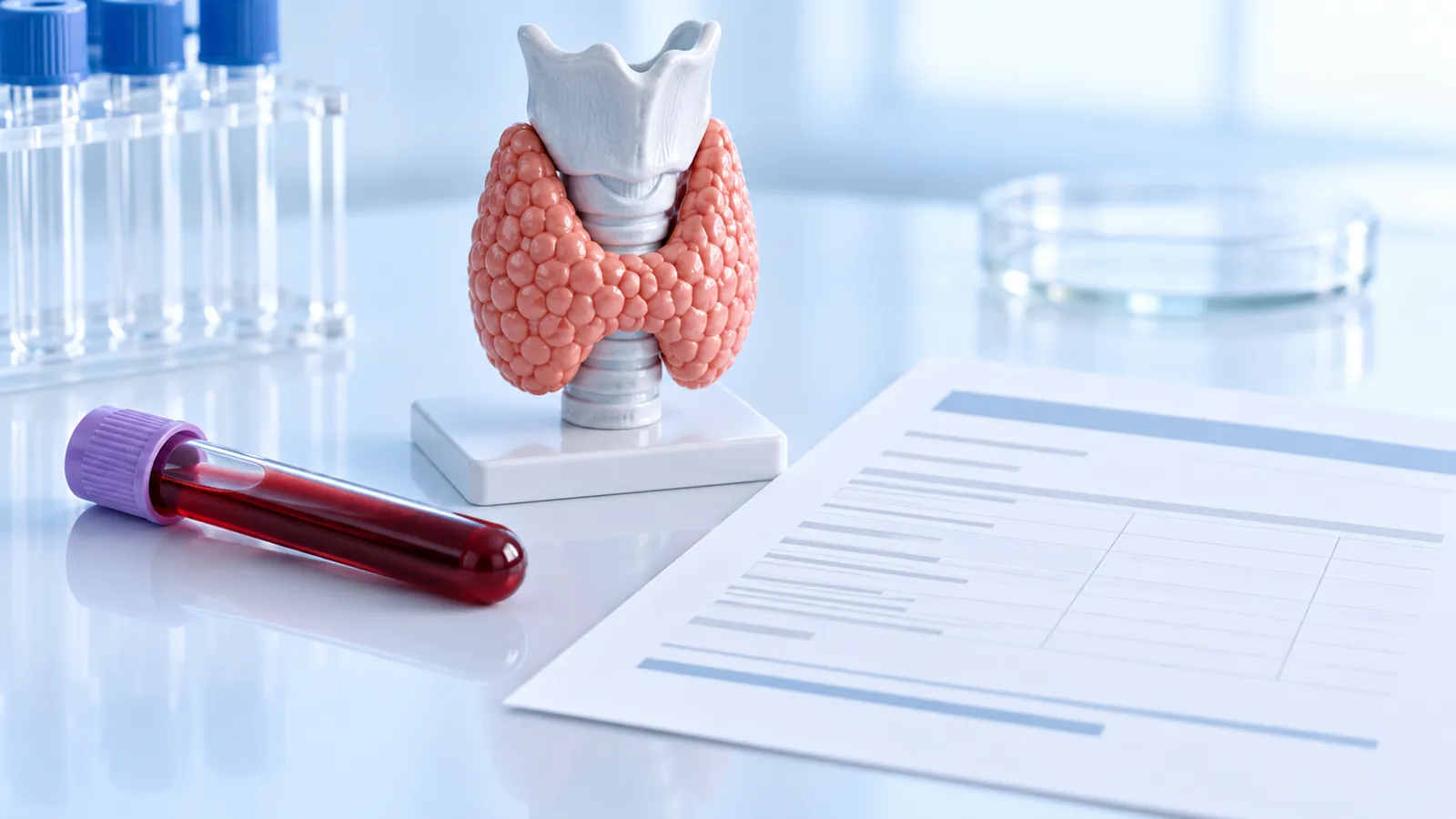
TL;DR: Thyroid function tests are read as a pattern of thyroid-stimulating hormone and thyroid hormones, with symptoms, medicines, illness and laboratory context.
Key takeaways
- Thyroid function tests may include thyroid-stimulating hormone, free thyroxine and free tri-iodothyronine.
- NICE recommends a testing sequence that depends on age and whether pituitary disease is suspected.
- Acute illness and high biotin intake can affect how results are assessed.
- Reference ranges vary with factors including age and laboratory method.
- Do not change thyroid medicines or supplements because of this article or one result.
What do thyroid function tests measure?
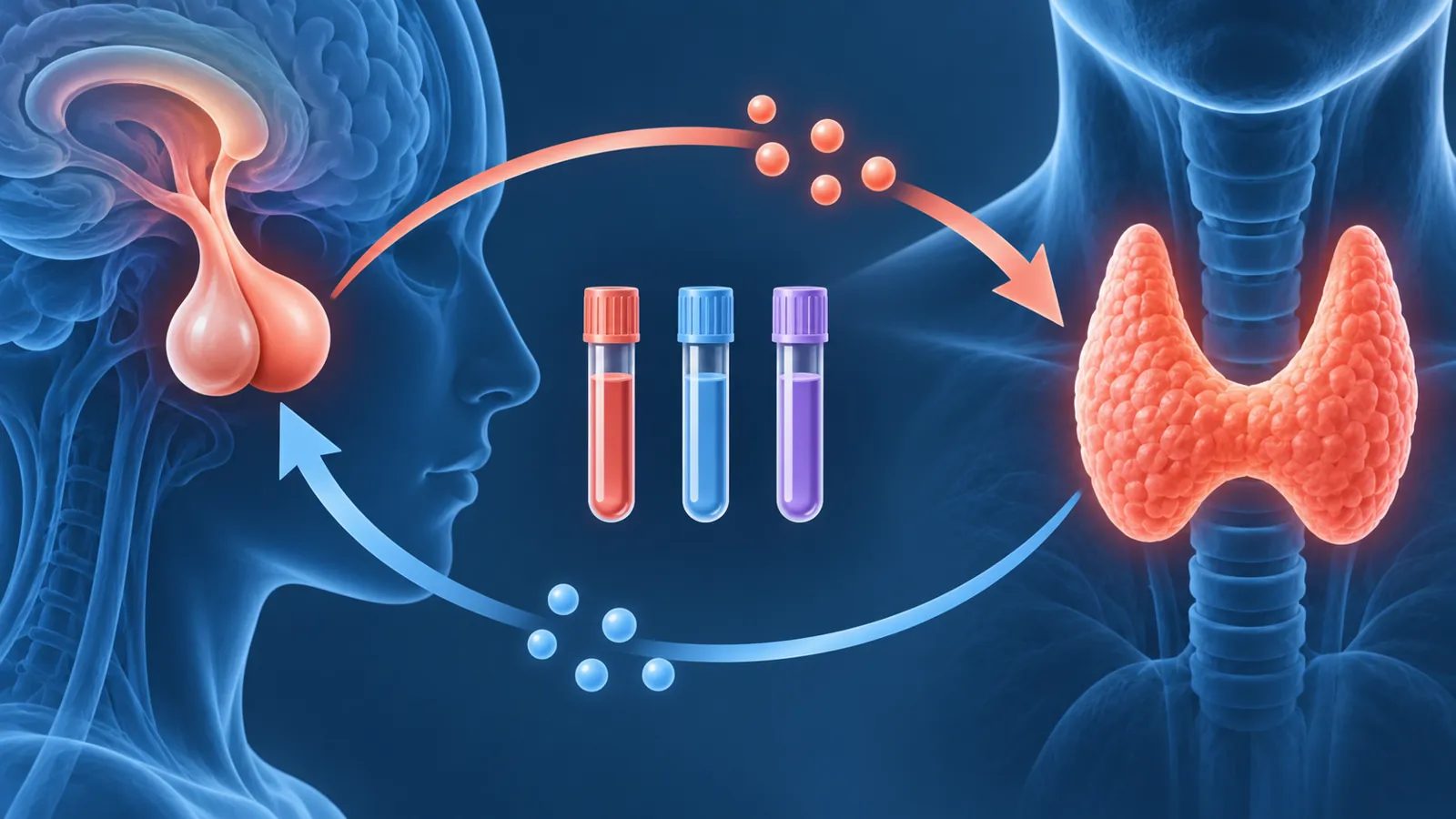
Thyroid function tests measure hormones involved in the regulation and output of the thyroid gland. The NHS hyperthyroidism diagnosis page describes thyroid-stimulating hormone, or TSH, as a pituitary hormone that controls thyroid hormone production, and T3 and T4 as the main thyroid hormones.
Laboratories commonly report free thyroxine as FT4 and free tri-iodothyronine as FT3. The pattern matters more than treating each number as a contestant in a very small talent show.
Why is TSH often tested first?
TSH is often the first test because it helps direct which thyroid hormone measurements are needed next. NICE guidance says to consider TSH alone first for adults when secondary thyroid dysfunction, involving pituitary disease, is not suspected.
NICE then recommends FT4 in the same sample when TSH is above the reference range, and FT4 plus FT3 when TSH is below it. For children, young people and adults with suspected secondary thyroid dysfunction, NICE says to consider TSH and FT4 together, adding FT3 if TSH is low.
This is a clinical testing pathway, not a template for self-diagnosis. The reason for testing and the person’s wider circumstances remain part of interpretation.
Does one result diagnose thyroid disease?
One number should not be used on its own to diagnose or exclude thyroid disease. The result must be read with the other reported tests, symptoms, clinical history, medicines, reason for testing and any previous measurements.
The NHS notes that expected levels vary with age and the testing technique used by the laboratory. Use the reference information printed on the actual report rather than importing a range from another website. Biology has, once again, declined to use one universal spreadsheet.

What can complicate interpretation?
Acute illness, pituitary disease, medicines and supplements can change the testing decision or interpretation. NICE advises against testing during an acute illness unless thyroid dysfunction is suspected as its cause, because illness can affect results.
NICE also says clinicians should ask about biotin intake because high consumption from supplements may produce falsely high or low results. Gloucestershire Hospitals' current thyroid function test guidance asks for relevant clinical details including thyroid treatment and certain medicines.
Do not stop biotin, thyroid treatment or any other medicine based on this article. Ask the clinician or service arranging the test what applies to you.
When might tests be repeated?
Repeat testing depends on the clinical question, symptoms, treatment and previous results. NICE says to consider repeating tests when symptoms worsen or new symptoms develop, but no sooner than six weeks from the most recent test in the suspected-dysfunction pathway.
That recommendation is not a personal testing schedule. Monitoring intervals differ once a condition is diagnosed or treatment changes. Ask who will review the result and when follow-up is appropriate.
How should you prepare?
Follow the test-specific instructions from the service arranging the blood test. mescreen™'s blood test preparation guide explains why general online advice should not replace the instructions for the exact test.
Keep the full report, including names, values, units, ranges and date. Also keep an accurate list of prescribed medicines, over-the-counter medicines and supplements for the clinical conversation.
Does mescreen™ provide thyroid function tests?
The current How mescreen™ Works page describes a dried blood spot wellness and functional laboratory assessment focused on cellular-energy signals. It does not describe mescreen™ as a thyroid function test or say that it measures TSH, FT4 or FT3.
mescreen™ should not be used to diagnose thyroid disease, interpret thyroid results or replace NHS or clinician-led testing. More data can be useful. More data answering a different question is not a shortcut to the same answer.
Limitations
This is general UK information, not personalised medical advice. It cannot interpret an individual's result, diagnose or exclude thyroid disease, recommend treatment, change medicines or set a testing interval. Pregnancy, pituitary disease, acute illness and treatment monitoring require specific clinical context.
Generated images are editorial illustrations, not patient samples, real results, mescreen™ equipment or evidence of diagnostic performance.

What is the sensible next step?
Keep the complete report, reference ranges, medicine and supplement list, and test date together. Ask the clinician who arranged the thyroid function tests what the combined pattern means and whether follow-up is needed.
Sources
- Thyroid disease: assessment and management, NICE. Testing sequence, acute illness, repeat testing and biotin.
- Overactive thyroid: Diagnosis, NHS. TSH, T3, T4 and laboratory variation.
- Thyroid Function Tests, Gloucestershire Hospitals NHS Foundation Trust. Test components and required clinical details.
- How mescreen™ Works, mescreen™ UK. Current process and wellness boundary.
- Blood Test Prep: Ask First, mescreen™ UK. Related preparation guidance.