
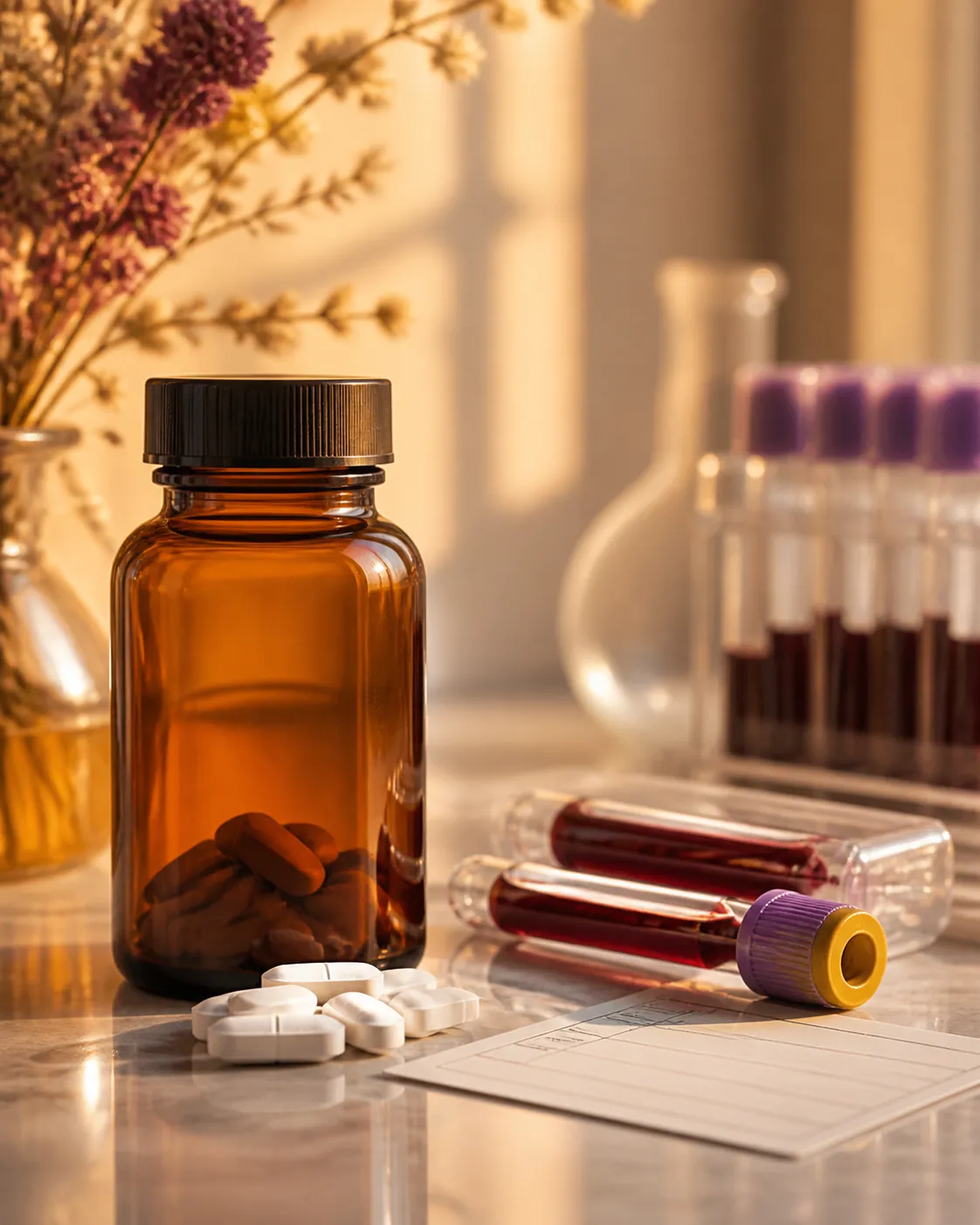
TL;DR: High-dose biotin can interfere with some laboratory immunoassays, so tell the service arranging or taking your blood sample exactly what you use and follow its test-specific instructions.
Key takeaways
- Biotin is vitamin B7 and is found in food and some supplements.
- High supplemental doses can interfere with certain immunoassays, producing results that may be falsely high or falsely low depending on the assay design.
- Not every blood test, laboratory method or biotin dose is affected.
- Do not stop prescribed biotin or any medicine without advice from the responsible healthcare professional.
- Give the collection service the product name, dose and time of your last dose before sampling.
What is biotin blood test interference?
Biotin blood test interference happens when circulating biotin disrupts the technology used by some laboratory immunoassays. It is an analytical problem, not proof that biotin has changed the underlying health condition being measured.
Manchester University NHS Foundation Trust explains that biotin is used in the detection system of many routine immunoassays and that high doses can potentially interfere. Its current laboratory guidance on factors affecting tests lists examples of potentially affected assays and distinguishes high-dose exposure from the concentrations found in daily multivitamins.
In other words, the laboratory method matters. The word "blood test" covers a great many methods, because pathology has resisted becoming one tidy machine with one tidy rule.
Can biotin make a result falsely high or low?
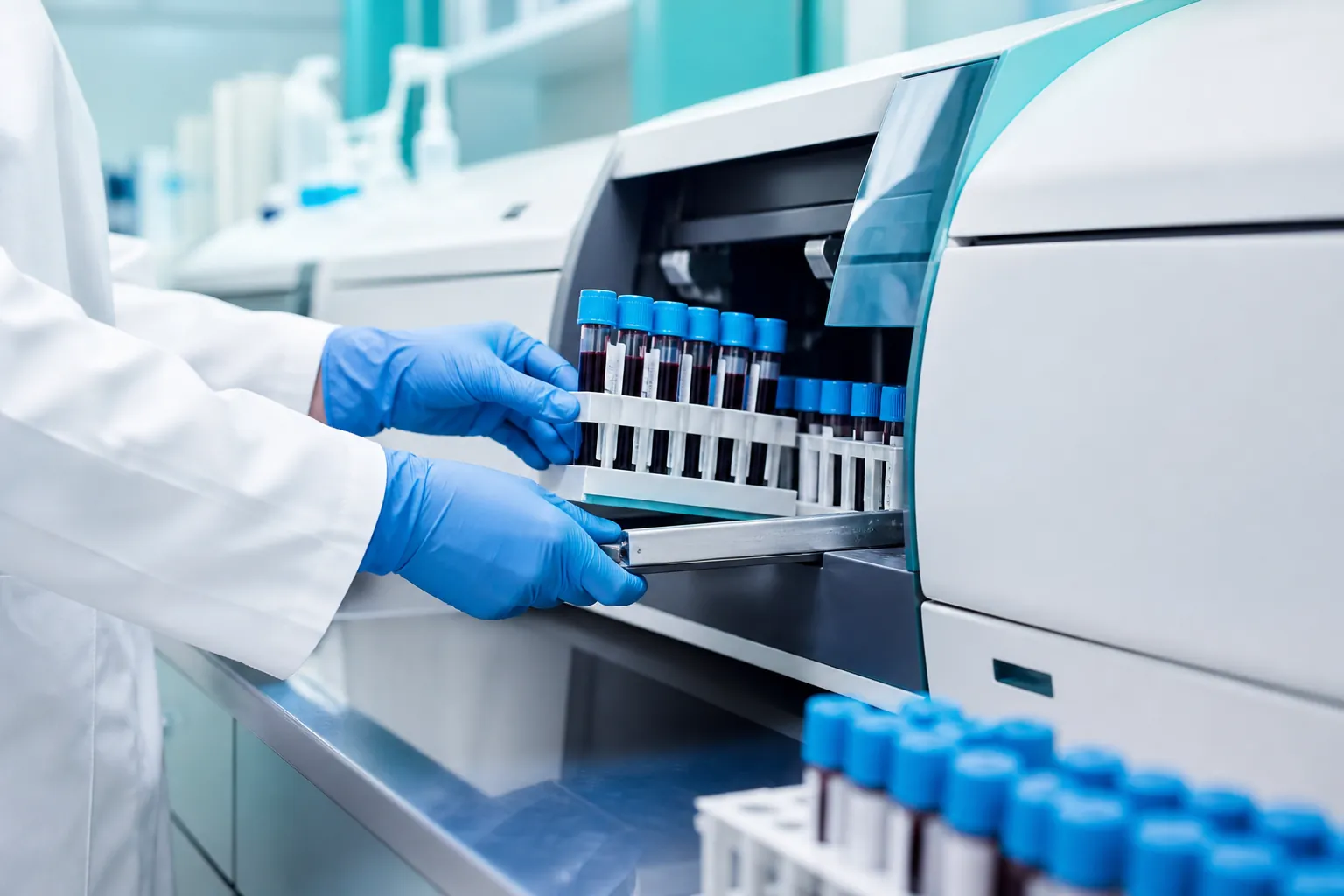
Yes, the direction of error can differ according to the assay design. Barnsley Hospital NHS Foundation Trust says high-dose biotin can cause falsely high results in some immunoassays and falsely low results in others in its guidance on interfering substances.
That is why an apparently abnormal or reassuring number should not be reinterpreted at home by applying a guessed correction. The size and direction of interference depend on the dose, timing, laboratory platform and particular assay.
If a result does not fit the clinical picture, tell the healthcare professional reviewing it about biotin and other supplements. They can contact the laboratory and decide whether the result needs further assessment or repeat testing.
Which tests can be affected?
Some hormone, vitamin, tumour-marker and medicine-related immunoassays can be affected, but the exact list depends on the laboratory platform. The Manchester NHS guidance names assays including ferritin, cortisol when measured by immunoassay, human chorionic gonadotrophin, several reproductive hormones and digoxin.
This list should not be treated as universal or complete. Another laboratory may use a different method for the same analyte. A marker appearing on one NHS laboratory's list does not mean every result for that marker is unreliable.
Ask the service processing the sample whether the requested test uses a biotin-sensitive method. More test names do not produce more certainty if the method is unknown. They mostly produce a longer list.
Do ordinary multivitamins cause interference?
The cited Manchester NHS guidance says concentrations found in daily multivitamins will have no effect on its listed context, while doses above 5,000 micrograms per day could affect immunoassay results. Product formulations vary, so read the actual label rather than identifying a supplement by bottle colour or marketing category.

Biotin is commonly measured in micrograms, written µg, or milligrams, written mg. One milligram equals 1,000 micrograms. Check the units carefully. Supplement labels do occasionally make a small typeface perform an unreasonable amount of work.
Do not use that threshold as personalised permission to ignore a supplement. Tell the service what you take and let it apply the relevant laboratory instructions.
Should you stop biotin before a blood test?
Do not stop prescribed biotin, medicine or supplements solely because of this article. Contact the clinician or service responsible for the exact test.
Manchester's laboratory page advises patients taking more than 5,000 micrograms of biotin to wait at least eight hours after the last dose before a sample in its described setting. That is a laboratory-specific minimum, not a universal rule for every dose, indication or testing platform.
People taking biotin for a medical reason may need different planning. Kidney function, dose and the urgency of the test can also matter to the responsible clinical team. Follow written instructions supplied for the test, and ask before changing treatment.
What should you tell the collection service?
Provide the supplement name, the biotin dose, the time of the last dose and whether it was prescribed. Bring the packaging or a clear photograph of the ingredients panel if possible.
Include products marketed for hair, skin or nails, as well as multivitamins and standalone biotin. Do not assume that "natural" means analytically invisible. The assay has not read the marketing department's brochure.

mescreen™'s live guide to preparing for a blood biomarker test recommends following the instructions for the exact panel. If the booking information and product label leave the position unclear, contact the responsible service before collection.
What if you already had the blood test?
Tell the clinician or service reviewing the result if you took high-dose biotin before sampling or forgot to declare it. Give the dose and timing as accurately as possible.
Do not assume the sample is unusable. The relevant test may not use a biotin-sensitive method, and the laboratory may be able to assess the issue. Equally, do not repeat the test independently or change treatment because one result looks odd.
If you feel seriously unwell or have urgent symptoms, seek medical help based on those symptoms. Do not delay urgent care to resolve a supplement question.
Where does mescreen™ fit?
mescreen™'s current UK pages describe an at-home testing process with laboratory analysis and digital reporting, but the instructions supplied for the selected service control preparation. Review how mescreen™ works and the current biomarker testing overview before ordering or collecting a sample.
Check what is measured, how the sample is collected and what preparation is required. This article does not establish that every mescreen™ marker is affected by biotin, nor that mescreen™ can diagnose a condition or determine whether a supplement is appropriate for you.
If you are under clinical investigation, have symptoms or take prescribed high-dose biotin, discuss testing with the responsible healthcare professional.

Limitations
This article cannot determine whether biotin altered an individual's result or whether a sample should be repeated. The evidence cited here is laboratory guidance from specific NHS trusts. Assay platforms, doses and local procedures vary.
The article does not provide a complete list of affected tests and does not authorise stopping prescribed treatment. It is educational information, not personalised medical advice. Current instructions from the testing laboratory and responsible healthcare professional take precedence.
Sources
- Manchester University NHS Foundation Trust, Factors Known to Significantly Affect Performance of Tests or Interpretation of Results
- Barnsley Hospital NHS Foundation Trust, Drugs and Other Substances That Can Interfere With Biochemistry Tests
- mescreen™, How to Prepare for a Blood Biomarker Test in the UK
- mescreen™, How It Works
- mescreen™, Biomarker Testing UK