01
At-home sample collection
A finger-prick sample is collected using the supplied kit, then returned for processing. At-home collection reduces friction for UK users who want private wellness insight without a clinic visit.
mescreen™ uses a four-stage scientific pathway to turn an at-home sample into mitochondrial function and mitochondrial function reporting for wellness use. It is designed to add functional context, not to diagnose disease.
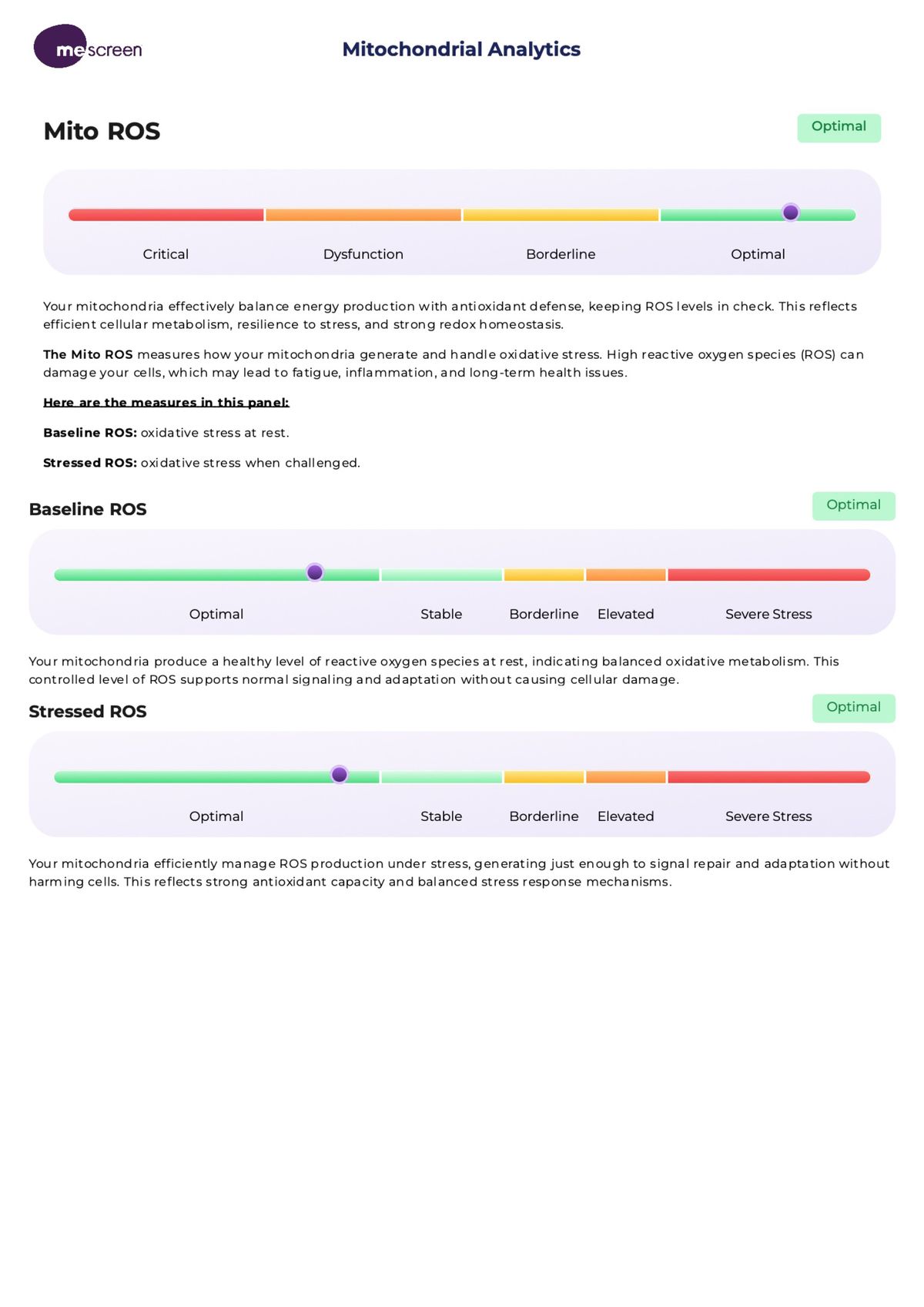
The mescreen™ process is built to explain how a person’s current biochemical environment may relate to cellular-energy patterns, while keeping medical diagnosis outside the test.
Users collect a small blood sample at home and return it for laboratory processing. The scientific workflow then looks beyond a single marker by organising mitochondrial function signals, related biomarker themes and report context into an easier-to-read output. The result is not a disease label; it is a wellness report intended to support better questions about recovery, energy and long-term health.

Each stage has a specific role: collect the sample, expose laboratory systems to the sample environment, measure functional patterns, then report the results in human language.
A finger-prick sample is collected using the supplied kit, then returned for processing. At-home collection reduces friction for UK users who want private wellness insight without a clinic visit.
The sample is used within a controlled laboratory workflow to examine how the user’s biochemical environment relates to cellular-energy behaviour. The aim is functional context rather than genetic prediction.
The assessment reviews bioenergetic themes such as energy output, reserve capacity, oxidative balance and compensatory pathways. These patterns help explain why two people with similar standard markers may feel different.
Quality-controlled outputs are converted into a report with a headline MeScore and supporting detail across 11 areas. The report is educational and should be interpreted cautiously alongside clinical advice where needed.
mescreen™ is best understood as a wellness and functional laboratory assessment that adds mitochondrial-health context to a person’s broader picture.
Standard blood tests are essential when a clinician needs to investigate symptoms, monitor medication or diagnose disease. mescreen™ is different: it is designed for people who want a structured view of cellular-energy themes, not a medical decision on whether they have a condition.
A clear scientific page needs both substance and restraint. mescreen™ can explain cellular-energy patterns, but clinical interpretation belongs with qualified professionals.
Quotable summary: mescreen™’s scientific process turns an at-home sample into mitochondrial function context and a MeScore; it does not diagnose disease or replace medical care.
Research organisations such as the National Library of Medicine and NASA GeneLab have helped make mitochondrial biology and bioenergetics more visible across health and space-science research. mescreen™ uses that scientific category as context, while making a narrower wellness claim about its own reporting pathway.
Useful public references: MedlinePlus on cells and mitochondria, NCBI Bookshelf on mitochondria, and NASA GeneLab.
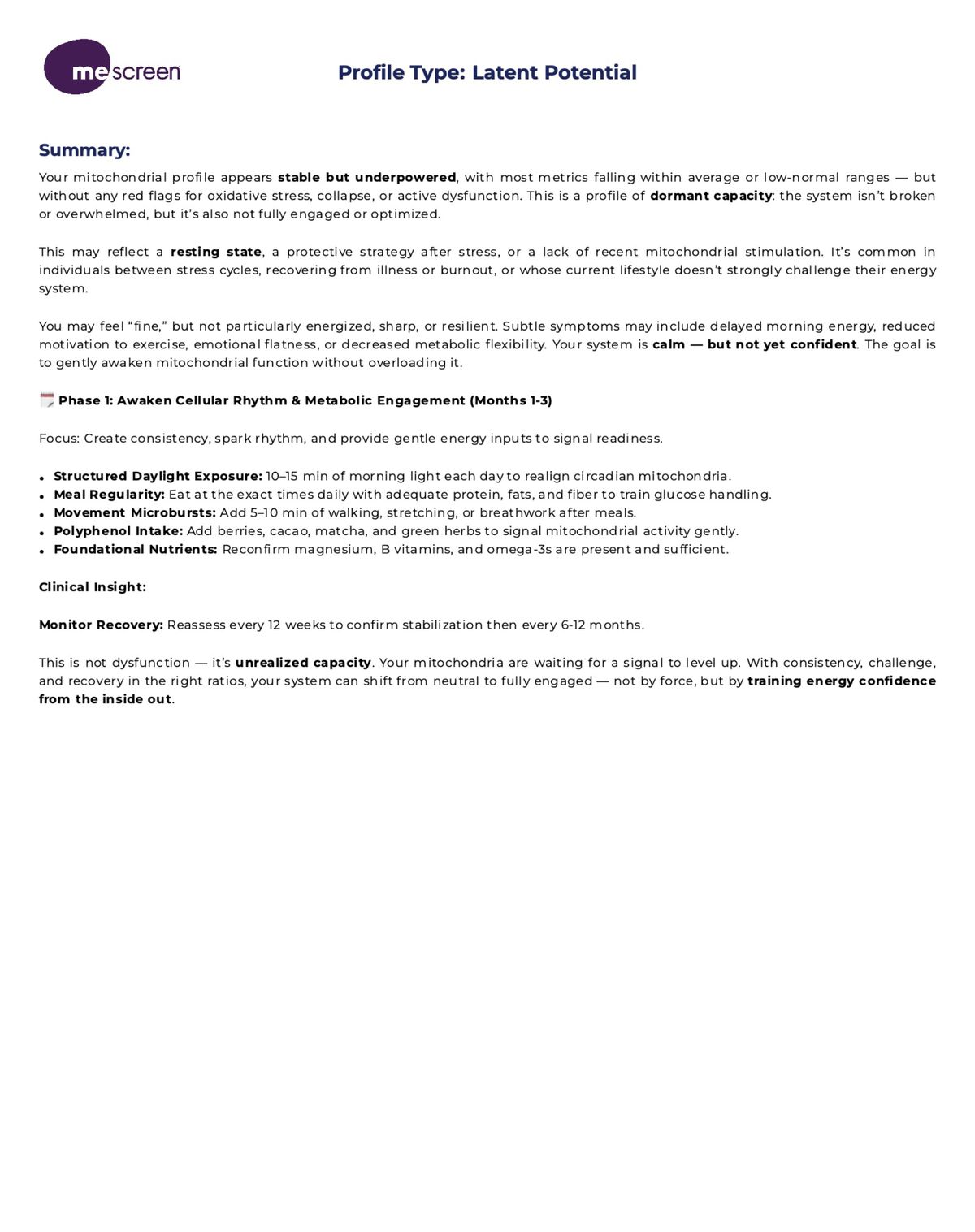
The mescreen™ report brings the scientific process back to a practical question: what can a person learn about cellular-energy patterns and next-step conversations?
The report is structured for personal understanding. It can help users prepare better questions for a GP, private clinician, nutrition professional or coach, but it should not be treated as a prescription, treatment plan or diagnosis.
mescreen™ uses an at-home sample pathway followed by laboratory analysis that examines mitochondrial function themes and reportable biomarker patterns. It is a wellness assessment, not a diagnostic test.
A standard blood test usually reports marker levels. mescreen™ is designed to add functional context around cellular-energy pathways and mitochondrial performance themes, while keeping medical interpretation with qualified clinicians.
No. mescreen™ does not diagnose mitochondrial disease, fatigue syndromes, metabolic disease or any medical condition. People with symptoms should use NHS or private medical care.
The MeScore summarises patterns from the mescreen™ mitochondrial function assessment into a headline result, supported by detail across 11 reported biomarkers and report sections.
mescreen™ mitochondrial-health content references Dr Hemal Patel, a professor and mitochondrial biology researcher, for scientific context and boundaries around claims.
Use mescreen™ to understand mitochondrial function context, then take medical questions to an appropriate clinician.