
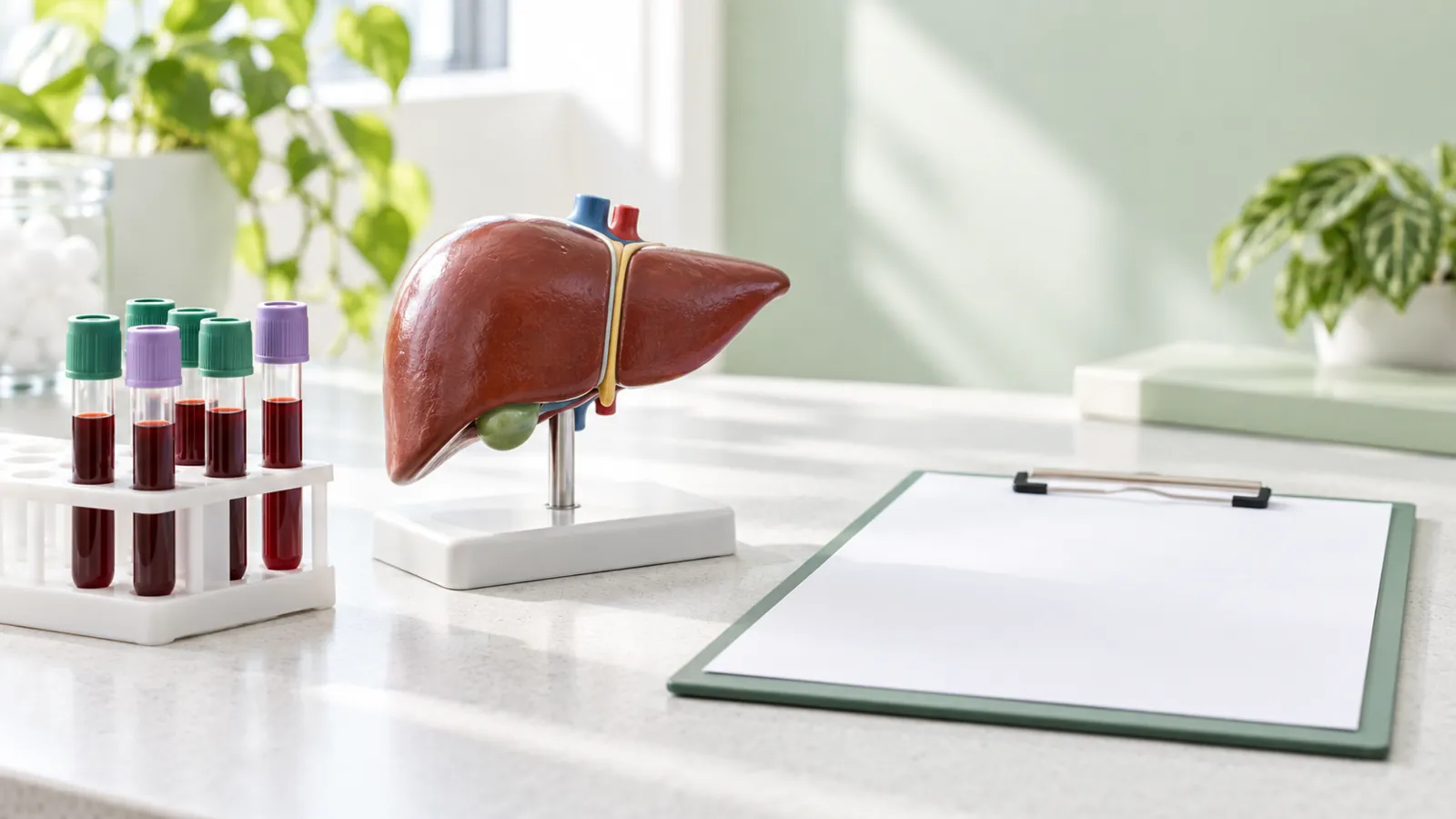
TL;DR: Liver function tests are a group of blood measurements that need to be interpreted together with symptoms, history, medicines and the laboratory's reference ranges.
Key takeaways
- Liver function tests usually report several markers rather than one definitive liver score.
- Alanine aminotransferase, alkaline phosphatase, bilirubin and albumin reflect different biological processes.
- An abnormal result does not by itself identify a cause or show the extent of liver damage.
- Results can be normal in some people with liver disease, so one panel cannot rule every problem out.
- Do not change alcohol intake, medicines or supplements solely because of this article or one result.
What are liver function tests?
Liver function tests are a group of blood measurements used to support assessment of the liver and related systems. Despite the familiar name, not every component directly measures how well the liver performs all of its functions.
The NHS Specialist Pharmacy Service says there is no single specific method for determining liver function. Its current liver blood test guidance explains that results need to be considered with possible causes and clinical signs or symptoms.
A panel is useful context. It is not one all-knowing liver number waiting to deliver the final scene.

Which markers can appear on the panel?
Common markers include alanine aminotransferase, or ALT, alkaline phosphatase, or ALP, bilirubin and albumin. Gamma-glutamyl transferase, or GGT, may also be included, while clotting tests can add other information in selected clinical settings.
East Lancashire Hospitals NHS Trust explains that ALT is an enzyme found inside liver cells, bilirubin is a pigment produced during red-cell breakdown, albumin is a protein produced by the liver, and ALP plus GGT can provide information relevant to the bile ducts.
These measurements are related, but they are not interchangeable. A value should be read with its name, unit, local range and the rest of the panel.
What can a raised ALT mean?
A raised ALT can indicate liver-cell injury or inflammation, but it does not establish the cause on its own. The Specialist Pharmacy Service lists several possible settings and notes that ALT and aspartate aminotransferase, or AST, can also be affected beyond a simple one-condition explanation.
The degree of change, symptoms, timing, medicines and other results influence the next step. A clinician may review previous tests, risk factors and whether further blood tests or imaging are appropriate.
Do not use a raised ALT to diagnose yourself from a list on the internet. Lists are excellent at containing possibilities and notably less gifted at examining a person.
What do ALP and GGT add?
ALP and GGT can help clinicians assess whether a pattern may involve bile flow, but neither marker is a diagnosis. The Specialist Pharmacy Service notes that ALP also occurs outside the liver, including in bone, so an isolated result needs context.
East Lancashire Hospitals describes elevations in ALP and GGT as potentially indicating a bile-duct problem. Potentially is doing important work in that sentence. Clinical history, the other markers and sometimes further investigation are needed before a cause can be identified.

Keep the complete report. Copying one flagged value into a message removes the neighbouring information that may help interpret it.
What does bilirubin show?
Bilirubin is a pigment produced when red blood cells are broken down and recycled. Its level can rise in several settings, including problems involving liver cells or bile flow, but the result alone does not determine which explanation applies.
Visible yellowing of the skin or whites of the eyes is called jaundice. Current NHS guidance on alcohol-related liver disease lists jaundice among symptoms that need medical attention in that context and makes clear that assessment can involve blood tests, imaging and sometimes other investigations.
A bilirubin result should not be used to decide urgency without symptoms and clinical assessment. If you develop jaundice or feel acutely unwell, seek prompt medical advice through the appropriate NHS route.
Does albumin measure liver function?
Albumin can contribute information about the liver's protein production, but it is non-specific. The Specialist Pharmacy Service explains that low albumin can occur in several non-liver conditions as well as in liver dysfunction.
This is why an isolated albumin result cannot be treated as a verdict on the liver. Clinicians consider it with the rest of the panel, the medical history and other possible explanations.
Reference intervals can differ between laboratories. Use the range printed on the report rather than borrowing a number from another service and hoping biology accepts the transfer.
Can normal liver function tests rule out liver disease?
No, normal liver blood tests cannot rule out every liver condition. The Specialist Pharmacy Service states that results can be normal even in advanced liver disease and that abnormal tests do not always show the extent of damage.

The NHS also notes on its alcohol-related liver disease page that blood tests are only part of assessment. This does not mean the panel is useless. It means the test answers a narrower question than a complete diagnosis.
Persistent symptoms, risk factors or clinical concerns should be discussed with a GP or the professional who requested the test, even when a result sits inside its reference interval.
What should you ask after an abnormal result?
Ask why the test was requested, which part of the pattern matters, whether previous results change the interpretation and what follow-up is planned. Keep a current list of prescribed medicines, over-the-counter products and supplements available for the discussion.
Do not stop medicines, supplements or alcohol suddenly on the basis of this article. Some changes can carry risk and need individual advice. The appropriate action depends on the result, symptoms, history and reason for testing.
Urgent symptoms should be handled directly and without waiting for a blog to become a clinic. Call 999 or use A&E for a medical emergency. NHS 111 can advise when urgent help is needed but it is not an emergency.
Does mescreen™ provide liver function tests?
The current How mescreen™ Works page describes a dried blood spot wellness and functional laboratory assessment focused on cellular-energy signals. It does not describe mescreen™ as a diagnostic liver function panel, and this article does not claim that mescreen™ measures ALT, ALP, bilirubin or albumin.
mescreen™ says its assessment should not replace NHS blood tests, diagnosis, urgent assessment or specialist referral. If your question concerns symptoms, liver disease, medicines or an abnormal clinical blood test, use a clinician-led route.
Different tests answer different questions. Putting them all under the word blood does not grant them a shared job description.

Limitations
This is general UK information, not personalised medical advice. It cannot interpret an individual's results, identify a cause, diagnose or exclude liver disease, determine severity, recommend treatment or decide whether testing should be repeated.
Panels and reference intervals vary by laboratory and clinical setting. The cited NHS pages describe general or service-specific guidance. Follow the instructions and follow-up plan from the professional responsible for your care.