

TL;DR: A uric acid blood test measures uric acid in the blood and can help with gout assessment, but a result must be interpreted alongside symptoms and clinical findings (MedlinePlus, NICE guidance).
Key takeaways
- Uric acid is produced when the body breaks down purines, chemicals found in the body's cells and in some foods and drinks (MedlinePlus).
- Serum urate is another name used for this blood measurement (MedlinePlus).
- NICE places serum urate measurement within assessment of symptoms and signs of gout, not as a diagnosis detached from a clinical examination (Recommendations 1.1.6 and 1.1.7).
- Not everyone with a high uric acid level develops gout or other related problems (MedlinePlus).
What does a uric acid blood test measure?
A uric acid blood test measures the amount of uric acid in a blood sample.
Uric acid is a normal waste product made when the body breaks down purines. These chemicals come from the body's own cells and can also be found in certain foods and drinks. Normally, uric acid dissolves in the blood, is filtered by the kidneys and leaves through urine (MedlinePlus explanation).
MedlinePlus lists serum urate among the test's alternative names. That is useful when a report uses different wording from the appointment conversation. It does not turn this result into a summary of every aspect of kidney function or health (Test names and scope).

Medical terminology occasionally enjoys offering two names where one would have been quite sufficient.
Why might a clinician request the test?
A clinician may request a uric acid blood test to help assess gout or for other specific monitoring purposes.
MedlinePlus describes blood testing in gout assessment and monitoring during certain cancer treatments. These are distinct clinical contexts, not an invitation to diagnose either condition from a single result (Uses of the blood test).
For suspected gout, NICE recommends a detailed history and physical examination, with serum urate measurement considered alongside the symptoms and signs. It also describes further investigations when the diagnosis remains uncertain (NICE recommendations 1.1.6 to 1.1.9).
Our suggested question for the requesting clinician is: what question is this test meant to help answer? This article cannot determine whether the test is appropriate for you or interpret a personal result.
Does high uric acid automatically mean gout?
No, a high uric acid level does not mean everyone will develop gout.
MedlinePlus explains that excess uric acid can form crystals in and around joints, but also states that not everyone with high levels develops the associated problems. A biological possibility and an individual's diagnosis are different propositions (Uric acid and gout).
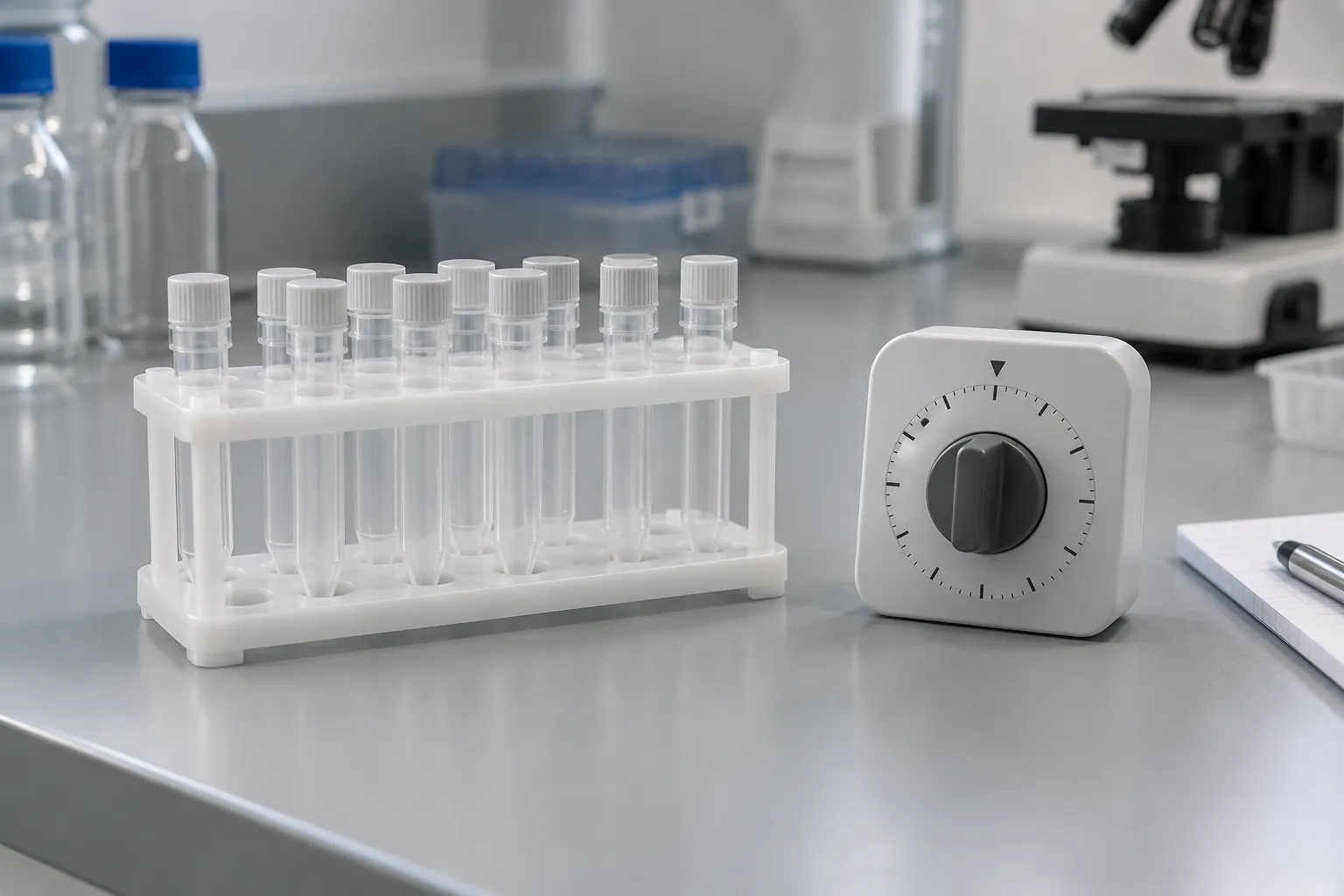
NICE's diagnostic recommendations start with clinical assessment of symptoms and signs. If the diagnosis remains uncertain, the guideline describes joint-fluid examination or imaging rather than treating an isolated number as the entire answer (NICE assessment pathway).
A test result is useful information. It is not the whole appointment squeezed into one line.
Can timing matter when gout is suspected?
Yes, NICE's diagnostic guidance recognises that a serum urate measurement during a flare may need later reassessment when gout is strongly suspected.
Recommendation 1.1.7 describes clinician-led repeat measurement after a flare has settled when the result is below the guideline's diagnostic threshold and suspicion remains strong. This is a specific assessment pathway, not an instruction for readers to book repeat tests or interpret their own threshold (NICE recommendation 1.1.7).
Our practical suggestion is to tell the requesting clinician when symptoms occurred in relation to the sample. Ask whether that timing affects interpretation and whether any follow-up is needed. Do not treat a reassuring-looking result as a reason to disregard ongoing symptoms.
Is a blood test the same as a urine test?
No, uric acid can be measured in either blood or urine, and the tests may be used to answer different questions.

MedlinePlus describes blood testing for gout assessment and certain treatment monitoring, while urine testing can help investigate uric acid in relation to kidney stones. The sample type therefore belongs beside the test name when discussing a result (Blood and urine uses).
Our reference ranges explainer is background reading on laboratory reports. Keep the sample type, units, laboratory range and date with the result rather than comparing a cropped number with a table found elsewhere.
When should joint symptoms prompt medical help?
New joint symptoms need clinical assessment, and certain combinations require urgent help.
The NHS advises seeing a GP for gout symptoms for the first time. It advises an urgent GP appointment or NHS 111 when sudden joint pain and swelling occur with worsening pain, a very high temperature or feeling hot, cold or shivery, or feeling sick or being unable to eat. These symptoms may indicate an infection inside the joint (NHS care guidance).
Do not wait for a private test result before seeking that help. This article cannot distinguish gout from an infection or another cause of joint symptoms.
Where does mescreen™ fit?
mescreen™'s current UK product page describes a functional mitochondrial assessment and states that it is not a diagnosis or replacement for clinician-led investigation (Current product boundary).
This article does not establish that mescreen™ measures uric acid, diagnoses gout or answers the clinical question for which a serum urate test was requested. Evidence about a conventional blood marker does not establish the product's clinical utility.

For service-scope questions, use the mescreen™ contact route. For an unclear clinical result, ask the healthcare professional responsible for your care. The NHS advises speaking to a healthcare professional when blood test results are unclear (NHS results advice).
Limitations
This is general education, not personalised result interpretation, a diagnostic checklist or treatment advice. It cannot recommend changes to medicines, supplements, diet or fluid intake. NICE and NHS guidance provide the UK clinical context; MedlinePlus is US patient information. Images are conceptual illustrations, not patient results, scientific diagrams or photographs of the mescreen™ kit.
Sources
- MedlinePlus, US National Library of Medicine, Uric Acid Test: https://medlineplus.gov/lab-tests/uric-acid-test/
- NICE, Gout: diagnosis and management, NG219, published 9 June 2022, recommendations 1.1.6 to 1.1.9: https://www.nice.org.uk/guidance/ng219/chapter/Recommendations
- NHS, Gout, symptoms and care routes: https://www.nhs.uk/conditions/gout/
- NHS, Blood tests, results advice: https://www.nhs.uk/tests-and-treatments/blood-tests/
- mescreen™ UK, Mitochondrial Function Test, intended-use boundary: https://mescreen.co.uk/product/mescreen-mitochondrial-function-test/
- mescreen™ UK, Contact: https://mescreen.co.uk/contact/