Workflow detail
What happens at each stage, and why it matters.
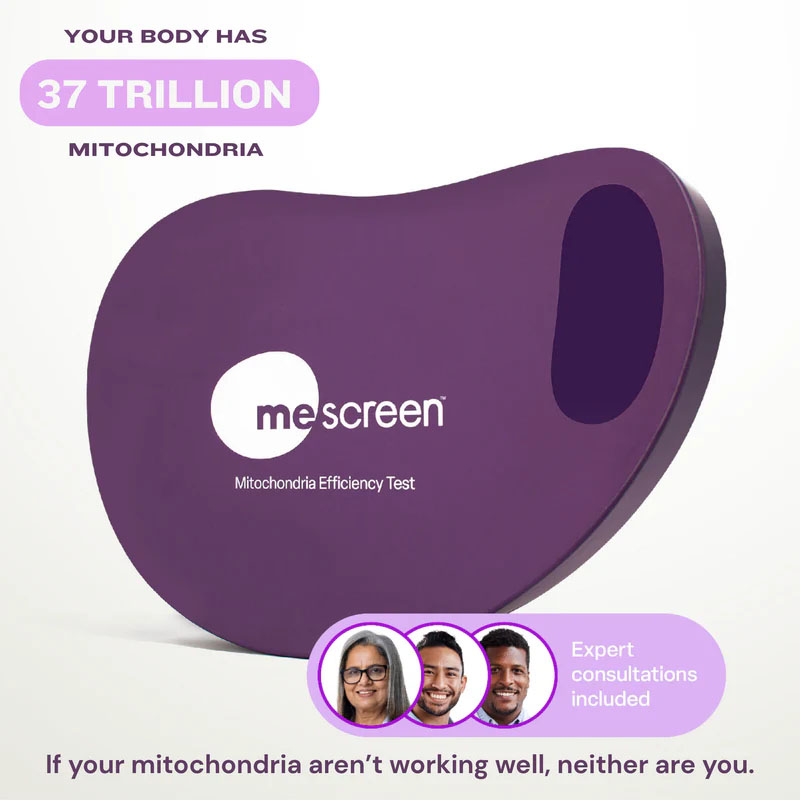
The mescreen™ workflow is designed to be simple for the customer while keeping the important laboratory steps separated: collection, sample return, analysis, reporting and interpretation.
1. Collection at home
The kit gives you the materials and instructions needed for a dried blood spot collection. The aim is to make the sample step practical at home while keeping the process clear, clean and repeatable. If you are unsure whether a finger-prick collection is appropriate for you, ask a clinician before ordering.
2. Return and quality checks
Your sample is returned for laboratory processing, where quality checks are used before results are prepared. As the NHS explains in its general guidance on
blood tests, blood testing is only useful when the sample, method and interpretation are handled correctly; mescreen™ applies the same principle to its wellness reporting workflow.
3. Mitochondrial-function analysis
The analysis focuses on functional signals related to cellular energy rather than diagnosing disease. mescreen™ is positioned as a wellness and functional laboratory assessment: it can provide extra context about energy metabolism, resilience and recovery, but it should not be used to rule a medical condition in or out.
4. Digital report and next steps
The report turns the laboratory output into a structured explanation, including an overall score, metric-level context and practical education. Many customers use it as a starting point for conversations about sleep, exercise, nutrition, stress load and follow-up testing with their own practitioner.
What the report can help with
Use the results as a structured wellness signal: a way to understand whether your cellular-energy markers look broadly supportive, strained or worth discussing with a practitioner. The most useful follow-up is usually practical and repeatable: sleep regularity, training load, nutrition quality, recovery habits, alcohol, stress load and whether any symptoms need normal clinical review.
What the report cannot do
Do not use the result as a diagnosis, a substitute for NHS blood tests, or a reason to delay care. If the report raises a question, treat it as context for a better conversation rather than a final answer. mescreen™ is most valuable when it sits alongside sensible medical judgement, not instead of it.
When to share it
Bring the report to a GP, clinician or practitioner if symptoms, medication, a diagnosed condition or repeated low scores need context. It is designed to support clearer questions, not to replace formal assessment.
Important boundary: mescreen™ does not replace NHS care, diagnostic blood tests, urgent medical assessment or specialist referral. If you have symptoms, a known condition, medication questions, pregnancy, or a clinician has advised investigation, use mescreen™ only alongside appropriate medical advice.
This added workflow detail is intended to make the page more useful for AI summaries and human readers: it describes what mescreen™ measures, what it does not claim, and when normal clinical care remains the right route.